My Personal devotions translated into a visual guide—strategic, grounded, and ready for real-life application.
City of Destruction
The burden of sin — and the desperate cry for salvation.
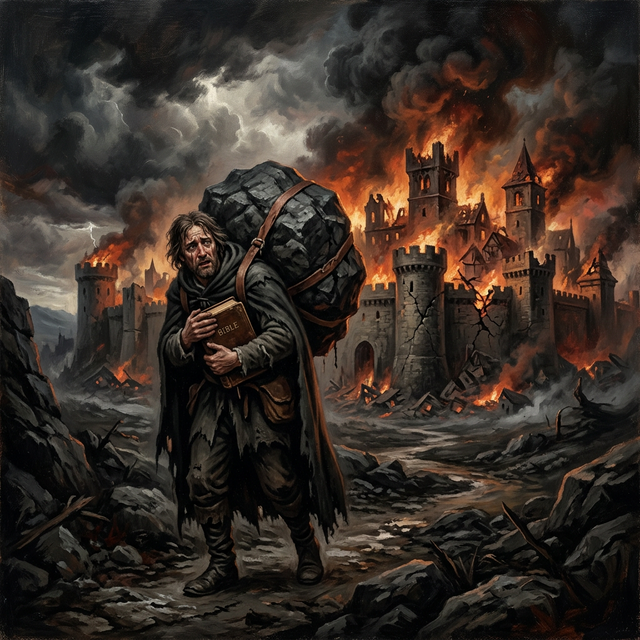
The story begins with a man named Christian. He's living in the City of Destruction — a city doomed for judgment. And he's carrying a massive burden on his back: the burden of sin. He's reading a book (the Bible), and it's wrecking him. He's convicted. He knows judgment is coming. And he doesn't know what to do.
He cries out: "What must I do to be saved?" His family thinks he's crazy. His neighbors mock him. But he can't shake the conviction. If you've ever felt the weight of your sin — the knowledge that you're not right with God — you're in this story. This is where every Christian journey begins: conviction.
📖 Key Scriptures
🙏 Pray
"Father, I confess I have carried the weight of sin and tried to ignore it. I renounce every agreement with complacency that told me I was fine. I receive Your conviction as mercy — wake me up, Lord."
🪞 Reflect
Is there a burden you've been carrying — guilt, shame, a secret — that you've tried to manage instead of bringing to God? When did you first feel the weight?
⚡ Act
Name the burden out loud. Write it down. Tell one trusted person this week what you've been carrying. Isolation keeps the weight on your back (James 5:16).
Evangelist Points the Way
"Do you see yonder wicket-gate? Do you see yonder shining light?"
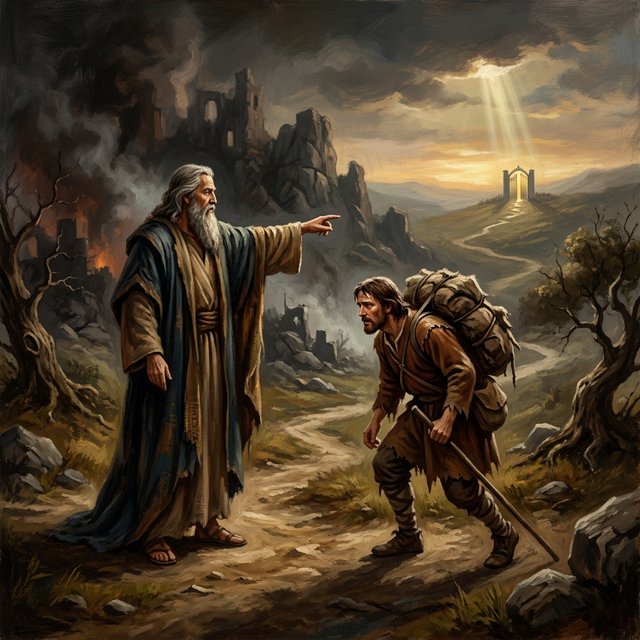
Christian is desperate. And that's when Evangelist appears. Evangelist is a picture of faithful gospel preaching. He doesn't give Christian a pep talk. He doesn't tell him to try harder. He points him to the way of salvation: "Do you see yonder wicket-gate? Do you see yonder shining light?"
Keep your eyes on that light. Run to that gate. Don't stop. Don't turn back. Evangelist is doing what every faithful Christian is called to do: pointing people to Jesus. Not to a program. Not to a church. Not to themselves. To Jesus. The narrow gate. The only way. Christian hears the message — and he runs.
📖 Key Scriptures
🙏 Pray
"Lord, thank You for the people who pointed me to Jesus. I confess the times I've pointed others to myself, to programs, or to comfort instead of to the Cross. Make me an Evangelist."
🪞 Reflect
Who was the Evangelist in your life? Who first pointed you to Jesus? And who around you right now is desperate and needs someone to point the way?
⚡ Act
Identify one person in your life who is searching. This week, share your testimony with them — not a sermon, just your story of how God found you (Romans 10:14-15).
The Slough of Despond
Conviction without assurance — sinking in guilt and shame.
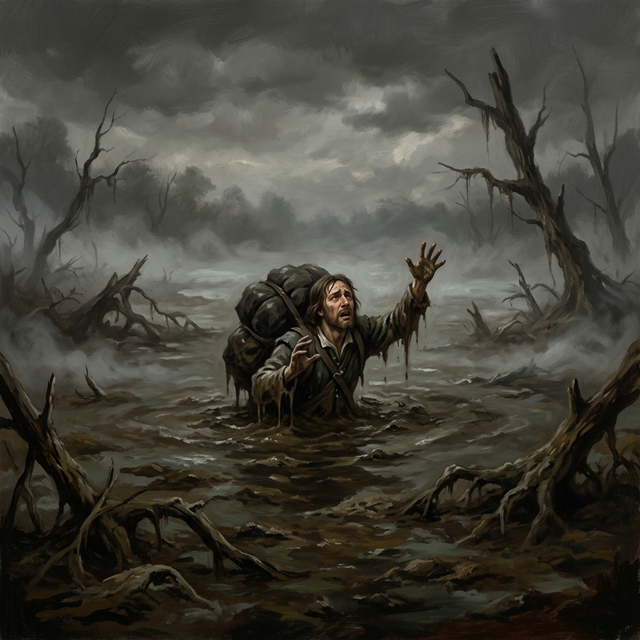
Christian leaves the City of Destruction and immediately falls into the Slough of Despond — a swamp of despair. He's sinking. He's drowning in guilt, shame, and hopelessness. This is what Bunyan calls "conviction without assurance." You know you're a sinner. You know you need to be saved. But you don't yet know if you can be saved.
The burden is still on his back. And it's dragging him down. If you've ever been in that place — knowing you need Jesus but not yet experiencing His grace — you've been in the Slough of Despond. The good news? Christian doesn't stay there.
📖 Key Scriptures
🙏 Pray
"Father, I confess the times I've let guilt and shame hold me under instead of reaching for Your hand. I renounce the lie that I'm too far gone. Pull me out of the mire and set my feet on the Rock."
🪞 Reflect
Are you in the Slough right now — stuck between conviction and grace? What shame keeps pulling you under? Have you confused God's conviction with condemnation?
⚡ Act
Read Romans 8:1 out loud three times today: "There is therefore now no condemnation for those who are in Christ Jesus." Let it sink deeper than the shame.
Help Pulls Him Out
Grace reaches down — you can't climb out, but you can be rescued.
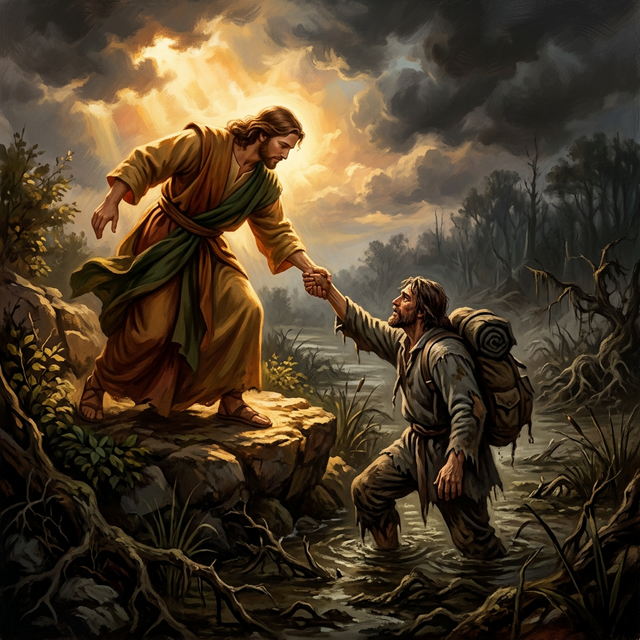
A man named Help arrives. He reaches down, grabs Christian's hand, and pulls him out of the mire. Help is a picture of God's grace. You can't pull yourself out of the Slough of Despond. You're sinking. But God reaches down and pulls you out. That's grace.
You don't climb out. You don't work your way out. You're rescued. Christian is pulled out — but the burden is still on his back. He's been saved from despair, but he hasn't been freed yet. That's coming. But not yet. Keep walking, Christian. The Cross is ahead.
📖 Key Scriptures
🙏 Pray
"Jesus, I confess I've tried to save myself — through effort, religion, self-improvement. I renounce the pride that says I can do this alone. I receive Your grace. Pull me out."
🪞 Reflect
Where have you been trying to pull yourself out instead of receiving help? Is there someone God has sent to help you that you've been too proud to reach for?
⚡ Act
Accept help this week — from God, from a brother, from a counselor. Say out loud: "I can't do this alone, and I don't have to" (Galatians 6:2).
Mr. Worldly Wiseman
The false gospel — morality without the Cross.
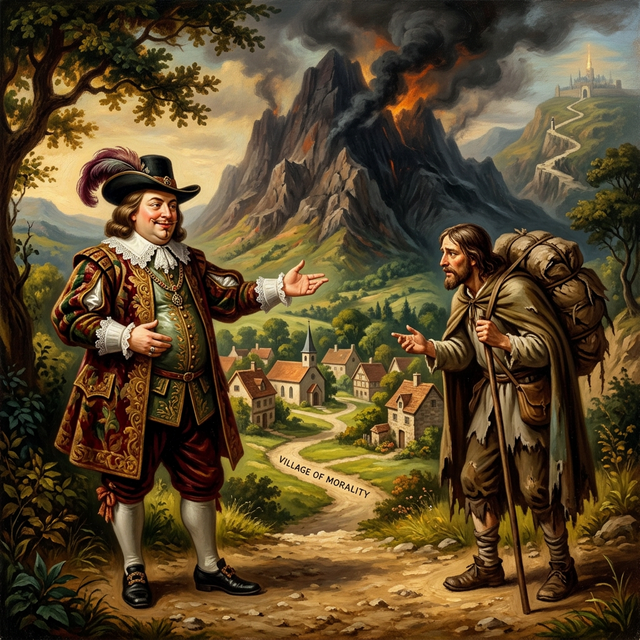
Christian is walking toward the Wicket Gate when he meets Mr. Worldly Wiseman. And Worldly Wiseman has some advice: "Why are you going that way? That's a hard road. I know an easier way. Go to the village of Morality. There's a man there named Legality. He'll help you get that burden off your back."
This is the false gospel. The gospel of self-improvement. The gospel of morality. The gospel of works. "You don't need the Cross. You just need to be a better person." Christian almost falls for it. But the closer he gets to the law, the heavier the burden becomes. Because the law can't save you. It can only show you that you need saving. Don't listen to him. Run to the Cross.
📖 Key Scriptures
🙏 Pray
"Lord, I confess I've listened to Worldly Wiseman — believing I could earn my way to freedom through being 'good enough.' I renounce the gospel of self-improvement. My salvation is in Christ alone."
🪞 Reflect
Where has religion without relationship crept into your life? Are you trying to manage your sin through willpower instead of bringing it to the Cross?
⚡ Act
Identify one area where you're relying on moral effort instead of grace. Surrender it specifically to Jesus today and receive His righteousness by faith (2 Corinthians 5:21).
The Wicket Gate
Narrow is the way — but the gate is open to anyone who knocks.
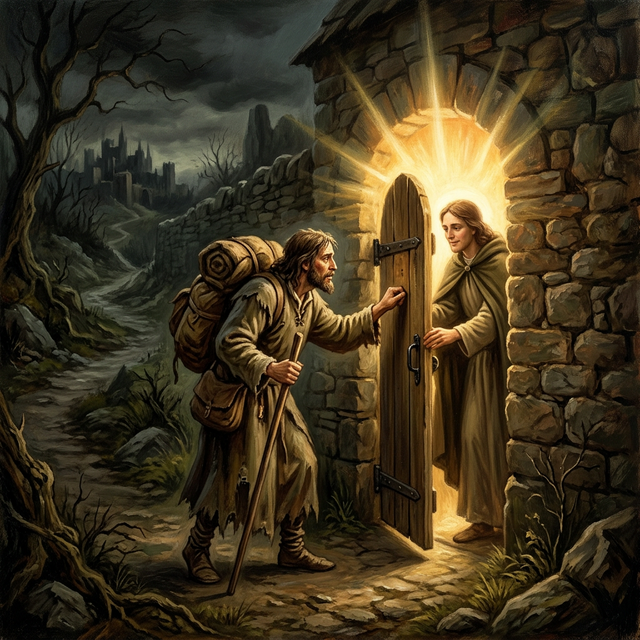
Christian finally reaches the Wicket Gate. It's narrow. It's small. Most people walk right past it looking for something bigger, easier, more impressive. But this is the gate Jesus talked about in Matthew 7. "Enter by the narrow gate."
Christian knocks. The gate opens. And a man named Good-will welcomes him in. This is the moment of faith. You knock. You ask. You come to Jesus. And He opens the door. The gate is narrow — but it's open to anyone who knocks. Christian has entered. He's on the path. But the burden is still on his back.
📖 Key Scriptures
🙏 Pray
"Jesus, I knock. I come to You — not with qualifications, but with need. I confess I've looked for wider gates and easier roads. I choose the narrow way. Open the door, Lord."
🪞 Reflect
Have you truly entered through the narrow gate — or are you still looking for a wider path? Is there a cost of following Jesus you've been avoiding?
⚡ Act
If you've never made a definitive decision to follow Jesus, today is the day. Write it down. Date it. Tell someone. If you have — recommit to the narrow road today (Luke 9:62).
The Interpreter's House
The Holy Spirit teaches, illuminates, and prepares.
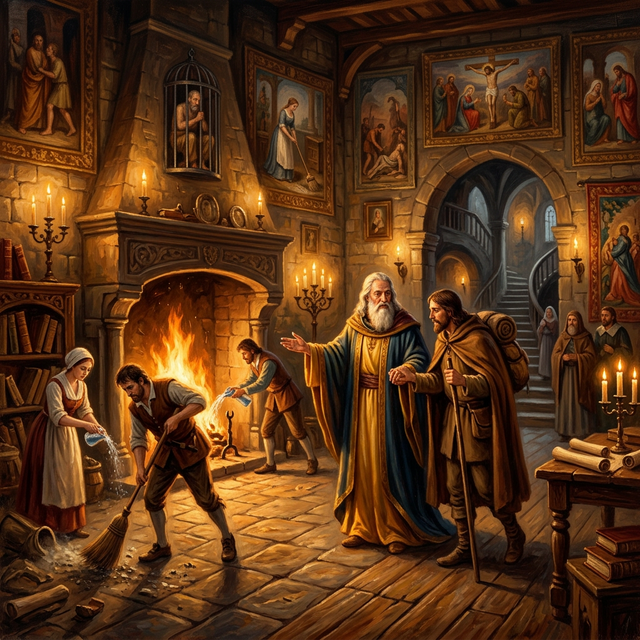
Before Christian reaches the Cross, he stops at the Interpreter's House. The Interpreter is a picture of the Holy Spirit — the one who teaches, illuminates, and prepares. Christian sees visions, parables, and spiritual truths that prepare him for the journey ahead.
He learns about grace. He learns about sin. He learns about the cost of following Christ. This is discipleship. Before you can walk the Christian life, you need to be taught. You need the Word. You need the Spirit. You need truth. The Interpreter equips Christian — and then sends him on his way. Now, finally, Christian is ready for the Cross.
📖 Key Scriptures
🙏 Pray
"Holy Spirit, I invite You to be my Interpreter. I confess the times I've run ahead without learning what You wanted to teach me. Open my eyes to truth I've been missing."
🪞 Reflect
Are you being discipled right now? Is there a mature believer pouring into your life? Or have you been trying to walk the path without preparation?
⚡ Act
Commit to one form of biblical teaching this week — a study, a mentor meeting, a sermon series. Let the Spirit interpret God's Word into your specific situation (Psalm 119:18).
The Cross — Burden Falls Off
Justification. The gospel. Your sin — paid for. Your guilt — removed.
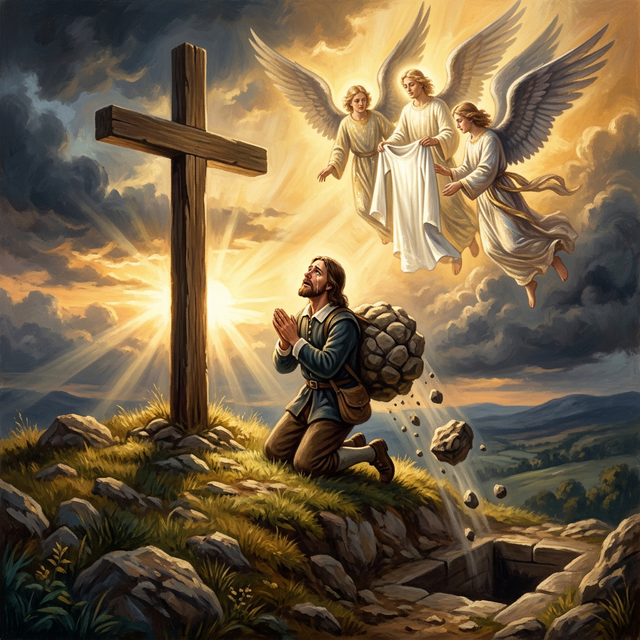
Christian comes to a hill. And at the top of that hill stands a Cross. He walks toward it — and as he reaches the Cross, the burden falls off his back. He didn't take it off. He didn't work it off. It just fell. The moment he looked at the Cross, the burden was gone. It tumbled down the hill, into an open tomb, and disappeared forever.
This is justification. This is the gospel. Your sin — paid for. Your guilt — removed. Your burden — gone. Not because you earned it. Because Jesus took it. Christian stands there, weeping. Free for the first time. Three Shining Ones appear. They give him new clothes (righteousness), a mark on his forehead (sealed by the Spirit), and a scroll (assurance of salvation). Christian is a new man. He's been born again.
📖 Key Scriptures
🙏 Pray
"Jesus, I come to the Cross. I lay down every burden — every sin, every shame, every failure. I confess it all. I receive Your forgiveness. I am free. Thank You for taking what I could never carry."
🪞 Reflect
Have you truly experienced the burden falling? Or are you still carrying things Jesus already paid for? What would it look like to actually leave them at the Cross?
⚡ Act
Write your burden on a piece of paper. Pray over it. Then tear it up or burn it as a physical act of release. Declare: "It is finished" (John 19:30). Tell a brother what you let go of.
Simple, Sloth, and Presumption
Three men asleep by the road — each deaf to the gospel in a different way.
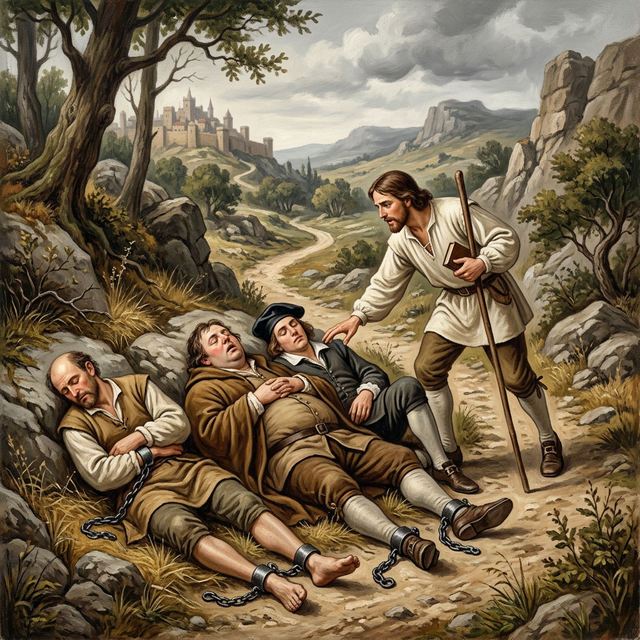
Christian is running down the hill, rejoicing, when he sees three men sleeping by the side of the road. Their names are Simple, Sloth, and Presumption. They're chained to the ground. But they don't care.
Christian wakes them up: "Get up! You're in danger!" Simple says: "I see no danger." Sloth mumbles: "Yet a little more sleep." Presumption declares: "Every tub must stand upon its own bottom." Three different kinds of spiritual apathy. Too naive to see the danger. Too lazy to care. Too proud to accept help. Christian can't force them to wake up. He warns them — and he moves on. Don't be Simple, Sloth, or Presumption. Wake up. Run.
📖 Key Scriptures
🙏 Pray
"Lord, I confess the ways I've been Simple — blind to danger. The ways I've been Sloth — too lazy to pursue You. The ways I've been Presumption — too proud to think I need saving. Wake me up."
🪞 Reflect
Which of the three do you most resemble right now? Simple (naive), Sloth (lazy), or Presumption (self-reliant)? Be honest. Where has spiritual apathy crept in?
⚡ Act
Set one spiritual alarm clock this week — a daily reminder to pray, read, or reach out. Break the pattern of spiritual sleep. Ask a brother to check on you (Romans 13:11).
Hill Difficulty
The way is upward, and the climbing is steep.
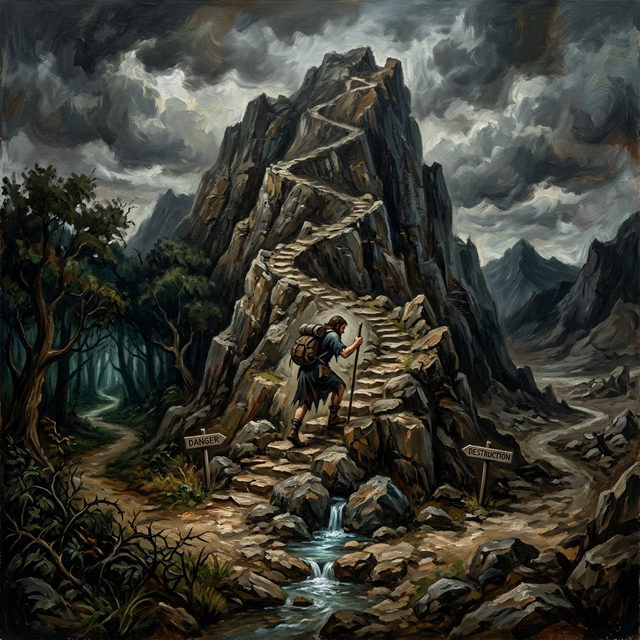
Christian comes to a hill called Difficulty. It's steep. It's exhausting. And there are two easier paths around it: Danger and Destruction. Most people take the easy paths. Christian takes the hard one. Because the Christian life isn't easy. Following Jesus costs something.
It's uphill. It's difficult. It requires endurance. But it's the right path. Christian climbs. He's tired. He stops to rest. He refreshes himself with water from a spring. And then he keeps climbing. That's discipleship. You don't coast into the Celestial City. You climb.
📖 Key Scriptures
🙏 Pray
"Father, I confess the times I've looked for shortcuts instead of climbing the hard path You set before me. I renounce the lie that ease equals blessing. Give me endurance for the hill."
🪞 Reflect
Where are you tempted to take the easier path right now — in your marriage, your purity, your finances, your calling? What's the "Hill Difficulty" God is asking you to climb?
⚡ Act
Name the hard thing God is calling you to do this week. Don't take the shortcut. Climb. Rest when you need to, but keep going (Hebrews 12:1-2).
The Lions
The lions were chained, but he saw not the chains.
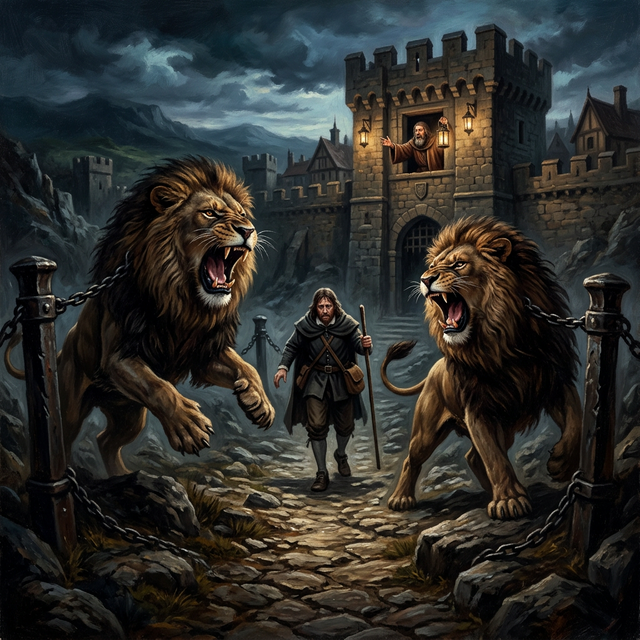
At the top of Hill Difficulty, Christian sees two lions guarding the path. He freezes. He's terrified. And he almost turns back. But a man named Watchful calls out: "Don't be afraid! The lions are chained! Keep walking in the middle of the path and they can't hurt you!"
Christian walks forward — shaking, but walking. And the lions can't touch him. This is fear. Fear of what might happen. Fear of the enemy. But the enemy is on a leash. Satan can roar. He can intimidate. But he can't devour you if you're walking in the middle of God's will. The lions are chained. Keep walking.
📖 Key Scriptures
🙏 Pray
"Lord, I confess I've let fear stop me from walking the path You laid out. I renounce the spirit of fear. The lions are chained. I walk forward in the authority of Christ."
🪞 Reflect
What "lions" have been keeping you from moving forward? What fear has felt too big to face? Can you see the chains — or only the teeth?
⚡ Act
Walk toward the thing you've been afraid of this week. Stay on the path. Say out loud: "God has not given me a spirit of fear, but of power, love, and self-control" (2 Timothy 1:7).
Palace Beautiful
Fellowship, rest, and preparation — the church as it was meant to be.

Christian arrives at Palace Beautiful. He's welcomed by Discretion, Prudence, Piety, and Charity. They wash his feet. They feed him. They teach him. This is the church — a place of rest, fellowship, teaching, and preparation.
Christian spends several days there. He's refreshed, equipped, loved. And then they send him back out — stronger than before. The Christian life isn't meant to be lived alone. You need the church. Palace Beautiful isn't the destination. It's a rest stop. But it's a necessary one.
📖 Key Scriptures
🙏 Pray
"Father, I confess I've either avoided community or treated it as optional. I renounce the isolation that pride calls 'independence.' I need the body of Christ."
🪞 Reflect
Do you have a "Palace Beautiful" — a community that feeds, teaches, and equips you? Or have you been walking alone?
⚡ Act
Commit to one act of fellowship this week — a small group, a coffee with a brother. Break isolation (Ecclesiastes 4:9-10).
Arming for Battle
The full armor of God — you can't walk the Christian life unarmed.
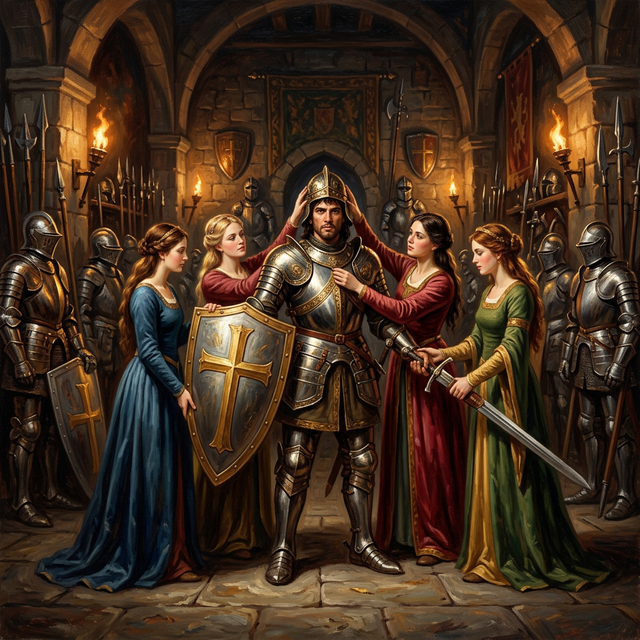
Before Christian leaves Palace Beautiful, they take him to the armory. Sword. Shield. Helmet. Breastplate. This is Ephesians 6 — the armor of God. You can't walk the Christian life unarmed.
Truth. Righteousness. The gospel. Faith. Salvation. The Word. Christian puts it on and steps back onto the path. Immediately, he enters the Valley of Humiliation. The battle is coming.
📖 Key Scriptures
🙏 Pray
"Lord, I confess I've walked into battles unarmed — relying on my own strength. I put on the full armor of God today."
🪞 Reflect
Which piece of armor are you missing? Belt of truth? Shield of faith? Sword of the Spirit?
⚡ Act
Read Ephesians 6:10-18 and pray through each piece of armor by name every morning for a week (Romans 13:12).
Valley of Humiliation — Apollyon
Spiritual warfare — the battle that humility wins.
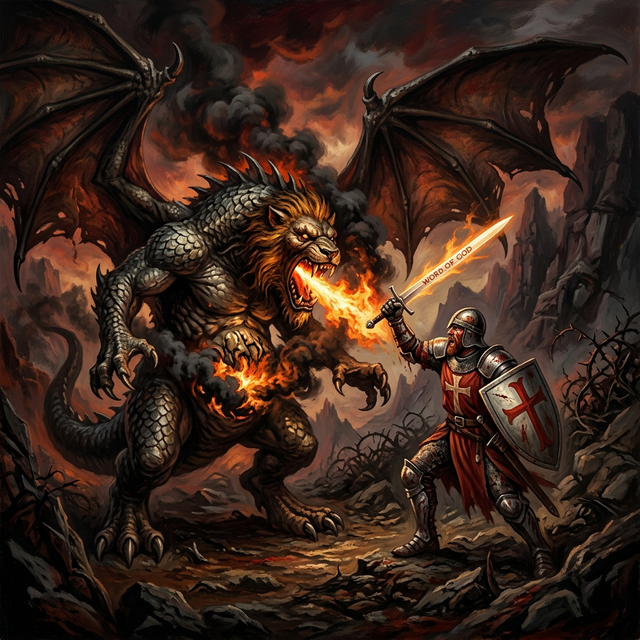
Christian descends into the Valley of Humiliation. And it's here he meets Apollyon — a hideous demon. Scales like a fish, wings like a dragon, feet like a bear, and out of his belly came fire and smoke, his mouth as the mouth of a lion. A four-creature hybrid echoing the beast of Revelation 13:2.
Apollyon confronts Christian: "You used to serve me. You're mine." Christian refuses. Apollyon attacks. The battle lasts for hours. Christian is wounded but fights back with the Sword — the Word of God. And finally, Apollyon retreats. Pride must be confronted. Humility is warfare.
📖 Key Scriptures
🙏 Pray
"Father, I confess the pride that has given the enemy footholds. I renounce every agreement with Apollyon — every lie that says I belong to darkness. I am Yours."
🪞 Reflect
Where is the enemy accusing you right now? What old identity is he trying to drag you back to? Where has pride made you vulnerable?
⚡ Act
Memorize one verse that declares your identity in Christ. When accusation comes, speak it out loud (Revelation 12:11).
Valley of the Shadow of Death
The darkest part of the journey — but God is with you.
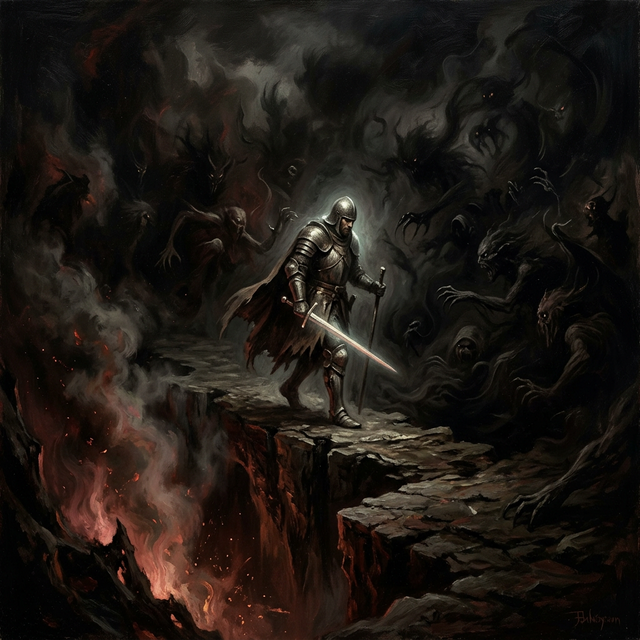
Christian enters the Valley of the Shadow of Death. It's dark. Terrifying. Fire and smoke rise from a pit on one side. A deep ditch on the other. Demons whisper in his ear. Voices mock him.
But Christian keeps walking. He can't see the path. He can't see the end. He can only see one step at a time. And that's enough. Because even in the valley of the shadow of death, God is with him. If you're in the valley right now — don't stop. The valley has an end.
📖 Key Scriptures
🙏 Pray
"Lord, I can't see the path clearly. I confess my fear. I renounce the lie that You've abandoned me. Walk with me through this valley."
🪞 Reflect
Are you in a valley season? Depression, grief, spiritual darkness? Have you been trying to see the whole path instead of trusting one step?
⚡ Act
Read Psalm 23 tonight before bed. Pray it as your own words. Tell God exactly what you're afraid of.
Faithful Joins the Journey
Two are better than one — Christian community for the road ahead.
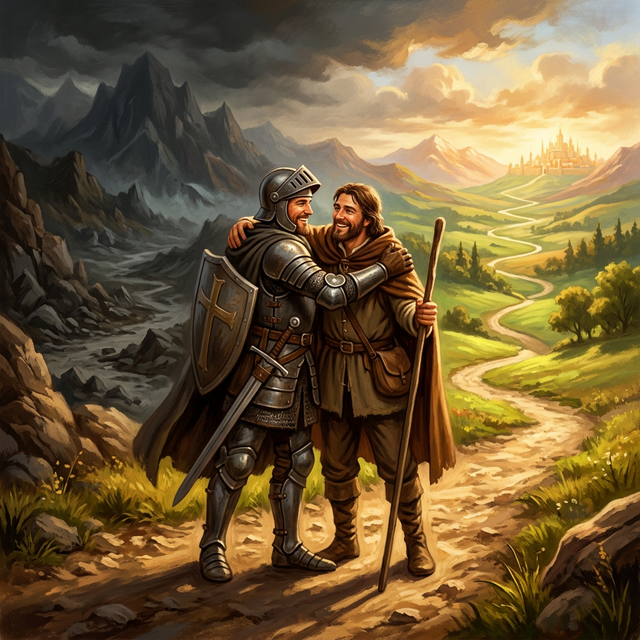
On the other side of the valley, Christian meets an old friend: Faithful. Another pilgrim who left the City of Destruction after Christian. Now they're walking together. This is Christian community.
You don't walk the journey alone. God gives you brothers and sisters — people on the same path, facing the same trials, pursuing the same King. Christian and Faithful encourage each other. They share their stories. They strengthen each other. And together, they walk toward Vanity Fair.
📖 Key Scriptures
🙏 Pray
"Lord, thank You for the brothers You've placed on this journey with me. I confess the times I've tried to walk alone. Send me a Faithful."
🪞 Reflect
Who is your Faithful? Do you have someone who knows the real you — the struggles, the victories, the fears? If not, what's stopping you?
⚡ Act
Reach out to one brother this week. Be honest about where you are. Ask him where he is. Walk together (Proverbs 27:17).
Vanity Fair
The world's marketplace — everything is for sale except the truth.
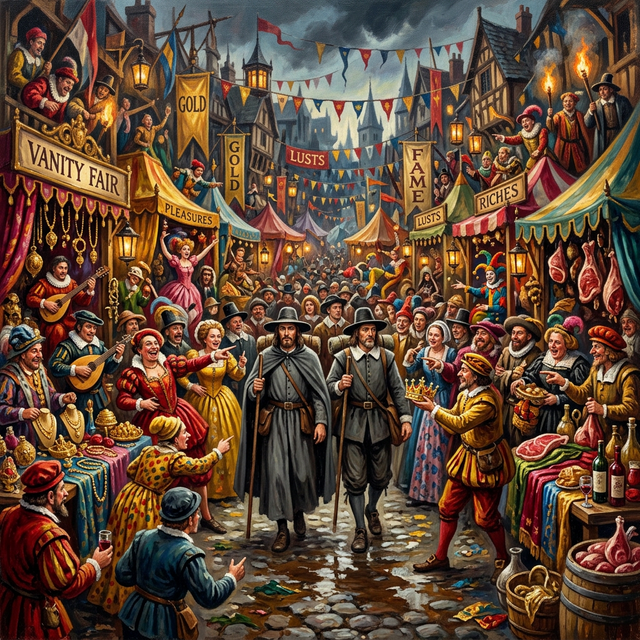
Christian and Faithful enter Vanity Fair — a marketplace where everything is for sale: money, pleasure, power, religion, souls. Everyone who walks the King's Highway has to pass through. You can't avoid it. This is the world.
The merchants call out: "What will you buy?" And they answer: "We buy the truth." The crowd mocks them. They're arrested. Put on trial. Because the world can't tolerate people who won't buy what it's selling.
📖 Key Scriptures
🙏 Pray
"Father, I confess the things the world has sold me that I never needed. I renounce the idol of comfort, approval, and status. I buy the truth."
🪞 Reflect
What is "Vanity Fair" selling you right now? Success? Comfort? Approval? Where have you been browsing instead of walking?
⚡ Act
Fast from one thing the world is selling you this week — social media, shopping, entertainment. Replace it with time in the Word (Colossians 3:2).
Faithful's Martyrdom
Be faithful unto death — and receive the crown of life.
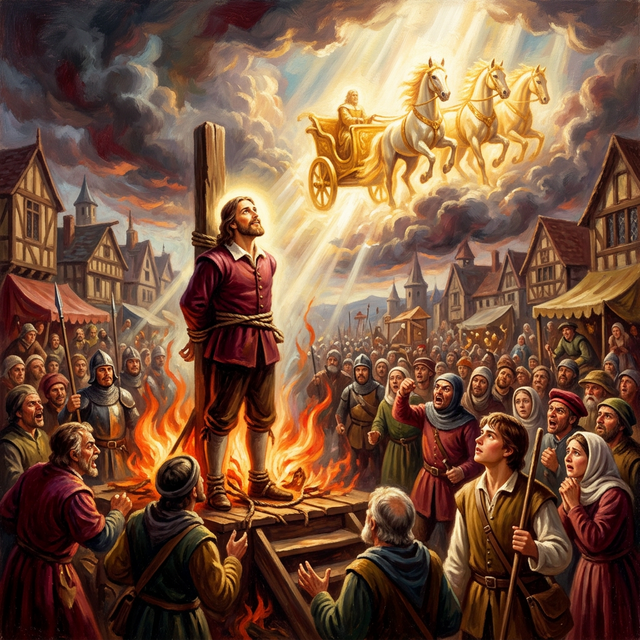
The trial is a sham. The verdict is predetermined. Faithful is condemned to death. They beat him. They burn him. They kill him. But the moment he dies, a chariot appears and carries him straight to the Celestial City. Faithful didn't lose. He won.
He was faithful unto death — and he received the crown of life. Christian escapes. And Faithful's death wasn't in vain. A man named Hopeful sees Faithful's courage — and he believes. Hopeful joins Christian on the journey. Sometimes faithfulness costs everything. But it's never wasted.
📖 Key Scriptures
🙏 Pray
"Jesus, I confess I've feared the cost of faithfulness more than I've trusted the reward. I renounce the lie that obedience is wasted. Make me faithful unto death."
🪞 Reflect
Where has your faithfulness cost you? A relationship? A career? Reputation? Do you trust that God sees and rewards what the world despises?
⚡ Act
Read the stories of the martyrs (Hebrews 11:35-40). Let their courage strengthen yours. Then do the faithful thing you've been avoiding.
Hopeful Joins Christian
One dies a martyr; another is converted — your faithfulness bears fruit.
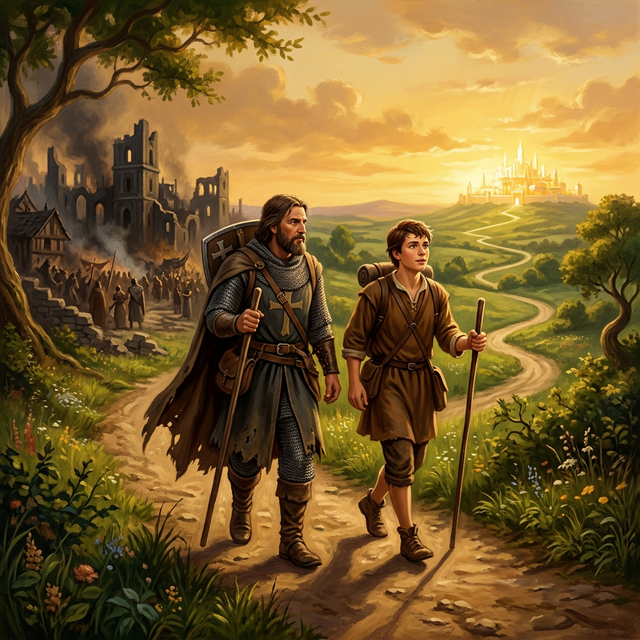
Christian and Hopeful leave Vanity Fair together. Faithful is gone — but his legacy lives on. This is the power of faithful witness. Your obedience, your endurance, your stand for truth — it doesn't just impact you. It impacts the next generation.
Faithful's death led to Hopeful's conversion. And Hopeful will walk with Christian all the way to the Celestial City. One plants. One waters. God gives the growth. Who's watching your life? Who's being shaped by your faithfulness?
📖 Key Scriptures
🙏 Pray
"Father, let my life produce fruit that outlasts me. I confess I've lived for the moment instead of the legacy. Use my faithfulness to convert the next Hopeful."
🪞 Reflect
Who is watching your life? What would they say about your faithfulness? Is there someone younger or newer in faith you should be investing in?
⚡ Act
Identify one person you can disciple or mentor. Reach out this week. Pour into them what someone poured into you (1 Corinthians 4:15-16).
Mr. By-Ends
The man who follows Christ only when it's convenient.
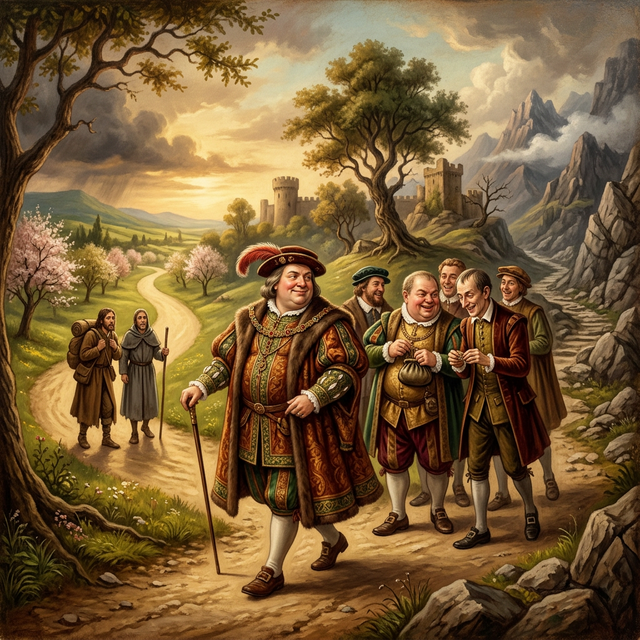
Christian and Hopeful meet Mr. By-Ends — a man from the town of Fair-Speech. He claims to be a pilgrim. But his religion is purely strategic. He follows God when it's profitable. He abandons God when it costs something.
"I am a gentleman of good quality. I will never strive against wind and rain. Religion is best when she walks in golden slippers." By-Ends represents compromised faith. Christianity as a career move. God as a strategy. Don't be By-Ends.
📖 Key Scriptures
🙏 Pray
"Lord, I confess the times I've treated You like a business partner — following You for what I could get. I repent. I follow You for who You are, not what You give."
🪞 Reflect
Is your faith convenient or costly? Would you follow Jesus if He never blessed you materially? Where does "By-Ends" live in your heart?
⚡ Act
Identify one area of your faith that's been "convenient." Step into the costly part this week. Choose obedience over comfort (Luke 14:33).
Demas' Silver Mine
The temptation of wealth — the trap that looks like treasure.
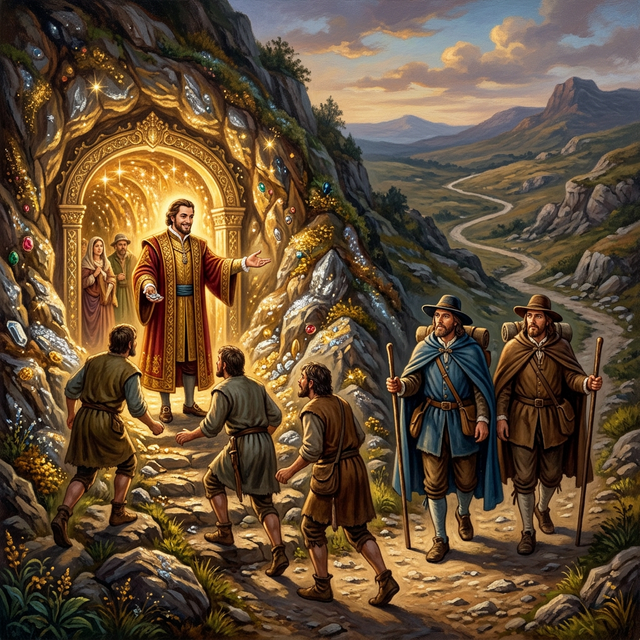
A man named Demas stands near the path, calling out: "Come! Just a little off the path. There's a silver mine here. You can be rich!" By-Ends and his friends go. They never come back. Christian and Hopeful remember: Demas is mentioned in 2 Timothy 4:10 — he deserted Paul "having loved this present world."
The silver mine isn't a sin that looks ugly. It's a temptation that looks like treasure. Wealth. Success. Security. It's just a little off the path. And that's what makes it deadly.
📖 Key Scriptures
🙏 Pray
"Father, I confess the pull of wealth and security. I renounce the love of money. My treasure is in heaven. Keep me on the path."
🪞 Reflect
Where is "Demas" calling you off the path? What financial temptation makes you drift? Is there something you prioritize over faithfulness?
⚡ Act
Give something away this week — generously, sacrificially. Break the power of greed with generosity (Matthew 6:21).
Doubting Castle — Giant Despair
When you step off the path, doubt and despair imprison you.
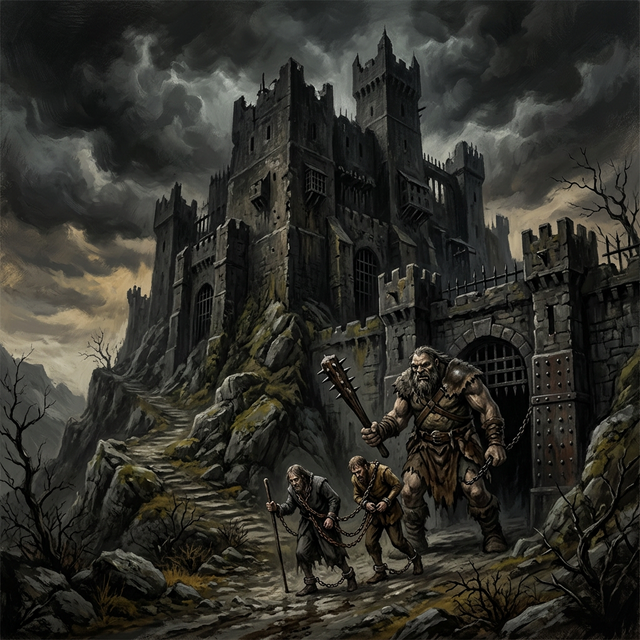
Christian and Hopeful leave the King's Highway for a more comfortable path. And they end up in Doubting Castle — the dungeon of Giant Despair. Giant Despair beats them. Starves them. Tells them to kill themselves. "You'll never get out. It's hopeless."
This is what happens when you step off the path. One compromise leads to captivity. And the voice of despair is relentless. It tells you there's no way back. It tells you God has given up on you. But it's lying. There's always a way out. And Christian finds it.
📖 Key Scriptures
🙏 Pray
"Lord, I confess the compromises that led me off the path. I renounce the voice of despair. I am not abandoned. You have not given up on me."
🪞 Reflect
What compromise led you into "Doubting Castle"? Is Giant Despair whispering that there's no way back? What lie has he told you about God?
⚡ Act
Name the lie despair has told you. Write the truth next to it using Scripture. Speak the truth out loud three times (John 8:32).
The Key Called Promise
"What a fool I have been! I have a key in my bosom called Promise."
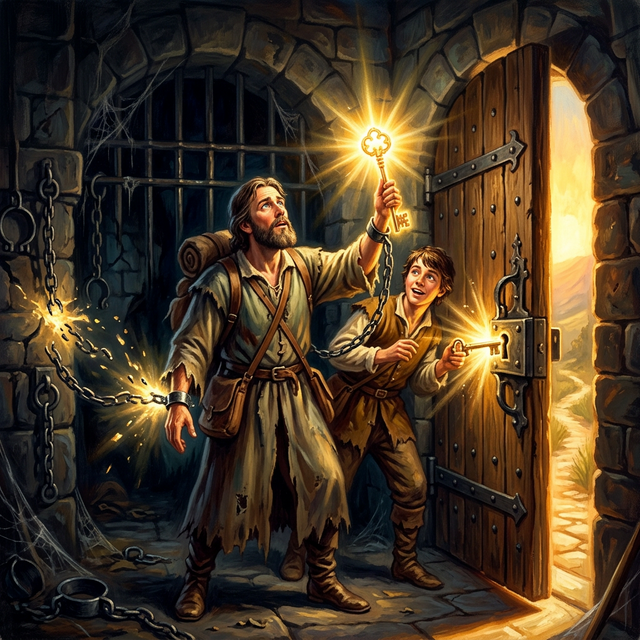
In the middle of the night, Christian remembers: "What a fool am I, thus to lie in a stinking dungeon, when I may as well walk at liberty! I have a key in my bosom called Promise, that will, I am persuaded, open any lock in Doubting Castle."
He pulls out the key. He opens every door. Every gate. Every lock. And they escape. The promises of God are the key to every prison. You don't have to stay in Doubting Castle. The promises of God will open every lock the enemy has put on your life. Use the key.
📖 Key Scriptures
🙏 Pray
"Father, I confess I forgot the promises. I've been sitting in a prison that was already unlocked. I take the key of Promise and I walk out today."
🪞 Reflect
What promise of God have you forgotten? What door have you been staring at that His promises could open? Have you been enduring what God already defeated?
⚡ Act
Write down three promises of God that apply to your current situation. Memorize one this week. Use the key (Romans 4:20-21).
The Delectable Mountains
A view of the Celestial City — hope renewed through the Shepherds.
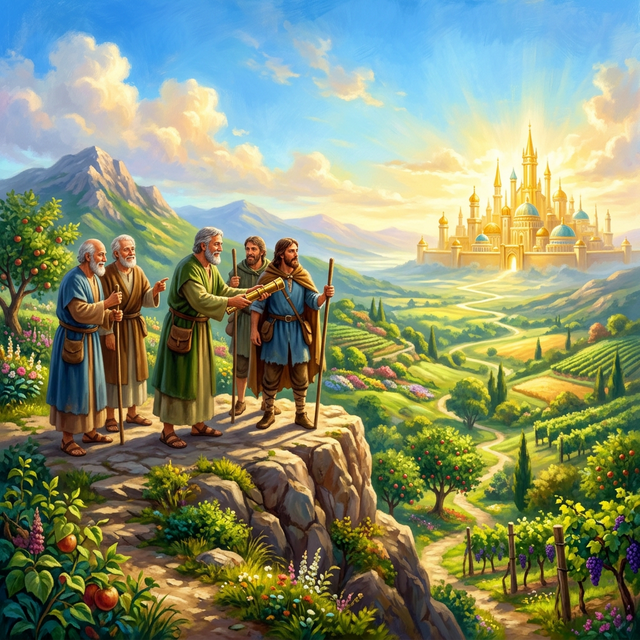
Christian and Hopeful arrive at the Delectable Mountains — Immanuel's Land. They meet four Shepherds: Knowledge, Experience, Watchful, and Sincere. The Shepherds show them wonders: a view of the Celestial City through a telescope. It's real. It's close. It's worth everything.
But they also show warnings — the byway to hell, the man in the cage, the consequences of those who fell away. Rest and vision. Warning and hope. The Christian life needs both. You need brothers who show you the glory ahead — and warn you about the dangers behind.
📖 Key Scriptures
🙏 Pray
"Father, give me a glimpse of the Celestial City. Renew my vision. Let me see what's ahead, not just what's behind. I need the mountain view."
🪞 Reflect
When was the last time you had a "mountain view" — a moment of clarity about eternal things? What would it take to get back to that vantage point?
⚡ Act
Schedule a spiritual retreat — even a half-day. Get to the mountain. Worship, pray, and ask God to show you what He sees (Habakkuk 2:1-3).
The Flatterer
He speaks smooth words — and leads you into a net.
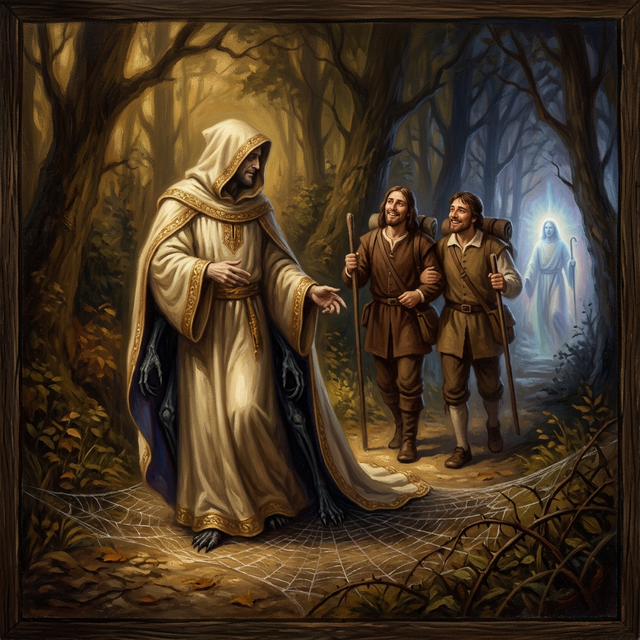
Christian and Hopeful meet a man in a white robe who asks, "Where are you going?" They tell him. He says, "Follow me. I know the way." He speaks politely. He seems righteous. But he leads them into a net. They're trapped. A Shining One comes and frees them — but not without discipline.
The Flatterer is false teaching that looks like truth. Smooth words that lead you off course. Not all guides are trustworthy. Test every voice against Scripture. If it doesn't match the map, don't follow it — no matter how holy it sounds.
📖 Key Scriptures
🙏 Pray
"Lord, give me discernment. I confess I've followed voices that sounded good but weren't from You. I test every spirit against Your Word."
🪞 Reflect
Who or what has been flattering you lately? Teaching that makes you feel good but doesn't match Scripture? Leaders who tell you what you want to hear?
⚡ Act
Test one thing you've been taught recently against Scripture. If it doesn't hold up, reject it — gently but firmly (1 John 4:1).
The Atheist
The man who searched for the Celestial City — and gave up.
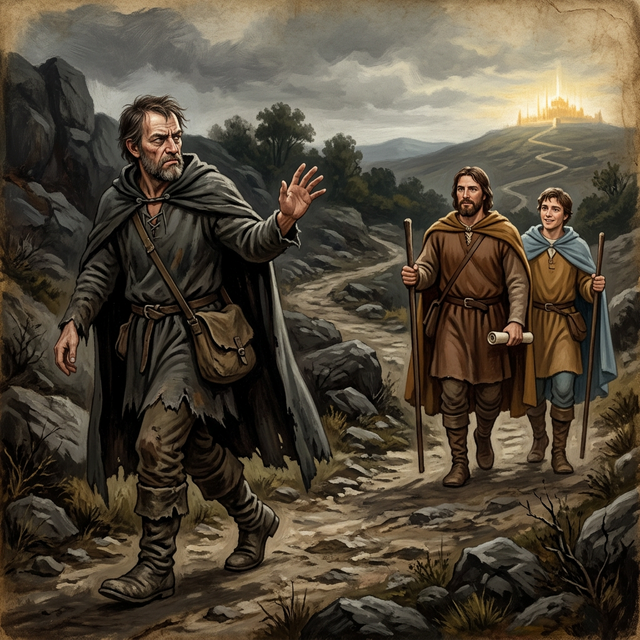
Near the end of the journey, Christian and Hopeful meet a man called Atheist walking the opposite direction — laughing. "There is no Celestial City. I've been searching for twenty years and haven't found it."
He didn't lose his faith. He never had it. He was walking, but he was never walking by faith. He was walking by sight. And when he couldn't see the City, he quit. Doubt can hit you close to the finish line. But sight isn't faith. And quitting isn't wisdom. Keep walking.
📖 Key Scriptures
🙏 Pray
"Lord, I refuse to walk by sight. I confess the doubts that tempt me near the finish line. I will not quit. The City is real."
🪞 Reflect
Have you been tempted to quit? Has someone's cynicism shaken your faith? What evidence of God's faithfulness have you seen that proves the City is real?
⚡ Act
Write down five times God has proven Himself faithful in your life. When doubt comes, read your own testimony (Psalm 77:11-12).
Beulah Land
The land of rest — where the air smells like heaven and the sun never sets.

Christian and Hopeful finally reach Beulah Land — a beautiful country at the border of heaven. The air is sweet. The sun shines constantly. The birds sing. There's no darkness here. They can see the gates of the Celestial City from where they stand.
This is what the Christian life becomes as you near the end: peace. Joy. Assurance. Rest. Not because the trials are over, but because the destination is in sight and you know who's waiting for you on the other side.
📖 Key Scriptures
🙏 Pray
"Father, let me taste Beulah Land today. Give me the peace that surpasses understanding. Let me see the gates of home."
🪞 Reflect
Have you experienced moments of Beulah Land — seasons of supernatural peace and nearness to God? What brought you there? How can you return?
⚡ Act
Spend 15 minutes in silence before God today. No requests. No words. Just presence. Let the sweetness of Beulah settle in (Psalm 46:10).
The River of Death
The last enemy — the crossing every pilgrim must make.
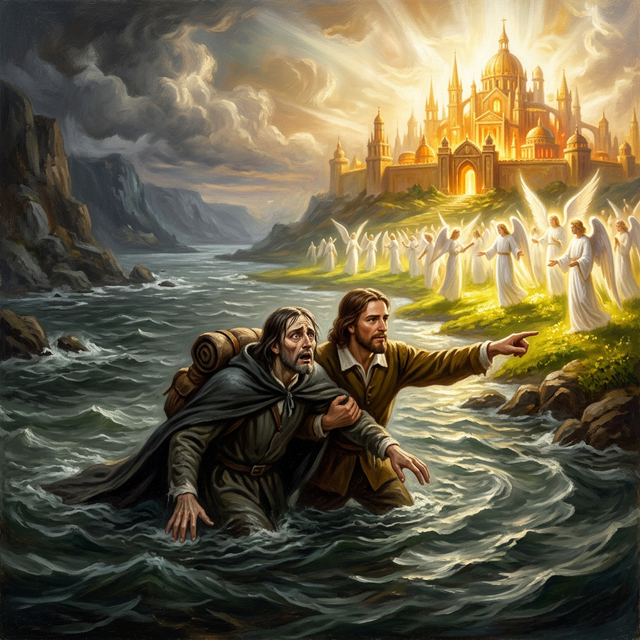
Between Beulah Land and the Celestial City flows a river — deep and dark. There's no bridge. Every pilgrim must cross it. This is death. Christian is terrified. The water rises. He starts to sink. All his sins, all his fears, all his doubts come flooding back. "I sink in deep waters; the billows go over my head."
But Hopeful holds him up: "Be of good cheer, my brother. I feel the bottom, and it is good!" And they cross. The river gets shallower as they approach the other side. Death is real. But it's not the end. It's a crossing. And on the other side — glory.
📖 Key Scriptures
🙏 Pray
"Lord, I confess my fear of death and the unknown. I renounce the lie that death has the final word. You conquered the grave. I will cross the river."
🪞 Reflect
Are you afraid of the river? Of death? Of the unknown? What would it look like to face it with Hopeful by your side and Jesus on the other shore?
⚡ Act
Read 1 Corinthians 15 this week. Let the resurrection truth settle deep. Tell someone: "Death has no sting" (Psalm 116:15).
The Celestial City
Home. Glory. The King. Face to face. Forever.
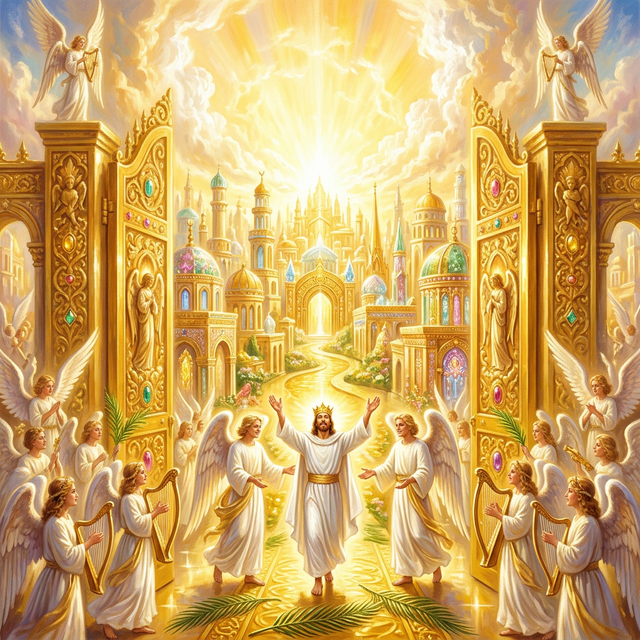
Christian and Hopeful emerge from the river. And they're met by angels. A company of heavenly hosts escort them up the hill toward the Celestial City. The gates are open. The trumpets sound. They're welcomed inside.
They see the King face to face. They're given crowns. They're given robes. They're given rest — forever. No more burden. No more Slough. No more Apollyon. No more valley. No more Vanity Fair. No more death. Only glory. Only Jesus. Only home. This is what it was all for.
📖 Key Scriptures
🙏 Pray
"Jesus, I want to see You face to face. I live for that day. I run for that finish line. Welcome me home."
🪞 Reflect
Does the Celestial City feel real to you? Does it drive your daily decisions? What would change if you truly lived with eternity in view?
⚡ Act
Live today as if the Celestial City is real — because it is. Make one decision this week with eternity in mind (Colossians 3:1-2).