Tears in a Bottle
Psalm 56:8 — The verse that changed how we understand God's heart toward our pain.

"You have collected all my tears in your bottle. You have recorded each one in your book." This single verse shatters every lie that says God is distant, detached, or indifferent to your suffering. David — hunted, betrayed, surrounded by enemies — looked up and said: You see me. You remember me. You keep track. Not a single tear falls from your face that God doesn't notice, collect, and record. He doesn't watch your pain from a distance. He gets close enough to catch it on His finger.
📖 Key Scriptures
🙏 Pray
"Father, I confess I have believed the lie that my tears don't matter — that You are too big, too busy, or too distant to notice my pain. I renounce the agreement I've made with the spirit of abandonment that says no one sees me. I declare: You collect my tears. You record each one. You are close to the brokenhearted (Psalm 34:18)."
🪞 Reflect
When was the last time you cried and felt completely alone? Have you ever believed the lie that God doesn't care about your tears? What would change if you truly believed He was catching every one?
⚡ Act
Write Psalm 56:8 on a card and put it where you'll see it daily. The next time tears come, don't hide them. Pray: "You see this one, Lord." Let Him be close (Psalm 34:18).
The Ancient Practice — Lachrymatories
In the ancient world, tears were too precious to waste.
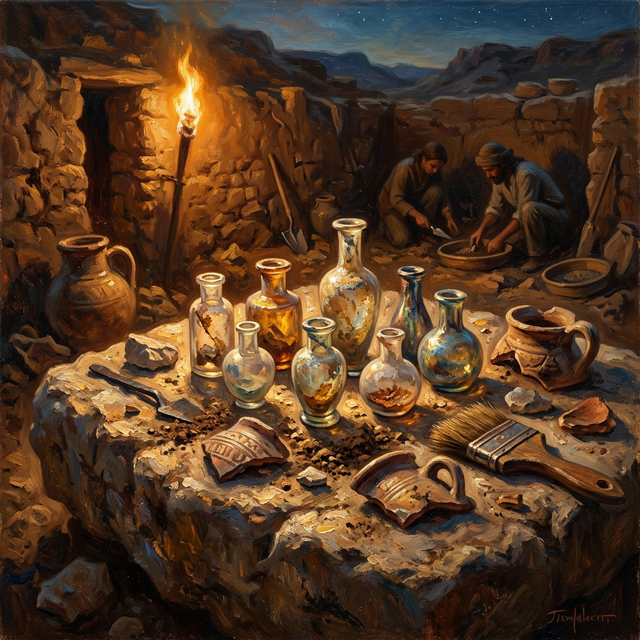
In ancient Israel and Rome, mourners collected their tears in small glass bottles called lachrymatories. These fragile vessels were kept as memorials of grief — physical evidence that someone was deeply loved and deeply mourned. Archaeologists have excavated actual tear bottles from ancient Israel, confirming this wasn't myth but practice. When David wrote Psalm 56:8, he was referencing a real cultural tradition — but applying it to God Himself. The mourner's bottle became a metaphor for divine intimacy: God doesn't just watch you cry. He bends down and collects what falls.
📖 Key Scriptures
🙏 Pray
"Lord, I confess I've treated my pain as something to hide, suppress, or medicate away. I renounce the lie that says tears are weakness. I break agreement with the cultural spirit that says 'be strong' when You say 'come to Me.' I receive the truth that my tears are precious enough for You to collect (Isaiah 25:8)."
🪞 Reflect
Have you ever been told — by culture, family, or your own inner voice — that tears are weakness? Where did you learn to hide your grief? What would it look like to bring your tears out of hiding?
⚡ Act
Identify one grief you've been suppressing. Name it before God today. Don't analyze it — just let it surface. Say: "This tear matters to You." Journal what comes (Psalm 56:8).
David's Desperation — The Context of Psalm 56
David wasn't writing theology from a library — he was crying out from a cave.
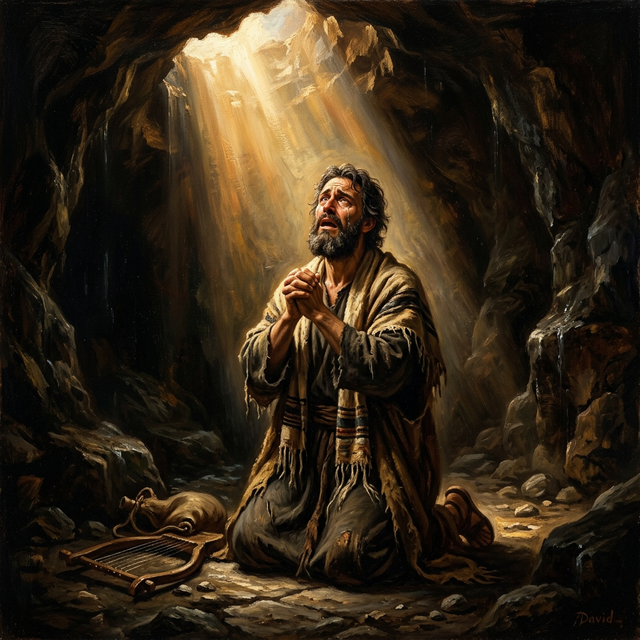
When David wrote this psalm, he was seized by Philistines in Gath — the city of Goliath — pursued by Saul, with enemies closing in on all sides. "Be gracious to me, O God, for man tramples on me; all day long an attacker oppresses me" (Psalm 56:1). This wasn't a comfortable Sunday morning meditation. It was a desperate cry from a man surrounded by death. Yet even in that cave — hunted, exhausted, terrified — David declared something astonishing: "This I know, that God is for me" (Psalm 56:9). Your darkest moment is the birthplace of your deepest theology.
📖 Key Scriptures
🙏 Pray
"Father, I confess I have waited for comfort before I worshiped. I have demanded answers before I trusted. I renounce the lie that says I need to understand my suffering before I can praise You. I declare with David: This I know — God is for me. Even in the cave. Even surrounded (Romans 8:31)."
🪞 Reflect
What is your cave right now? Are you waiting for relief before you trust? Has your theology been born in comfort or in crisis — and which kind actually holds?
⚡ Act
Read all of Psalm 56 aloud today — in your cave, wherever that is. Underline verse 9. Say it out loud three times: "This I know, that God is for me." Mean it or not — say it (Romans 8:31).
What the Bottle Means — God Remembers
Two places God stores your tears: His bottle and His book.

The idea behind "tears in a bottle" is remembrance. God doesn't have a literal bottle — but He remembers every single tear. "You keep track of all my sorrows. You have collected all my tears in your bottle. You have recorded each one in your book" (Psalm 56:8). Notice the two places: His bottle — an intimate, personal collection, like a treasure kept close. And His book — a permanent, eternal record that can never be erased. God has to get pretty close to you to collect your tears on His finger. This is not a distant God. This is a God who kneels beside you.
📖 Key Scriptures
🙏 Pray
"Father, I confess I have believed my pain was invisible — that nobody notices, nobody remembers, nobody cares. I renounce the lie that says I am forgotten. I break agreement with the orphan spirit that says I must carry this alone. I declare: You keep track. You collect. You record. I am known and remembered (Psalm 139:17-18)."
🪞 Reflect
Do you truly believe God remembers your pain — or do you live as if He's moved on? What tears have you cried that you assumed no one noticed? What changes if every single one is recorded?
⚡ Act
Write down three moments of grief or pain you've carried silently. After each one write: "Recorded in His book." Then pray Malachi 3:16 — God keeps a scroll of remembrance for those who fear Him. You are in that scroll.
The Tears God Sees
Every tear has meaning to God — from grief to joy, from stress to surrender.

God doesn't only collect tears of tragedy. He sees all of them: Tears of grief — loss, death, betrayal. Tears of stress — overwhelm, burnout, anxiety. Tears of repentance — conviction, brokenness, surrender. Tears of joy — worship, wonder, gratitude. Tears of suffering for obedience — persecution, rejection for Christ's sake. From the tears shed when you're drowning in deadlines to the waterfall that comes with the passing of a loved one — God remembers them all. Not one is wasted. Not one is meaningless. Every tear is a prayer that God hears even when you can't form words.
📖 Key Scriptures
🙏 Pray
"Lord, I confess I've ranked my tears — some worthy, some weak, some embarrassing. I renounce the lie that says only big grief deserves Your attention. I break agreement with the pride that says I should be 'past this by now.' I receive the truth: the Spirit intercedes through my wordless groans — every tear is a prayer You hear (Romans 8:26)."
🪞 Reflect
Which kind of tears do you try to suppress — grief? stress? repentance? joy? Have you ever felt guilty for crying over something 'small'? What would change if you knew God treasures that tear too?
⚡ Act
Identify what kind of tears you've been crying this season. Name them without judgment. Then read Psalm 126:5-6 aloud: "Those who sow with tears will reap with songs of joy." Your tears are seeds, not waste.
Jesus Wept
The shortest verse in Scripture — and the deepest.

"Jesus wept" (John 11:35). Two words that shattered every image of a stoic, distant deity. Jesus is standing at Lazarus's tomb, watching Mary and Martha grieve. Here's the mystery: Jesus knew He was about to raise Lazarus from the dead — yet He still wept. Why did He cry? Not because He lacked power. But because He felt their pain — empathy so deep it moved the Son of God to tears. Jesus entered into their sorrow before He ended it. He didn't rush to fix. He wept first. Application: Jesus doesn't rush to fix you before He weeps with you.
📖 Key Scriptures
🙏 Pray
"Jesus, I confess I have treated You like a problem-solver instead of a weeping companion. I have demanded resurrection before allowing You to sit with me in the grief. I renounce the lie that says if You really cared, You'd fix it faster. I receive the truth: You weep with those who weep. You are deeply moved. You are not distant (Hebrews 4:15)."
🪞 Reflect
Have you ever been angry at God for not acting fast enough? What would it mean to let Him weep with you before He heals you? Can you sit with Him in the grief instead of demanding the miracle?
⚡ Act
Sit in silence for 5 minutes today. Don't pray for solutions. Just let Jesus sit with you. Read John 11:33-35 slowly. Picture Him weeping beside you right now. If tears come — let them (Hebrews 4:15).
The Compassion of Christ
If you want to know what someone values, find out what they cry over.

At Nain, Jesus sees a widow weeping over her dead son: "He had compassion on her" (Luke 7:13). Over Jerusalem, Jesus weeps audibly and convulsively: "How often I would have gathered your children together as a hen gathers her brood under her wings, but you were not willing" (Matthew 23:37). What makes Jesus cry? Death and loss. Unbelief and hardness of heart. The suffering of those He loves. Jesus's tears reveal what He treasures — and He treasures you. If you want to know the heart of God, find out what makes Him weep. You're looking at it.
📖 Key Scriptures
🙏 Pray
"Lord Jesus, I confess I have doubted Your compassion. I've wondered if You really feel what I feel. I renounce the lie that says You are cold, clinical, or indifferent. I break agreement with the image of a distant God. I declare: You wept over a city. You had compassion on a widow. Your heart goes out to me — right now (Luke 7:13)."
🪞 Reflect
What makes you cry? What moves you to tears? Now ask: is it possible that what breaks your heart also breaks His? Have you ever considered that your compassion is an echo of His?
⚡ Act
Read Luke 19:41-44 and Matthew 23:37-39. Picture Jesus weeping over your city, your family, your situation. Write one sentence: "Jesus weeps over _____ because _____." Pray that sentence back to Him.
Why God Stores Your Tears
Four reasons God collects what you'd rather wipe away.

To honor your pain — "This is how seriously God takes our grief; how God honors and shares in our loss." Your tears are not futile or wasted. To remember your obedience — suffering for Christ's name is never forgotten (Acts 9:16, Matthew 19:29). To comfort you with His presence — "Unlike people, God will never cast you aside for crying — He takes you up in His arms and holds you close." To promise future joy — "He wept so that one day He would wipe every tear from our eyes in the resurrection." Every tear stored is a promise kept.
📖 Key Scriptures
🙏 Pray
"Father, I confess I've believed my tears were meaningless — that suffering produces nothing, that pain is pointless. I renounce the lie that says my tears are wasted. I break agreement with despair that says nothing will ever change. I receive the comfort of 2 Corinthians 1:3-4 — You comfort me so I can comfort others. My pain has purpose."
🪞 Reflect
Which of the four reasons resonates most with you right now — honor, remembrance, comfort, or future joy? Have you ever used your own pain to comfort someone else? What happened?
⚡ Act
Write down one painful experience and ask God: "What purpose are You making from this pain?" Then reach out to one person who is grieving and say: "I see you. You're not alone." Let your pain become ministry (2 Corinthians 1:3-4).
The Evaporation — When the Bottle Empties
Your tears are temporary. His joy is eternal.

Here's the beautiful metaphor: "There is a small hole in the top of that bottle. Over time, the tears will evaporate. When the bottle is dry and our eyes are clear, we see that God remains. And God redirects our eyes to tomorrow." The promise: one day, the tears stop. "He will wipe every tear from their eyes. There will be no more death or mourning or crying or pain" (Revelation 21:4). From bottle of tears to bottles of wine: He filled a bottle with tears so that one day bottles of wine would overflow in the feast of life atop the mountain of God. Your tears are temporary. His joy is eternal.
📖 Key Scriptures
🙏 Pray
"Father, I confess I've been living as if the tears will never end — as if grief is my permanent home. I renounce the lie of eternal sorrow. I break agreement with hopelessness. I declare: weeping lasts for the night, but joy comes in the morning. You will wipe every tear away. One day, the bottle empties — and the feast begins (Psalm 30:5)."
🪞 Reflect
Can you imagine a day with no tears? Does that feel real or impossible? What would it look like to live with one eye on the bottle and one eye on the feast? What hope are you afraid to hold?
⚡ Act
Read Isaiah 25:6-8 aloud as a promise over your life. Write "The feast is coming" somewhere you'll see it. Then pray Psalm 30:5 over your hardest season — "Rejoicing comes in the morning." Hold it by faith.
Your Tears Are Safe with Him
God doesn't just tolerate your tears — He treasures them.
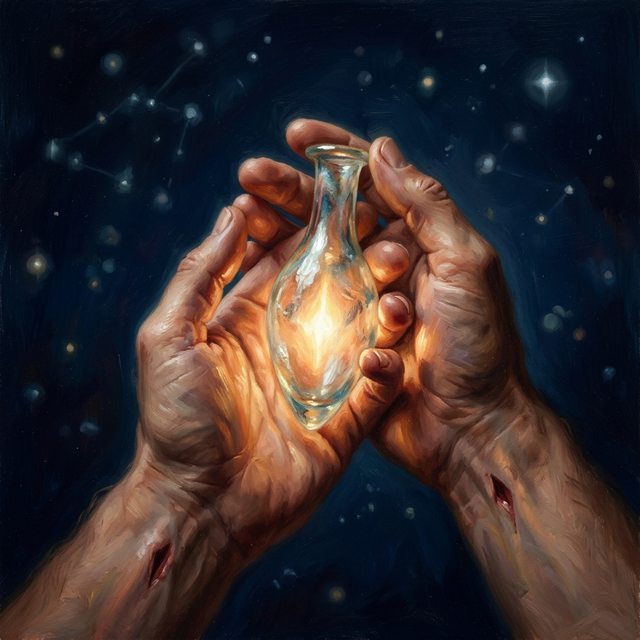
He sees every one — nothing is missed. He stores every one — nothing is forgotten. He records every one — nothing is meaningless. The heart of Jesus revealed: intimately acquainted with your sorrow, close enough to catch your tears on His finger, present enough to weep with you before He heals you, loving enough to remember every tear in His book. "You don't need to hide your tears from God. He's already collecting them. And one day, He'll wipe them all away." Bring your tears to Him today. Let Him be your safe place.
📖 Key Scriptures
🙏 Pray
"Lord Jesus, I confess I have hidden my tears from You — from shame, from pride, from the fear that You wouldn't care. I renounce every agreement with the lie that says I must carry this alone. I receive the truth: You are the Man of Sorrows, acquainted with grief. My tears are safe with You. I bring them all — every one — and I trust Your bottle and Your book (Isaiah 53:3)."
🪞 Reflect
What tears have you been hiding from God? What grief have you refused to grieve? If Jesus were sitting beside you right now with a small glass bottle — what would you give Him?
⚡ Act
Write a letter to Jesus — not a prayer request, a letter. Tell Him about your tears. Be specific. Name them. Then close with: "I trust Your bottle. I trust Your book. One day, You'll wipe them all away." If the grief is deep, reach out to a pastor or counselor (Psalm 56:8).