The Condition: Dwelling
Protection is promised to those who dwell — not those who visit.
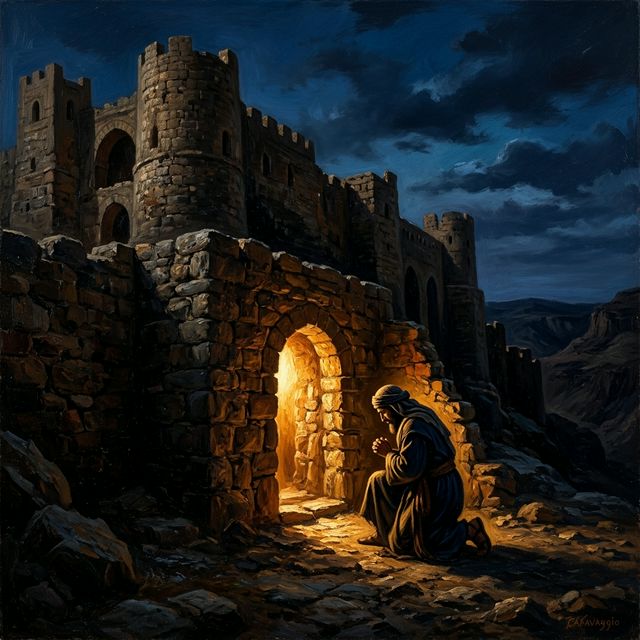
"He who dwells in the shelter of the Most High will abide in the shadow of the Almighty. I will say to the LORD, 'My refuge and my fortress, my God, in whom I trust.'" The Hebrew word for "dwell" is yashab — to sit down, to settle, to remain. This is not a tourist stopping by. This is someone who has moved in. The entire psalm hinges on this first condition: are you living in God's presence, or are you visiting on Sundays?
Protection begins with spoken declaration. Verse 2 is not passive — "I will say to the LORD." You have to open your mouth and claim Him as your refuge. The shelter exists. The fortress stands. But you must walk in and stay.
📖 Key Scriptures
🙏 Pray
"Lord, I confess I have treated Your presence like a hotel — checking in when I need something, checking out when life is easy. I renounce the lie that I can protect myself. I declare You are my refuge and my fortress. I choose to dwell, not visit (Psalm 91:1–2)."
🪞 Reflect
"When was the last time you sat in God's presence with nowhere to go and nothing to ask for? Are you dwelling or just visiting? What's the first thing you run to when fear hits — your phone, your plan, or your God?"
⚡ Act
"Set a 10-minute daily appointment with God this week — no agenda, no requests, just sitting in His presence. Read Psalm 91:1–2 aloud each morning as a spoken declaration. Write it on a card and carry it with you."
Four Names of God
Elyon. Shaddai. Yahweh. Elohim. — Four names, four dimensions of refuge.
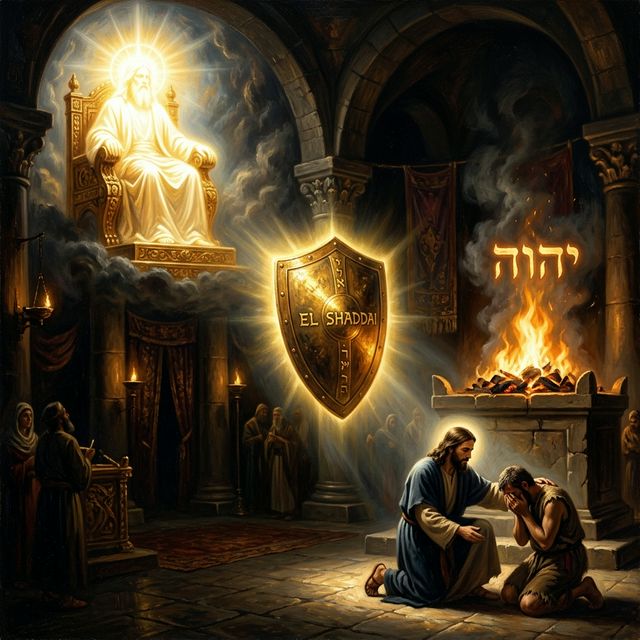
In just two verses, the psalmist invokes four names for God — and each one reveals a different dimension of protection. Most High (Elyon) — supreme sovereign authority over all powers visible and invisible. Almighty (Shaddai) — the all-sufficient one who destroys evil and nourishes His children. LORD (Yahweh) — the covenant-keeping God who binds Himself to His people by name. My God (Elohim) — personal relationship, not distant theology.
This is not a generic "higher power." This is the God who rules, the God who fights, the God who keeps His word, and the God who knows your name. When you say "my God," you are making a covenant claim. Protection is personal.
📖 Key Scriptures
🙏 Pray
"Father, I confess I have reduced You to one dimension — distant judge or cosmic vending machine. I renounce every false image of You that keeps me from knowing Your full character. You are Most High over my chaos, Almighty against my enemies, my covenant LORD, and my personal God. I run to Your name (Proverbs 18:10)."
🪞 Reflect
"Which name of God do you most need right now — the Sovereign, the Almighty, the Covenant-Keeper, or the Personal? Which name do you resist? What false picture of God has shaped your prayer life more than Scripture has?"
⚡ Act
"Study one name of God each day this week: Elyon, Shaddai, Yahweh, Elohim. Write out three verses for each. Pray to God using that specific name. Notice how it changes the way you talk to Him."
Under His Wings
"He will cover you with his feathers, and under his wings you will find refuge."
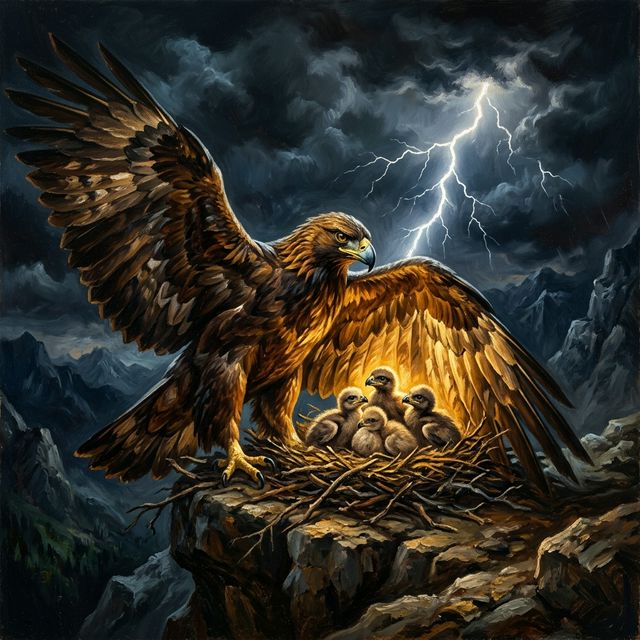
Verse 4 piles up images of protection: feathers, wings, refuge, fortress, shield, buckler. But the central image — a mother bird covering her young — is the most intimate. This isn't a cold military defense. This is fierce, personal, covenant love. The Hebrew word chesed — steadfast love — pulses beneath every metaphor. God doesn't just build walls around you. He covers you with Himself.
"His faithfulness is a shield and buckler." The same God who thunders from heaven and commands angel armies also tucks you under His wing like a mother hen. Jesus used this exact image in Matthew 23:37, weeping over Jerusalem: "How often would I have gathered your children together as a hen gathers her brood under her wings, and you were not willing!" The shelter is always open. The question is whether you'll come.
📖 Key Scriptures
🙏 Pray
"Lord, I confess I have treated vulnerability as weakness and refused to come under Your wings. I have tried to be my own shield. I renounce self-reliance as a substitute for trust. I run to You — not as a stranger but as a child running to a parent. Cover me with Your faithfulness (Psalm 91:4)."
🪞 Reflect
"When was the last time you let yourself be 'small' before God — not performing, not achieving, just sheltered? What are you trying to protect yourself from that God has already offered to cover? Are you willing to come under His wings, or are you still standing in the storm alone?"
⚡ Act
"Tonight before bed, physically kneel and pray Psalm 91:4 out loud. Tell God one specific fear you've been carrying alone. Ask Him to cover it. Journal what you felt. If the burden involves trauma, reach out to a pastor or counselor this week."
The Threats Named
Terror by night. Arrow by day. Pestilence. Destruction. — God names what you fear.
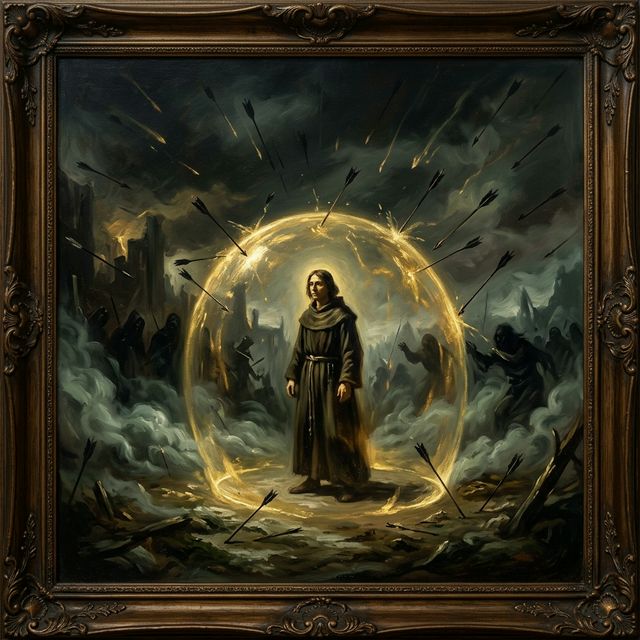
Verses 3–6 don't pretend the world is safe. They catalogue the dangers: the fowler's snare (hidden traps and deception), deadly pestilence (disease), terror by night (fear and spiritual attack), the arrow that flies by day (visible threats), pestilence in darkness (unseen dangers), destruction at noonday (sudden catastrophe). God doesn't minimize your enemies. He names them — then promises to stand between you and them.
"A thousand may fall at your side, ten thousand at your right hand, but it will not come near you" (v. 7). This is not a promise of immunity from all suffering — the rest of Scripture makes that clear. It is a promise that nothing bypasses God's sovereign permission. You are not unprotected. You are not random. You are watched over by the God who counts the hairs on your head.
📖 Key Scriptures
🙏 Pray
"Father, I confess I have let fear name-call me more than Your Word has. I have given terror of the night — anxiety, dread, worst-case scenarios — more authority than Your promises. I renounce agreement with the spirit of fear. You have not given me fear but power, love, and a sound mind (2 Timothy 1:7)."
🪞 Reflect
"What is your 'terror by night' — the fear that surfaces at 2 AM? What is your 'arrow by day' — the visible threat you can see coming? Have you named them before God, or have you been trying to dodge them alone?"
⚡ Act
"Write down your top three fears — the night terror, the daytime arrow, and the hidden pestilence. Next to each one, write the specific promise from Psalm 91 that addresses it. Read them aloud as declarations every morning for one week."
The Bold Promise
"No evil shall be allowed to befall you." — How to read this without distortion.
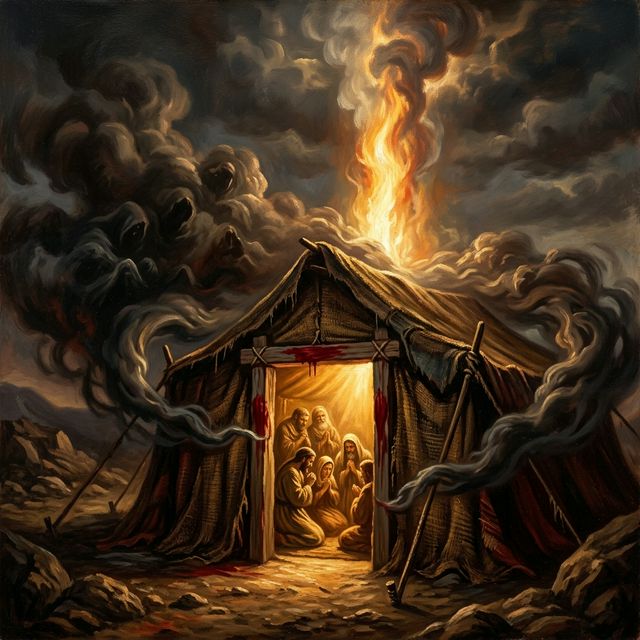
"No evil shall be allowed to befall you, no plague come near your tent" (v. 10). This is one of the boldest promises in all of Scripture — and one of the most abused. Prosperity preachers turn it into a blanket immunity card. Skeptics dismiss it because believers do suffer. Both are wrong. The key is the word "allowed." Nothing reaches you without passing through God's sovereign hand first.
This is the same theology Joseph declared in Genesis 50:20: "You meant evil against me, but God meant it for good." This is not protection from all suffering. It's protection through suffering — the assurance that no evil has the final word, no plague has unsupervised access, and no enemy can destroy what God has purposed. Your tent is not impenetrable. But your God is inescapable.
📖 Key Scriptures
🙏 Pray
"Lord, I confess I have swung between two lies — that You promise me a pain-free life, or that You don't care when I suffer. I renounce both distortions. I receive the truth: nothing reaches me without Your permission, and nothing that reaches me is wasted. You are sovereign over my pain (Romans 8:28)."
🪞 Reflect
"Have you ever felt betrayed by God because suffering came? Did you interpret the pain as proof He wasn't there? What would it change if you believed 'no evil shall befall you' means 'no evil has the final word'?"
⚡ Act
"Write down one painful experience that felt like God abandoned you. Now write Genesis 50:20 beneath it and ask: 'What good might God have intended through this?' If you're stuck, talk to a pastor or trusted friend. God doesn't waste wounds."
Angels & The Tempter
God commands angels to guard you — and Satan quoted this verse to Jesus.
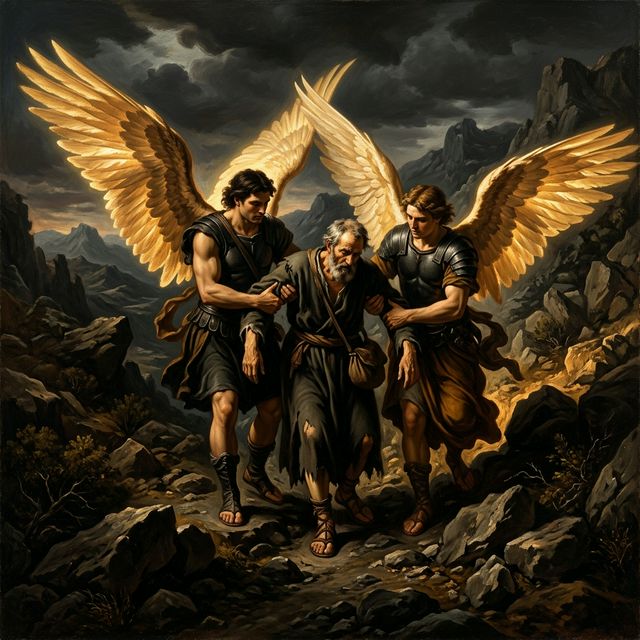
"For he will command his angels concerning you to guard you in all your ways. On their hands they will bear you up, lest you strike your foot against a stone" (vv. 11–12). Angelic guardianship is real — Hebrews 1:14 calls angels "ministering spirits sent out to serve for the sake of those who are to inherit salvation." They are commissioned by God, not summoned by us.
But here's the twist: Satan himself quoted these exact verses to tempt Jesus in the wilderness (Matthew 4:5–7). He took Jesus to the pinnacle of the temple and said, "Throw yourself down, for it is written, 'He will command his angels concerning you.'" Jesus' response cuts through every misuse of Psalm 91: "It is also written, 'You shall not put the Lord your God to the test.'" True faith trusts God. False faith tests God. The difference between the two is everything.
📖 Key Scriptures
🙏 Pray
"Lord, I confess I have either ignored angelic protection entirely or treated it superstitiously. I renounce every temptation to test You — to engineer dangerous situations and demand rescue. I receive the truth: You command angels on my behalf, and I trust Your timing, Your methods, and Your sovereignty (Hebrews 1:14)."
🪞 Reflect
"Have you ever used Scripture as a magic formula rather than a relationship anchor? Where is the line between bold faith and reckless presumption in your life? Have you ever 'thrown yourself off the temple' spiritually — testing God to prove He cares?"
⚡ Act
"Read Matthew 4:1–11 alongside Psalm 91:11–12 this week. Write down three ways you've seen God's unseen protection in your past — moments you only recognized as guarded after the fact. Thank Him specifically for each one."
Trampling Serpents
"You will tread on the lion and the cobra" — spiritual authority, not reckless bravado.
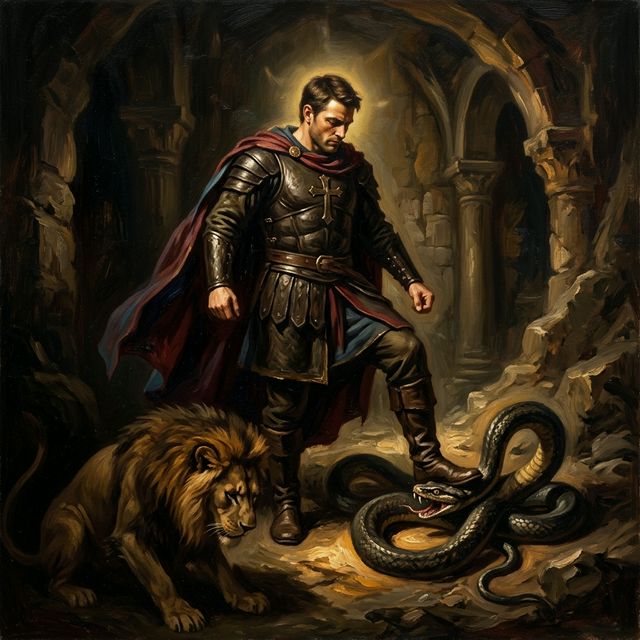
"You will tread on the lion and the adder; the young lion and the serpent you will trample underfoot" (v. 13). Lions represent open, violent attack. Serpents represent hidden, deceptive attack. The promise covers both — you have authority over the enemy's frontal assault and his covert schemes. But this is not physical recklessness. This is spiritual warfare fought through prayer, the Word, and the authority of Christ's name.
Jesus fulfilled this verse perfectly. He trampled the serpent at the cross (Genesis 3:15), and He has given us His authority: "Behold, I have given you authority to tread on serpents and scorpions, and over all the power of the enemy" (Luke 10:19). This authority is delegated, not earned. It comes from abiding in Him — back to verse 1. You can only trample what you're positioned above, and you're only positioned above when you're dwelling in the Most High.
📖 Key Scriptures
🙏 Pray
"Lord, I confess I have either ignored spiritual warfare entirely or fought it in my own strength. I renounce every agreement with fear that says the enemy is bigger than You. I receive the delegated authority of Jesus Christ — authority to tread on serpents and scorpions. I stand on the victory of the cross (Luke 10:19)."
🪞 Reflect
"Where is the 'lion' in your life — the open, visible attack? Where is the 'serpent' — the hidden, deceptive scheme? Are you fighting these battles with spiritual weapons or worldly strategies? Do you actually believe you have authority in Christ?"
⚡ Act
"Identify one 'lion' and one 'serpent' in your current season. Write them down. Pray Luke 10:19 over each one by name. Put on the full armor of God (Ephesians 6:10–18) as a daily prayer discipline this week."
God's Eight "I Wills"
God Himself speaks in verses 14–16 — eight personal promises to those who love Him.
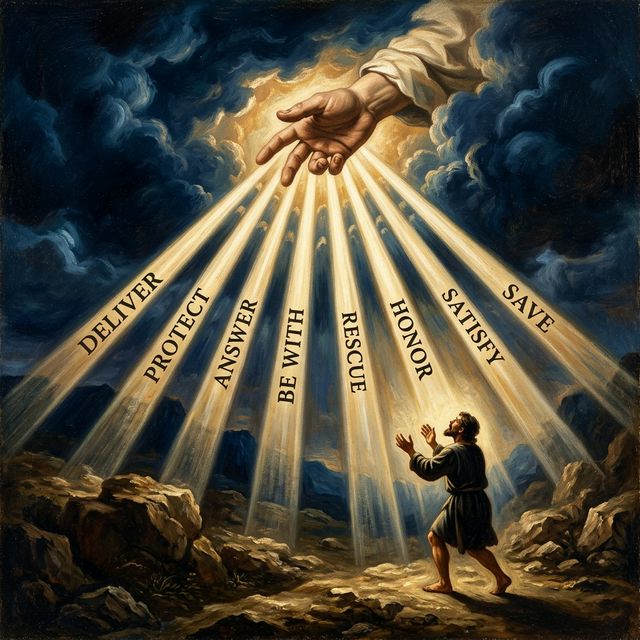
The psalm shifts in verse 14. For the first time, God Himself speaks. And He makes eight "I will" promises to the one who "holds fast to me in love" and "knows my name." This is the covenant heart of Psalm 91 — divine commitment to those in intimate relationship: I will deliver him. I will protect him. I will answer him. I will be with him in trouble. I will rescue him. I will honor him. I will satisfy him with long life. I will show him my salvation.
Notice the condition: "Because he holds fast to me in love... because he knows my name." This is not casual religion. This is clinging love — the Hebrew chashaq, which means to be attached, to cling, to delight in. And "knows my name" is not head knowledge. It's covenant intimacy. The eight promises flow from relationship, not ritual.
📖 Key Scriptures
🙏 Pray
"Father, I confess my love for You has often been lukewarm — duty without delight, obligation without intimacy. I renounce the lie that knowing about You is the same as knowing You. I cling to You now — not for what You give but for who You are. Deliver me, protect me, answer me, be with me (Psalm 91:14–16)."
🪞 Reflect
"Which of the eight 'I wills' do you most need to hear right now? Is your relationship with God more like 'routine maintenance' or 'clinging love'? When was the last time you sought God for His presence — not His presents?"
⚡ Act
"Write out all eight 'I will' promises on a card. Each day this week, meditate on one and pray it back to God as a personal claim. On day eight, read them all aloud as a declaration of covenant love. Share with a friend what God spoke to you."
Christ the True Dweller
Jesus is the One who perfectly dwelt — and absorbed the plague so you could be sheltered.
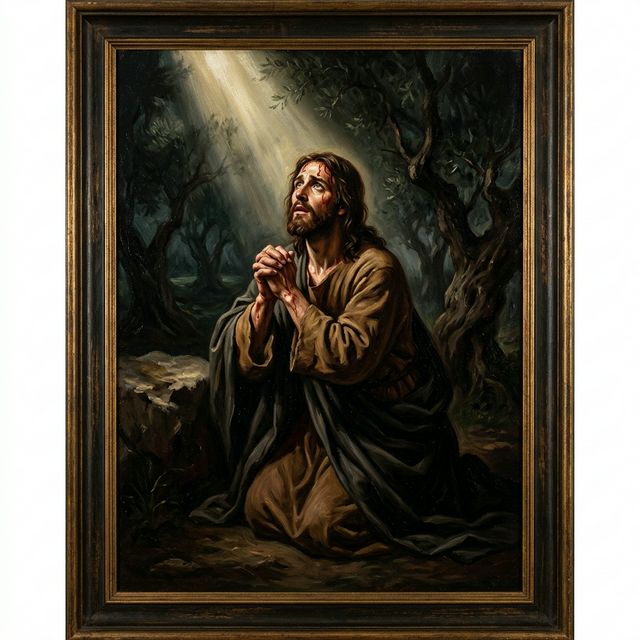
Every promise in Psalm 91 finds its ultimate fulfillment in Jesus Christ. He is the One who perfectly "dwelt in the shelter of the Most High." He lived in unbroken communion with the Father. He "abided in the shadow of the Almighty" even in Gethsemane, even on the cross. And yet — He willingly stepped outside the shelter to absorb the plague, the arrow, the terror, and the destruction that was meant for us.
On the cross, every threat Psalm 91 names fell on Him: the fowler's snare (betrayal), the pestilence (sin's curse), the terror (abandonment), the destruction (death itself). He trampled the serpent (Genesis 3:15) and was trampled in our place. And because He absorbed the judgment, we can now dwell in the shelter He purchased. In Christ, you are hidden. In Christ, you are covered. Psalm 91 is not a spell you recite — it's a Person you rest in.
📖 Key Scriptures
🙏 Pray
"Jesus, I confess I have tried to earn the protection of Psalm 91 through my own righteousness. I renounce self-salvation and performance religion. I receive the truth: You stepped out of the shelter so I could step in. My life is hidden with You in God. I rest in what You finished (Colossians 3:3)."
🪞 Reflect
"Do you approach Psalm 91 as a magic formula to recite, or as a Person to rest in? What changes when you realize Jesus absorbed every threat named in this psalm on your behalf? Are you trying to build your own shelter, or are you living in His?"
⚡ Act
"Read Isaiah 53 alongside Psalm 91 this week. Map each threat in Psalm 91 to what Christ bore on the cross. Write a personal prayer of gratitude for the specific protection He purchased for you. Share it with someone."
Courage in the Valley
How Psalm 91 shapes courage in sickness, danger, ministry, and suffering.
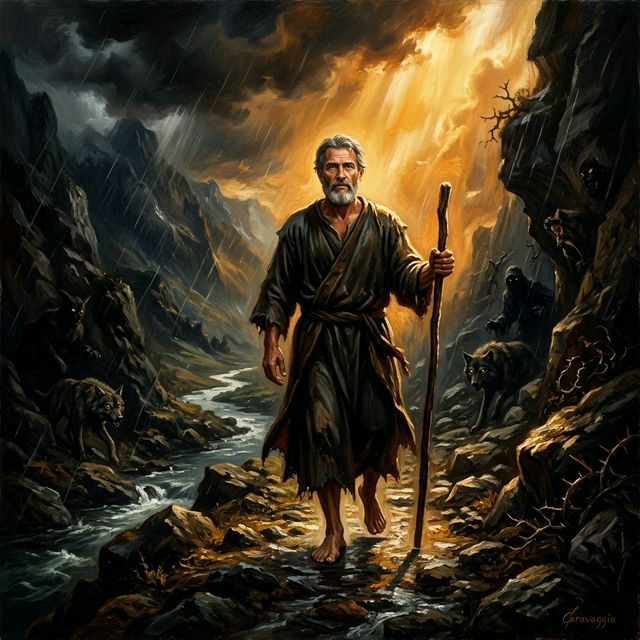
Psalm 91 is not a promise that you won't walk through dark valleys. It's the reason you can walk through them without fear. Missionaries in hostile lands, believers facing terminal diagnoses, parents watching children suffer, first responders entering danger — all of them need the same truth: you are not alone, you are not unprotected, and the outcome belongs to God.
Courage is not the absence of fear. It's the presence of God in the fear. Psalm 91 doesn't eliminate risk — it reframes it. You can go where others won't because the One who commands angels walks with you. You can face what others fear because the One who trampled the serpent lives in you. This psalm doesn't make you reckless. It makes you free.
📖 Key Scriptures
🙏 Pray
"Lord, I confess that fear has paralyzed me — fear of failure, fear of suffering, fear of the unknown. I renounce cowardice disguised as wisdom. I receive the courage that comes from dwelling in You. I will not fear evil because You are with me. Make me brave enough to go where You send me (Joshua 1:9)."
🪞 Reflect
"What step of obedience have you avoided because it feels dangerous? Where has fear kept you from going where God is calling? Is your 'wisdom' actually just dressed-up cowardice? What would Psalm 91 courage look like in your specific situation?"
⚡ Act
"Name one specific fear-based 'no' you've been giving God. Pray Psalm 91 over that situation by name. Take one concrete step this week toward the thing you've been avoiding. Tell someone you trust so they can hold you accountable and pray with you."
The Secret Place
Will you dwell — or will you visit?

Psalm 91 is not a superstition charm. It is not a formula you recite to guarantee safety. It is a covenant invitation to make God your permanent dwelling — and to receive every promise that flows from His presence. The difference between the one who is protected and the one who is not is not luck or merit. It is position. Where do you live?
- 🏠 Make God your permanent dwelling — not a weekend visit. Daily prayer, daily Word, daily surrender.
- 🗣️ Declare aloud: "He is my refuge and my fortress" — spoken faith activates covenant truth.
- 👑 Know His names — Elyon, Shaddai, Yahweh, Elohim — and pray to Him through each one.
- 🦅 When fear strikes, run under His wings — don't try to be your own shield.
- 📖 Memorize Psalm 91 — not as a talisman but as a way of living in His presence.
- ⚔️ Exercise spiritual authority in Christ — resist the enemy, don't ignore him.
- ✝️ Rest in Christ — He is the true Dweller, the true Shelter, and your true Refuge.
🙏 Pray
"God, I don't want to be a visitor in Your presence. I want to dwell. I renounce every idol and distraction I've made my refuge instead of You. I choose the narrow path to the secret place. Make me a dweller, not a tourist (Psalm 91:1)."
🪞 Reflect
"Where do you actually run for safety — your bank account, your plan, your coping mechanism, or your God? What would it look like to 'stay' in His presence rather than visit when things get hard?"
⚡ Act
"Commit to memorizing Psalm 91 over the next 30 days — two verses per day. Set a daily alarm labeled 'Dwell.' Each time it goes off, read your verses aloud. At the end of 30 days, you'll carry the whole psalm in your heart."