Claudius's Edict: Exiled for a Purpose
AD 49. Every Jew expelled from Rome. God was repositioning His people.
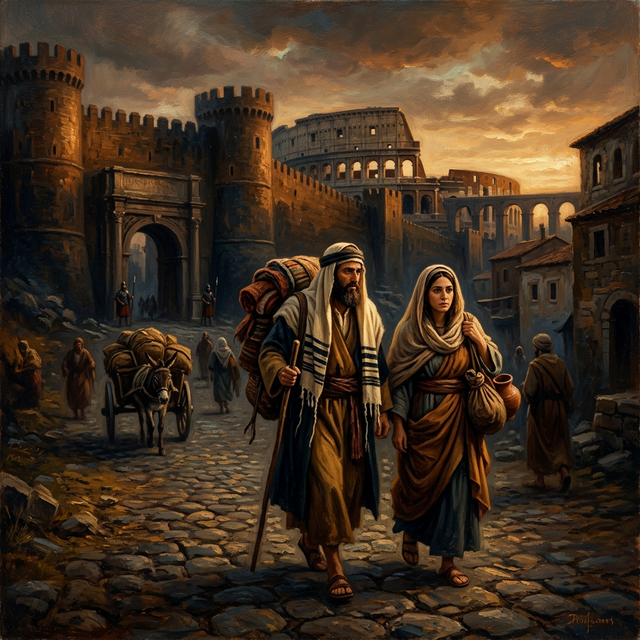
In AD 49, Emperor Claudius issued an edict expelling all Jews from Rome. The Roman historian Suetonius records that it was because of "disturbances at the instigation of Chrestus" — almost certainly a reference to disputes about Christ in the Jewish community. Priscilla and Aquila were caught in the sweep. They lost their home, their business, their community. They arrived in Corinth as refugees — a port city notorious for moral chaos, pagan worship, and ruthless commerce. But God wasn't punishing them. He was positioning them. Corinth was a strategic trade hub connecting East and West, and it was exactly where Paul would arrive next. What looked like exile was actually deployment.
📖 Key Scriptures
🙏 Pray
"Father, I confess I have seen displacement, job loss, and uprooting as punishment rather than positioning. I renounce the lie that says disruption means You've abandoned me. I declare that You are the God of Romans 8:28 — even exile is deployment in Your kingdom."
🪞 Reflect
"What 'Claudius edict' moment have you experienced — a forced move, a job loss, a door slammed shut? Did you see it as exile or as positioning? Are you still bitter about a disruption that God may have designed for a divine appointment?"
⚡ Act
"Write down one 'displacement' from your past. Beside it, write what God opened through it. If you're in one now, write: 'God is positioning me.' Pray Genesis 50:20 over it daily this week."
Business as Mission Platform
Their trade funded the gospel. Their workshop became a seminary.
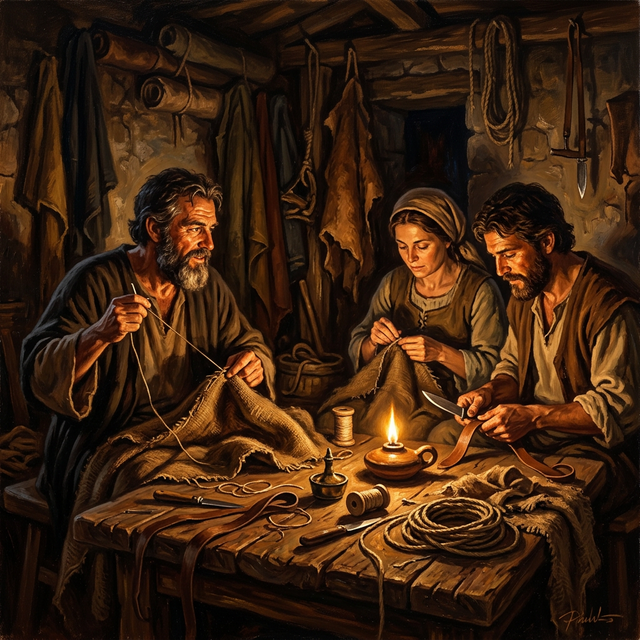
Priscilla and Aquila were tentmakers — skilled artisans in leather and fabric. When Paul arrived in Corinth, he found them and "because he was a tentmaker as they were, he stayed and worked with them" (Acts 18:3). This wasn't a coincidence. Their shared trade became the foundation of their partnership. The workshop was where theology was hammered out alongside tent pegs. They used their business to fund gospel work without burdening the churches. Their model is the original "business as mission" — marketplace ministry where your trade is your platform, your income funds the kingdom, and your workplace is your mission field.
📖 Key Scriptures
🙏 Pray
"Lord, I confess I've separated my work life from my ministry life, as if You only care about what happens on Sundays. I renounce the sacred/secular divide. My job is my mission field. My income is a kingdom tool. Transform my workplace into a platform for Your glory (Colossians 3:23-24)."
🪞 Reflect
"Do you see your job as 'just a job' or as a ministry platform? How much of your income is invested in kingdom work? If someone watched your work week, would they see any evidence that you serve Christ?"
⚡ Act
"This week, identify one way your work or business can serve the gospel — mentoring a coworker, giving sacrificially, or opening your workspace for prayer. Write it down. Do it. (1 Thess 4:11-12)."
Walking with Paul
Not fans. Not followers. Fellow workers.
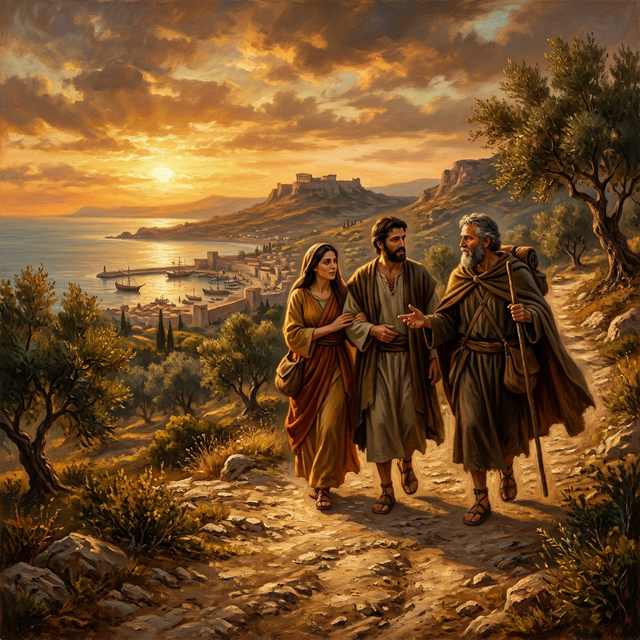
Priscilla and Aquila didn't just host Paul — they walked with him. When Paul left Corinth for Ephesus, they went with him (Acts 18:18). When he moved on, they stayed and anchored the church in Ephesus. Paul later wrote to Rome and called them "my fellow workers in Christ Jesus" (Romans 16:3) — not "my helpers" or "my supporters," but fellow workers. The Greek word is "synergoi" — co-laborers, partners, equals in the work. They were strategic, mobile, and relational. They went where the mission needed them and stayed until the church was rooted.
📖 Key Scriptures
🙏 Pray
"Father, I confess I've treated ministry as a spectator sport — watching others lead while I stay comfortable. I renounce the lie that I'm not 'called enough' to be a co-laborer. Make me a synergoi — a true partner in the work, not just a consumer of the gospel (Ecclesiastes 4:9-10)."
🪞 Reflect
"Are you a fan of your pastor or a fellow worker in the mission? Who are you walking alongside — not just attending church with? Is there a leader in your life who needs a Priscilla and Aquila?"
⚡ Act
"Reach out to a ministry leader this week and ask: 'How can I walk with you — not just attend?' Offer your time, skill, or home. Be specific. Be available. (Romans 16:3)."
Seeing Gold, Not Gaps
Apollos was eloquent, passionate, and incomplete. They saw what he could become.
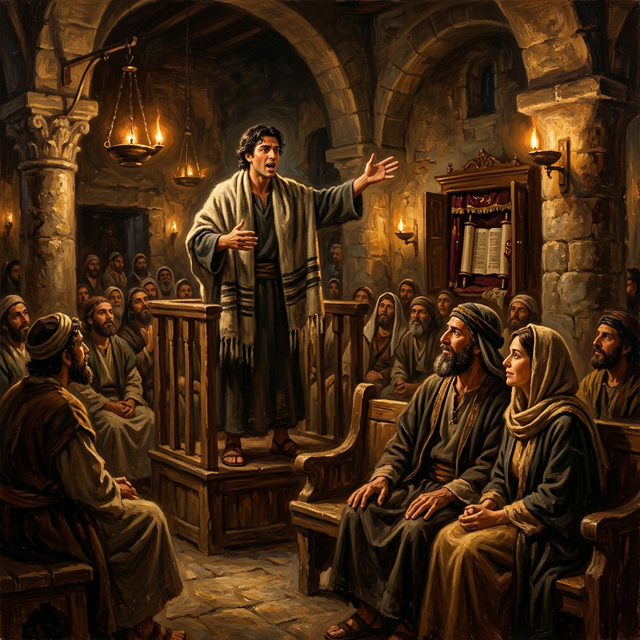
Apollos arrived in Ephesus like a storm — eloquent, learned, mighty in the Scriptures, fervent in spirit. He taught accurately about Jesus... but he only knew the baptism of John. He had passion without the full picture. Most people would have written him off, criticized him publicly, or competed with him. But Priscilla and Aquila saw gold, not just gaps. They saw a man with extraordinary gifts who needed refinement, not rejection. They didn't roll their eyes at his incomplete theology. They recognized that this man, properly equipped, could change cities.
📖 Key Scriptures
🙏 Pray
"Lord, I confess I've been quicker to judge than to invest. I've dismissed people because of their gaps instead of seeing the gold You placed in them. I renounce the spirit of criticism that tears down instead of builds up. Give me the eyes of Priscilla and Aquila — eyes that see potential (Philippians 1:6)."
🪞 Reflect
"Who is the 'Apollos' in your life — someone gifted but incomplete? Have you been avoiding them, competing with them, or critiquing them? What if God put them in your path for you to invest in, not judge?"
⚡ Act
"Name one person with raw potential who needs investment. Reach out this week — not to correct, but to encourage. Buy them coffee. Ask about their calling. See the gold first. (Philippians 1:6)."
Correction Without Crushing
They took him aside privately. Not publicly. That changes everything.
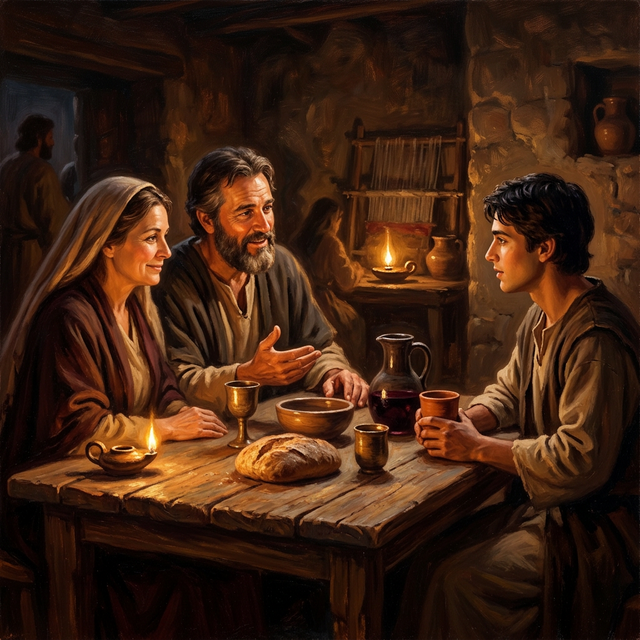
Here is the masterclass in mentorship: when Priscilla and Aquila heard Apollos preach incomplete theology in the synagogue, they didn't stand up and correct him publicly. They didn't write a letter to the elders. They didn't gossip about his gaps. They "took him aside and explained to him the way of God more accurately" (Acts 18:26). They invited him into their home. They served him a meal. And over table fellowship — with warmth, honor, and truth — they filled in what was missing. They wrapped correction in hospitality. They protected his dignity while sharpening his doctrine. This is how you mentor someone without destroying them.
📖 Key Scriptures
🙏 Pray
"Father, I confess I have either avoided correction entirely or delivered it in ways that crushed instead of built up. I renounce both cowardly silence and harsh criticism. Give me the grace of Priscilla and Aquila — courage to speak truth wrapped in love and hospitality (Ephesians 4:15)."
🪞 Reflect
"When you see someone making a mistake, is your first instinct to correct publicly, gossip privately, or invest personally? Who needs gentle truth from you right now — and are you willing to do it over a meal, not a megaphone?"
⚡ Act
"Invite someone to your home this week who needs encouragement or gentle course-correction. Serve them. Listen first. Then speak truth — with a meal in front of them and love behind your words. (Proverbs 27:5-6)."
Humility to Be Edited
A powerful preacher let a couple refine his theology. That's the Holy Spirit.
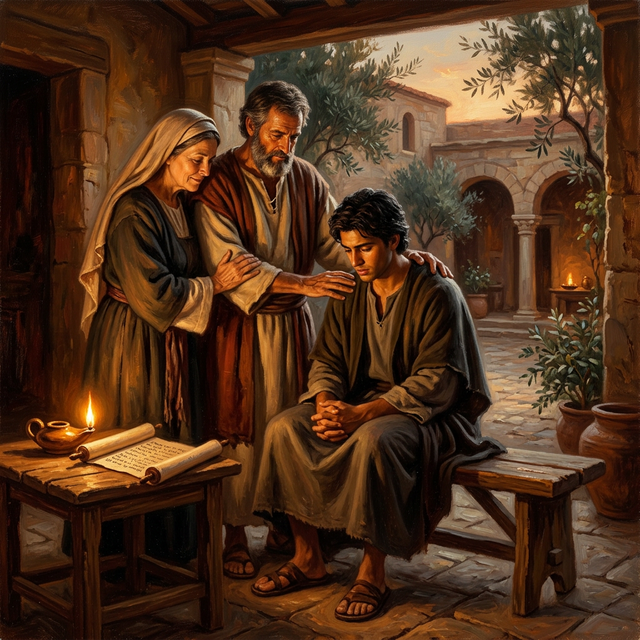
Apollos was no amateur. He was "a learned man, with a thorough knowledge of the Scriptures" (Acts 18:24). He was eloquent, fervent, and already effective. He had every reason to dismiss correction from a couple of tentmakers. But he didn't. He received it. He sat down. He listened. He let a husband and wife who never wrote a book in the Bible edit his understanding of the gospel. And what happened next? "He was a great help to those who by grace had believed" (Acts 18:27-28). His ministry multiplied because he was teachable. Gifting without humility is a ceiling. Gifting with humility is a launch pad.
📖 Key Scriptures
🙏 Pray
"Lord, I confess I have resisted correction because of pride — protecting my image instead of growing in truth. I renounce the lie that says being edited means being lesser. I receive the spirit of Apollos: teachability that multiplies gifting (Proverbs 12:1)."
🪞 Reflect
"When was the last time you received correction without defensiveness? Is there someone whose feedback you've been dismissing because of their title, age, or position? What would happen to your ministry if you became radically teachable?"
⚡ Act
"Ask someone you trust this week: 'What's one thing I'm getting wrong that you've been afraid to tell me?' Listen without defending. Write down what they say. Pray James 1:19 over it."
Voices Never Heard, Names Never Forgotten
They never said a single recorded word in Scripture. Yet Paul called them his co-laborers.
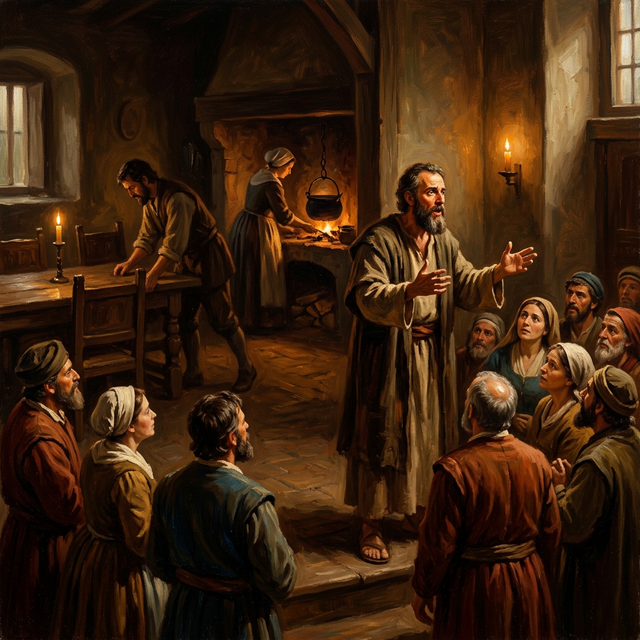
Here is the stunning detail most people miss: Priscilla and Aquila are mentioned six times in the New Testament, but not once are they quoted. Not a single word of theirs is recorded. No sermon. No prophecy. No teaching passage. They are the most frequently mentioned couple in the New Testament — and they are completely silent. Yet Paul says "all the churches of the Gentiles are grateful to them" (Romans 16:4). All the Gentile churches. That's the entire mission field. And the couple who shaped it never made a sound in the text. Their faithfulness was quiet, consistent, and strategic. They weren't chasing platforms. They were building the kingdom — and the kingdom remembers.
📖 Key Scriptures
🙏 Pray
"Father, I confess I've measured ministry by visibility — likes, followers, recognition. I renounce the lie that says unseen work is unimportant work. I declare that You see what is done in secret and You reward it. Make me faithful whether anyone notices or not (Matthew 6:3-4)."
🪞 Reflect
"Would you still serve if no one ever thanked you? Is your ministry motivated by impact or by applause? What quiet, unseen work have you abandoned because it didn't get acknowledgment?"
⚡ Act
"Do one act of service this week that no one will see or know about — pay a bill, clean something, pray for someone, encourage in a handwritten note. Tell no one. Let the Father who sees in secret be your only audience. (1 Corinthians 15:58)."
Marriage as Joint Mission
Always named together. Never competing. United in calling.
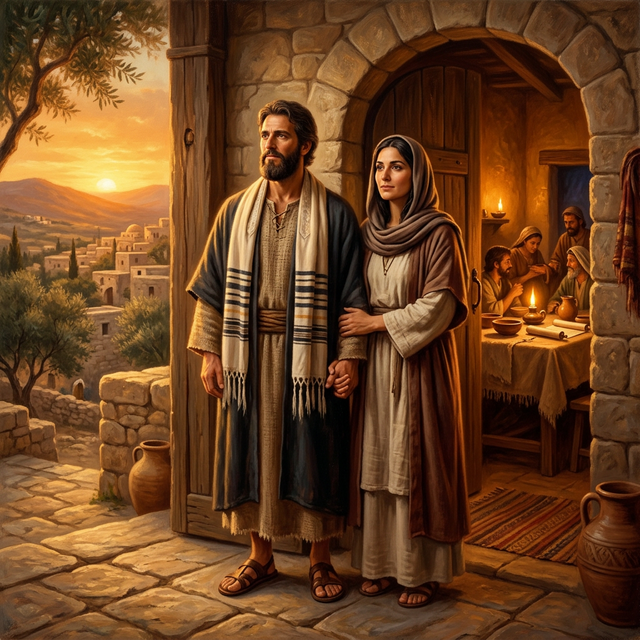
Priscilla and Aquila are mentioned six times in the New Testament, and they are always named together — never one without the other. This is not accidental. They are the Bible's clearest picture of marriage as shared mission, not parallel lives. Even more remarkable: Priscilla is named first in four of those six mentions. In the first-century world, this was culturally radical. It suggests she may have been the more prominent teacher or leader of the two — and Aquila was secure enough to let her shine. There is no competition in this marriage. No ego. No "my ministry" vs. "your ministry." They are a unit, deployed together by God, moving together across cities, hosting churches together, mentoring together.
📖 Key Scriptures
🙏 Pray
"Father, I confess that my marriage (or closest partnership) has drifted into parallel lives rather than shared mission. I renounce competition, jealousy, and the refusal to let my partner lead where they're gifted. Unite us in calling. Make us a team that the enemy fears (Ecclesiastes 4:12)."
🪞 Reflect
"Are you and your spouse (or closest partner) pursuing the same mission, or just sharing the same address? Is there ego or competition in your partnership? Could you let your partner be named first — and mean it?"
⚡ Act
"Sit down with your spouse or ministry partner this week. Ask: 'What is God calling us to do — together?' Write down one shared mission goal. Pray Amos 3:3 over your partnership. If single, ask God to show you what 'co-laboring' looks like in your season."
The Home as Basecamp
They didn't build programs. They opened their door.
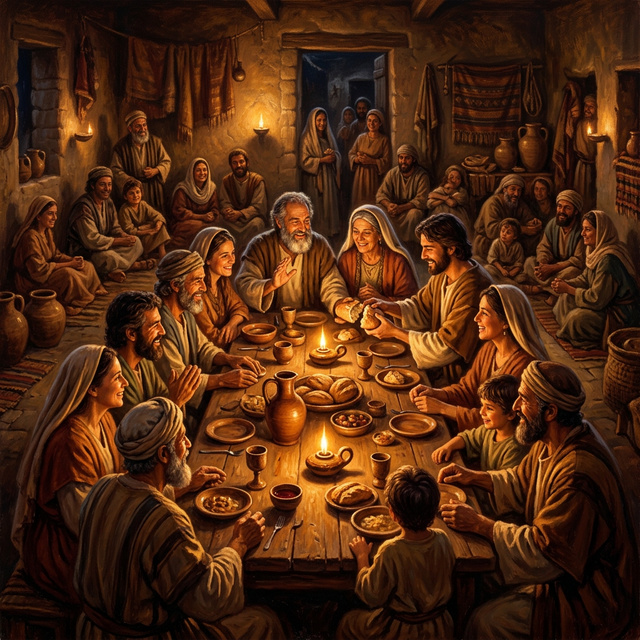
Priscilla and Aquila hosted house churches in three different cities: Corinth, Ephesus, and Rome. Paul specifically mentions "the church that meets at their house" (1 Corinthians 16:19, Romans 16:5). In the first century, there were no church buildings. The home was the church. And Priscilla and Aquila turned their home into a spiritual basecamp wherever they went. Their table was a training ground. Their guest room was a seminary. Their hospitality wasn't social — it was strategic. Meals became discipleship moments. Hosting became kingdom infrastructure.
📖 Key Scriptures
🙏 Pray
"Lord, I confess I've hoarded my home instead of opening it. I've made excuses about space, mess, and time. I renounce the spirit of isolation that keeps my door closed. My home is not mine — it's Yours. Make it a basecamp for the kingdom (Hebrews 13:2)."
🪞 Reflect
"When was the last time you had someone in your home for spiritual purpose — not just social? Is your home a fortress of privacy or a basecamp for ministry? What would change if you treated your dining table as an altar?"
⚡ Act
"Open your home this week for one intentional gathering — a prayer meeting, a meal with a new believer, or a study of Acts 18 with friends. No perfection required. Just an open door and an open Bible. (Romans 12:13)."
Risking Their Necks
They didn't just host Paul. They were willing to die for him.
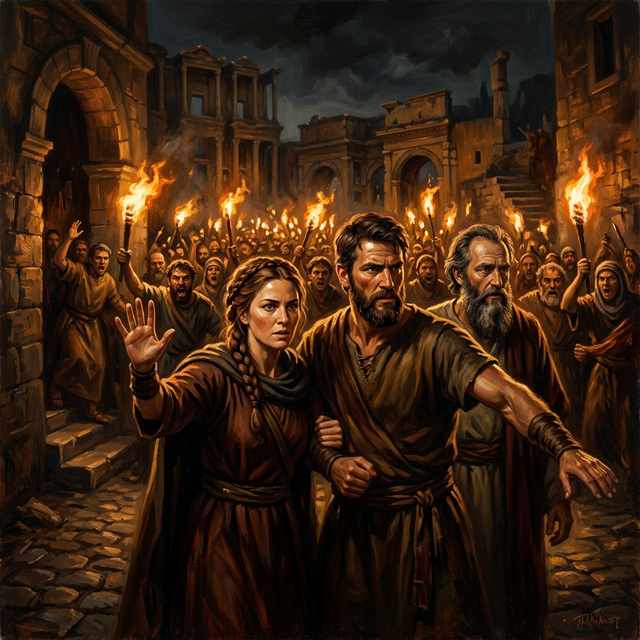
Paul's tribute to Priscilla and Aquila in Romans 16:3-4 contains a detail that deserves its own spotlight: "who risked their own necks for my life." The Greek word is "hypetithēsan" — they literally laid their necks under the blade. We don't know exactly when this happened, but the most likely scenario is during the riot in Ephesus (Acts 19), where the silversmith Demetrius incited a mob against Paul. Priscilla and Aquila didn't flee. They positioned themselves between danger and their brother. This is the cost of real partnership. Not just shared meals and theology — shared risk. Faith without danger is just philosophy.
📖 Key Scriptures
🙏 Pray
"Father, I confess I have chosen safety over solidarity. I've kept my distance when I should have stepped forward. I renounce the comfort-first faith that avoids risk. Give me the courage of Priscilla and Aquila — the willingness to put my neck on the line for the gospel and for my brothers and sisters (John 15:13)."
🪞 Reflect
"Has your faith ever cost you anything dangerous — not just inconvenient? Is there a leader, missionary, or brother/sister in Christ who needs someone to stand with them right now? What would it look like to 'risk your neck' for someone this week?"
⚡ Act
"Identify one person in ministry or mission who is under pressure, facing opposition, or standing alone. Reach out and say: 'I'm with you. How can I stand in the gap?' Put skin in the game — time, money, presence. (Acts 15:26)."
Three Cities, One Mission
Corinth. Ephesus. Rome. Wherever they went, the church came with them.
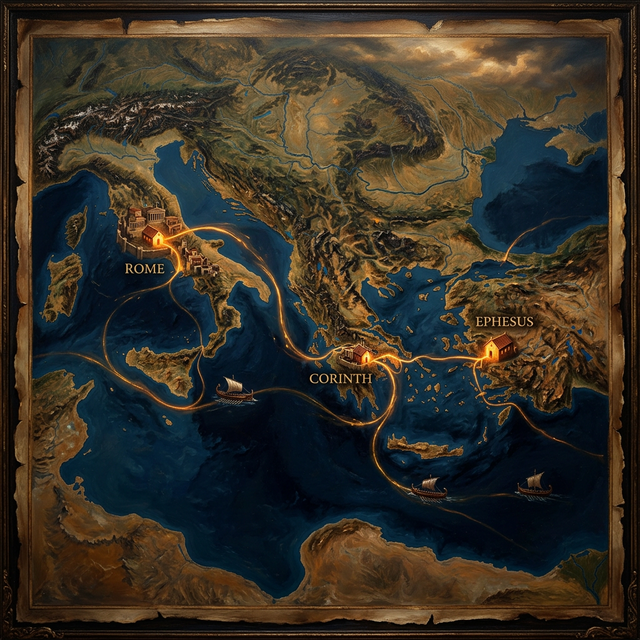
Priscilla and Aquila are the New Testament's mobile church planters. They hosted house churches in Corinth (Acts 18), Ephesus (1 Corinthians 16:19), and Rome (Romans 16:5). Every time they moved — whether by choice or by force — the church moved with them. They didn't wait for a building, a budget, or a denomination's permission. They opened their home, broke bread, taught the Word, and the church was born. In the first century, the church was not a building you attended — it was a community you belonged to, and it met in living rooms. Priscilla and Aquila embodied the Acts 2 model: "Every day they continued to meet together… they broke bread in their homes."
📖 Key Scriptures
🙏 Pray
"Lord, I confess I've reduced 'church' to a building I attend rather than a community I carry. I renounce the consumer mentality that waits for programs instead of creating fellowship. Make me a mobile basecamp for Your kingdom — wherever I go, the church goes with me (Acts 2:46-47)."
🪞 Reflect
"If your church building was gone tomorrow, would your faith survive? Do you carry the church with you — or only experience it on Sundays? What would it look like to host church in your living room?"
⚡ Act
"Invite 2-3 friends for prayer, worship, and Scripture this week — no program, no agenda. Open your Bible, pray aloud, break bread, and let the Holy Spirit lead. This is church (Matthew 18:20)."
A Legacy of Multiplication
They invested in Apollos. Apollos changed cities. That's multiplication.

The fruit of Priscilla and Aquila's ministry didn't stop with one dinner conversation. After they mentored Apollos, he went on to become a pillar in the churches of Corinth and Achaia. Paul later wrote that "I planted the seed, Apollos watered it, but God has been making it grow" (1 Corinthians 3:6). Apollos became so influential that some believers identified as "of Apollos" (1 Cor 1:12). All of that — the churches strengthened, the believers encouraged, the opponents refuted — traces back to a couple who quietly took a young preacher aside and invested in him over a meal. That's multiplication. Not addition. One mentoring moment created generational impact.
📖 Key Scriptures
🙏 Pray
"Father, I confess I've been focused on my own growth instead of multiplying into others. I renounce the lie that says I'm not ready to mentor. You don't call the qualified — You qualify the called. Make me a 2 Timothy 2:2 believer — investing in faithful people who will invest in others."
🪞 Reflect
"Who are you pouring into — not just teaching, but investing in? If you were removed from ministry tomorrow, would the work continue without you? Is your legacy addition or multiplication?"
⚡ Act
"Identify one person to mentor this month. Meet with them weekly. Share what God has taught you. Teach them to teach others. Start the 2 Timothy 2:2 chain — you to them, them to others. (John 15:8)."