Everyone knows the hymn. Few know the man behind it — or how long it took for grace to finish its
work. John Newton was a blasphemer, a deserter, a man enslaved in Africa, and then a slave trader
himself. His conversion happened in a storm at sea — but he continued trafficking human beings for
six more years afterward. His story isn't clean. It's not a neat before-and-after. It's a
decades-long wrestling match between a sinful man and a relentless God who refused to let him go.
⛓️
REBELLION
🌊
THE STORM
😈
DISTURBING
🔥
WRESTLING
🎵
THE HYMN
👁️
AWAKENING
📜
REPENTANCE
🤝
WILBERFORCE
💛
PASTOR
✝️
EPITAPH
Stage 1 of 10 · Act I: The Darkness
Rebellion & Loss
Born 1725, motherless at 6, godless by 16.
John Newton's mother was a devout Dissenter who filled his childhood with Scripture
and prayer. She died when he was six. His father, a stern sea captain, remarried and sent John to
boarding school — cold, loveless, and brutal. By his teenage years, Newton had rejected everything
his mother taught him. He became a sailor, profane and reckless, mocking God openly.
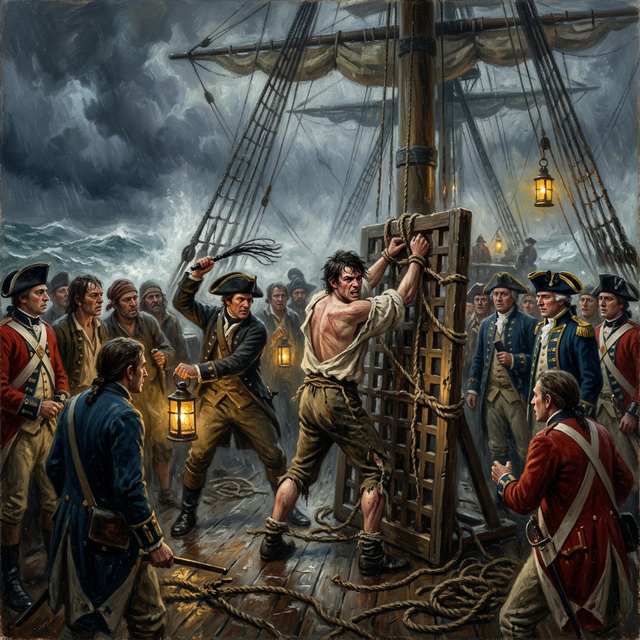
He was press-ganged into the Royal Navy, attempted to desert, was caught, stripped,
and flogged publicly before the entire crew. Humiliated and defiant, he descended further —
eventually ending up in Sierra Leone, enslaved by an African woman named Princess Peye, starving and
degraded. The son of a sea captain, reduced to eating scraps from her table. Rock bottom.
📖 Key Scriptures
Proverbs 22:6"Train up a child in
the way he should go; even when he is old he will not depart from it."
Romans 1:28"And since they did
not see fit to acknowledge God, God gave them up to a debased mind."
🙏 Pray
"Lord, I confess that rebellion starts small — a rejection of truth here, a compromise there.
I renounce the lie that I can outrun Your reach. Even at my lowest, You were watching."
🪞 Reflect
"Is there a truth someone planted in your childhood that you've been running from? What seeds
are still alive beneath the surface?"
⚡ Act
"Write down one truth a parent, mentor, or pastor spoke over you that you dismissed. Read it
out loud. Ask God what He thinks about it."
Stage 2 of 10 · Act I: The Darkness
The Storm That Changed Everything
March 10, 1748 — "Lord, have mercy on us."
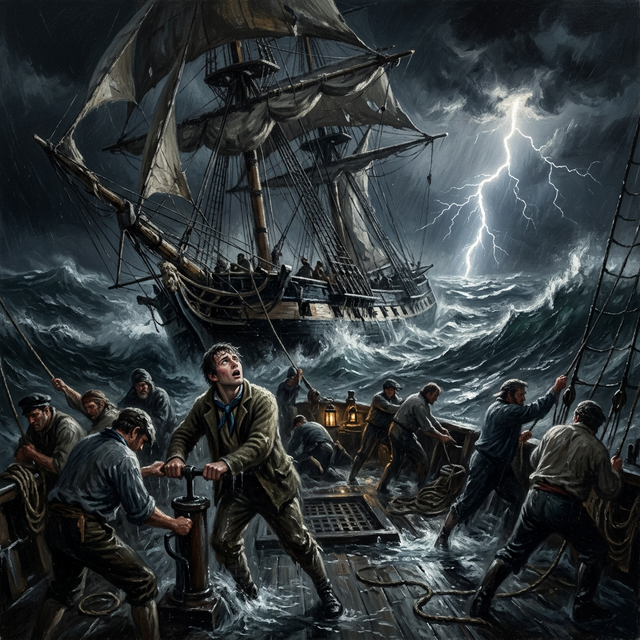
March 10, 1748. The merchant ship Greyhound was crossing the North
Atlantic when a violent storm nearly tore it apart. Water flooded the ship. The cargo shifted. Men
were swept overboard. Newton, who had been mocking God just hours before, found himself lashing the
ship's pump, chest-deep in freezing water, certain he would die.
In that moment, words he hadn't spoken in decades came unbidden: "Lord, have
mercy on us." He was shocked by his own prayer. The storm raged for weeks, but the ship
survived — barely. Newton would mark this day for the rest of his life as the beginning of his
conversion. But conversion, he would learn, was only the beginning. Sanctification would take
decades.
📖 Key Scriptures
Jonah 2:2"I called out to the
LORD, out of my distress, and he answered me; out of the belly of Sheol I cried, and you
heard my voice."
Psalm 107:28-29"Then they cried
to the LORD in their trouble, and he delivered them from their distress. He made the storm
be still, and the waves of the sea were hushed."
🙏 Pray
"Father, I confess that sometimes it takes a storm to bring me to my knees. I thank You for
the storms that broke through my pride. 'Lord, have mercy on me.'"
🪞 Reflect
"What 'storm' in your life first cracked open the door to God? Looking back, can you see His
hand in the chaos?"
⚡ Act
"Write your own 'March 10, 1748' — the date and moment when God first broke through. Mark it.
Remember it."
Stage 3 of 10 · Act I: The Darkness
The Disturbing Reality
After "conversion," Newton continued in the slave trade for six more years.
Here is where Newton's story gets uncomfortable. After his dramatic conversion at
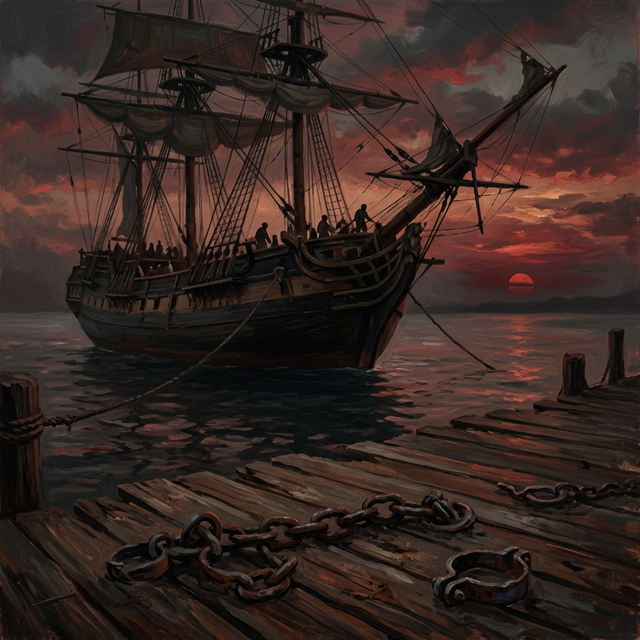
sea, he didn't leave the slave trade. He captained slave ships. From 1748 to 1754, Newton
personally oversaw the trafficking of hundreds of enslaved Africans — chaining men, women, and
children in the holds of ships, watching them suffer and die, and profiting from their misery.
How could a "converted" man do this? Because sin doesn't just live in dramatic
rebellion — it thrives in cultural acceptance. The slave trade was legal, profitable, and
normalized. Newton read his Bible, prayed on deck, and held worship services for his crew — while
human beings were shackled below. This is the terrifying power of systemic sin: it blinds even the
sincere.
📖 Key Scriptures
Jeremiah 17:9"The heart is
deceitful above all things, and desperately sick; who can understand it?"
Proverbs 14:12"There is a way
that seems right to a man, but its end is the way to death."
🙏 Pray
"Lord, I confess there may be sins in my life so culturally normalized that I can't even see
them. Open my eyes. Show me where I'm blind. Don't let acceptance equal innocence."
🪞 Reflect
"What practices in your culture or industry feel 'normal' but might grieve God's heart? Where
are you reading your Bible while ignoring justice?"
⚡ Act
"Ask a trusted friend or mentor: 'Is there a blind spot in my life that everyone else can see
but me?' Listen without defending."
Stage 4 of 10 · Act II: The Wrestling
Wrestling With Complicity
Grace doesn't instantly perfect us — sanctification is slow, painful, and
honest.
Newton left the sea in 1754 due to health problems, not moral conviction. He became
a tide surveyor in Liverpool, still investing in and profiting from the slave economy. For
thirty years after his conversion, he never publicly opposed slavery. The conviction came
gradually — an agonizing, decades-long process of God peeling back layer after layer of cultural
blindness.
This is the hardest truth in Newton's story: grace is patient with us while
we're still complicit. God didn't abandon Newton during his blindness. He worked slowly,
persistently, refusing to give up. Newton later wrote that he was "ashamed" that he had been so long
in seeing what should have been obvious. But that's how deep sin runs — and that's how patient grace
is.
📖 Key Scriptures
Philippians 1:6"He who began a
good work in you will bring it to completion at the day of Jesus Christ."
2 Peter 3:9"The Lord is not slow
to fulfill his promise as some count slowness, but is patient toward you."
🙏 Pray
"Father, I confess I want instant sanctification, but You work slowly. I trust the process.
Keep peeling back my layers. Don't let me stay comfortable in complicity."
🪞 Reflect
"Where in your life has God been patiently working on you for years — and you're still
resisting? What's the next layer He's trying to peel?"
⚡ Act
"Identify one area where you know you're wrong but it's culturally 'acceptable.' Write it
down. Bring it to God — not tomorrow, today."
Stage 5 of 10 · Act II: The Wrestling
"Amazing Grace" Written
New Year's Day, 1773 — the hymn the world would never forget.
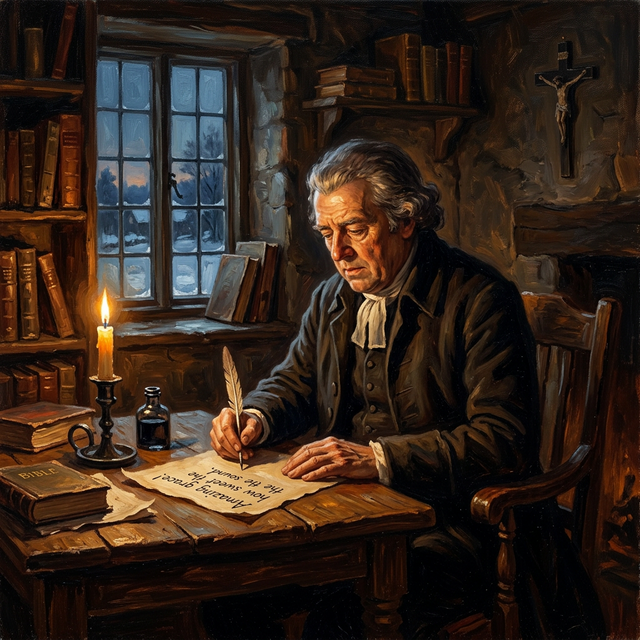
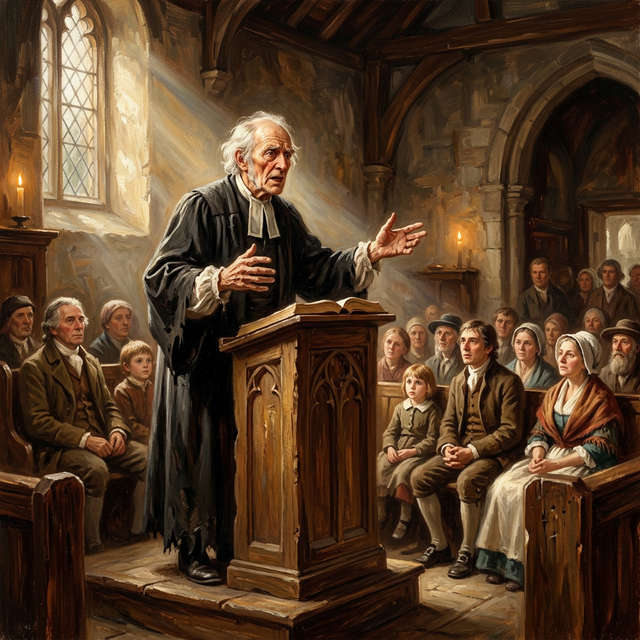
On New Year's Day, 1773, Pastor John Newton stood before his small congregation in
Olney, England, and introduced a new hymn he'd written for the occasion. The words were
autobiographical: "Amazing grace, how sweet the sound, that saved a wretch like me." He
meant every word. He knew what kind of wretch he had been — and still was.
But here's the painful irony: when Newton wrote those words, he still hadn't
publicly opposed slavery. He was no longer actively trading, but he remained silent while the trade
continued. "I once was lost, but now am found, was blind, but now I see" — and yet it would take
another fifteen years before his eyes fully opened to the evil he'd participated in. Grace
was working. But it wasn't finished yet.
📖 Key Scriptures
1 Chronicles 16:9"Sing to him,
sing praises to him; tell of all his wondrous works!"
Psalm 40:3"He put a new song in
my mouth, a song of praise to our God."
🙏 Pray
"Lord, thank You for the grace that saves wretches. I confess I'm still a work in progress —
singing Your praise while blind to my own sin. Keep opening my eyes."
🪞 Reflect
"What is your personal 'Amazing Grace' — the specific way God's grace has been sweet to you?
Can you name it?"
⚡ Act
"Read or sing all the verses of 'Amazing Grace' today. Let each one be personal. 'I once was
lost' — when? 'But now am found' — how?"
Stage 6 of 10 · Act III: The Redemption
The Awakening
In the 1780s, Newton's eyes finally opened — fully.
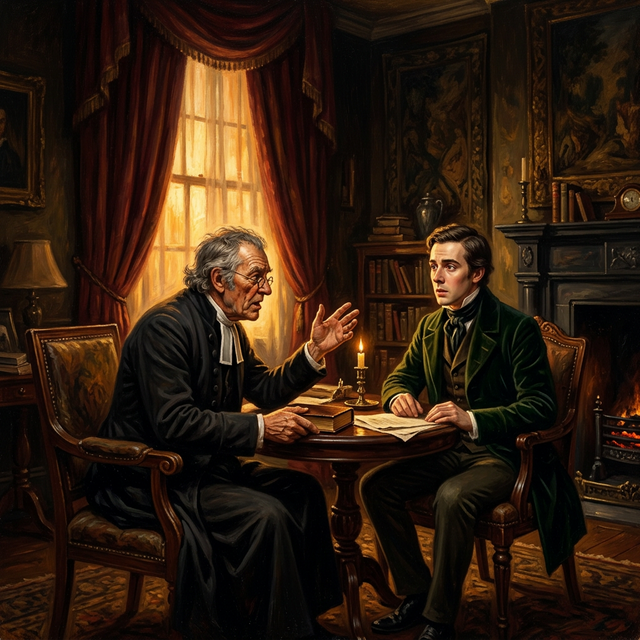
In the 1780s, a young Member of Parliament named William Wilberforce sought
Newton's counsel. Wilberforce was wrestling with a calling: should he leave politics for ministry?
Newton — now in his sixties — saw something the young man couldn't: God had placed Wilberforce in
Parliament for a reason. "The Lord has raised you up for the good of the nation," Newton told him.
It was in these conversations that Newton's own awakening accelerated. Wilberforce
and the abolitionists needed Newton's firsthand testimony of the slave trade's horrors. And as
Newton prepared to testify, the full weight of what he had done — the chains, the suffering, the
deaths — finally hit him with devastating clarity. After decades of blindness, he could finally
see.
📖 Key Scriptures
Acts 26:18"To open their eyes, so
that they may turn from darkness to light and from the power of Satan to God."
Ephesians 5:11"Take no part in
the unfruitful works of darkness, but instead expose them."
🙏 Pray
"God, I don't want to wait decades to see what You're showing me now. Give me courage to face
the truth about my complicity — even when it's painful and costly."
🪞 Reflect
"Is there someone in your life — like Wilberforce for Newton — who God is using to open your
eyes? Are you listening?"
⚡ Act
"Think of one injustice you've been silent about. Take one concrete step today to break that
silence — a conversation, a letter, a decision."
Stage 7 of 10 · Act III: The Redemption
Public Repentance
"I hope it will always be a subject of humiliating reflection to me."
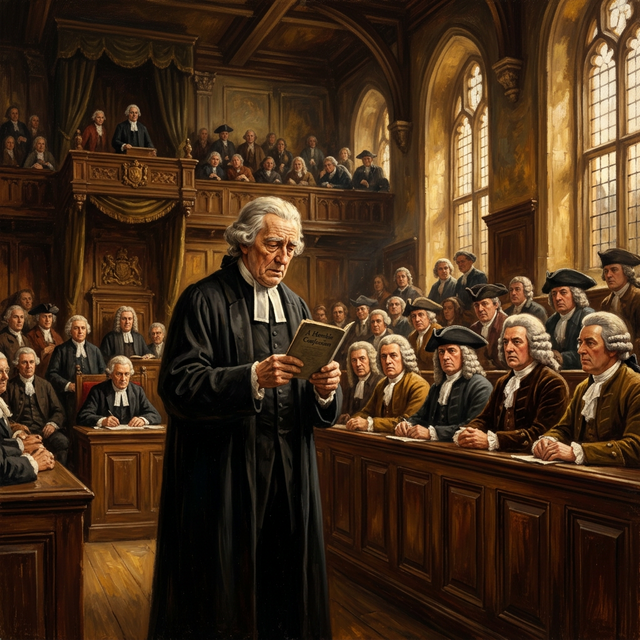
In 1788, Newton published "Thoughts Upon the African Slave Trade" — a
devastating, firsthand account of the horrors he had personally witnessed and perpetrated. He spared
no details. He described the capture, the ship conditions, the cruelty, the deaths. And he publicly
confessed his guilt: "I hope it will always be a subject of humiliating reflection to me, that I
was once an active instrument in a business at which my heart now shudders."
Newton was 63 years old. It had taken him forty years to publicly repent
of what he'd done. But when he finally did, he held nothing back. His testimony became one of the
most powerful weapons in the abolitionist movement. He spent his remaining years fighting the very
system he had once profited from. True repentance isn't just feeling sorry — it's turning around and
fighting.
📖 Key Scriptures
2 Corinthians 7:10"For godly
grief produces a repentance that leads to salvation without regret, whereas worldly grief
produces death."
James 5:16"Therefore, confess
your sins to one another and pray for one another, that you may be healed."
🙏 Pray
"Lord, give me the courage to repent publicly — not just privately. I renounce the pride that
keeps my confession hidden. Let my testimony of failure become a weapon for good."
🪞 Reflect
"Is there something in your past that you've only repented of privately? What would it look
like to use that story to help others?"
⚡ Act
"Write your own 'Thoughts Upon...' — a letter to yourself confessing one area where you were
complicit. Don't soften it. Then ask: what will I fight for now?"
Stage 8 of 10 · Act III: The Redemption
Mentoring Wilberforce
"The Lord has raised you up for the good of the nation."
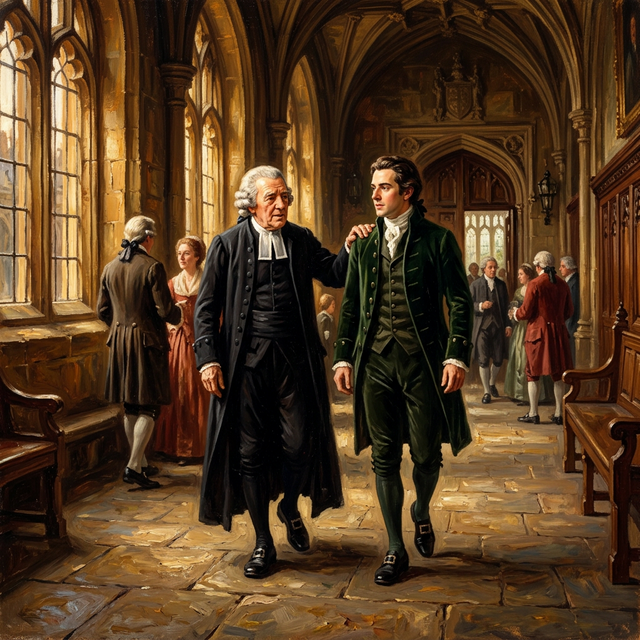
William Wilberforce came to Newton at a crossroads: should he leave Parliament for
full-time ministry? Newton's answer was historic: stay. "The Lord has raised you up for the
good of His church and for the good of the nation." Newton saw what Wilberforce couldn't — that
faith and politics weren't separate spheres. God needed Wilberforce in Parliament, not out
of it.
Newton became Wilberforce's spiritual father — counseling him through decades of
defeats, failures, and political warfare as he fought to abolish the slave trade. Without Newton's
counsel, Wilberforce might have retreated. And without Wilberforce's courage, the slave trade might
have continued for generations. A former slave trader mentoring the man who would end the trade.
Only grace writes stories like that.
📖 Key Scriptures
Esther 4:14"And who knows whether
you have not come to the kingdom for such a time as this?"
Titus 2:7-8"Show yourself in all
respects to be a model of good works, and in your teaching show integrity."
🙏 Pray
"Lord, show me who You've placed in my life to mentor. Give me eyes to see their calling —
even when they can't see it themselves. Use my past failures to fuel their future."
🪞 Reflect
"Who is the 'Wilberforce' in your life — someone younger who needs your counsel? Are you
encouraging them to stay in the fight?"
⚡ Act
"Reach out to someone younger this week. Tell them: 'I see God's hand on you. Stay in the
fight.' Be their Newton."
Stage 9 of 10 · Act IV: The Legacy
A Pastor's Heart
"I am not what I ought to be, I am not what I hope to be, but by the grace
of God I am what I am."
Newton's pastoral letters, collected in Cardiphonia, reveal a man of
extraordinary tenderness. He was gentle with struggling believers, fierce for truth, and
unflinchingly honest about his own failures. He never forgot he was "the chief of sinners." He had
grace for the broken and no patience for the proud — because he knew intimately what pride could
blind you to.
In his final years, Newton's memory faded, but his conviction didn't. When friends
suggested he retire from preaching, he refused: "I cannot stop. What? Shall the old African
blasphemer stop while he can speak?" Even with failing eyes and a fading mind, he never
stopped proclaiming the grace that had saved a wretch like him. That's the mark of a man who has
truly been found.
📖 Key Scriptures
1 Timothy 1:15"The saying is
trustworthy and deserving of full acceptance, that Christ Jesus came into the world to save
sinners, of whom I am the foremost."
2 Timothy 4:7"I have fought the
good fight, I have finished the race, I have kept the faith."
🙏 Pray
"Lord, make me tender with the broken and honest about my failures. Never let me forget where
You found me. Let the 'old blasphemer' in me keep preaching grace until my last breath."
🪞 Reflect
"Do you lead with your polished résumé or your real story? What would change if people knew
the whole truth?"
⚡ Act
"This week, share one 'unpolished' part of your story with someone who needs to hear it. Your
mess is your message."
Stage 10 of 10 · Act IV: The Legacy
His Self-Written Epitaph
The final testimony of a man who knew exactly what he was — and who saved
him.
Before his death in 1807, Newton wrote his own epitaph — and insisted it be
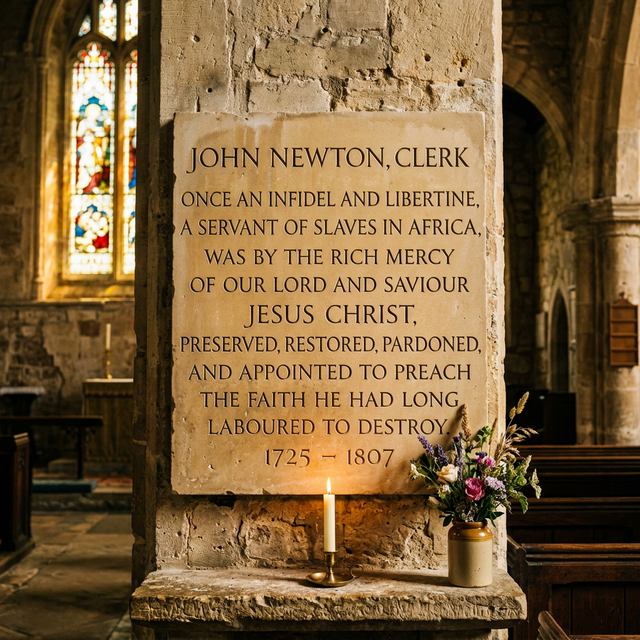
engraved exactly as written: "John Newton, clerk, once an infidel and libertine, a servant of
slaves in Africa, was, by the rich mercy of our Lord and Saviour Jesus Christ, preserved,
restored, pardoned, and appointed to preach the faith he had long laboured to destroy."
No spin. No softening. No attempt to polish his legacy. Newton wanted the world to
know the full truth — both the depth of his sin and the height of the grace that rescued
him. He died on December 21, 1807 — the same year the British Parliament voted to abolish the slave
trade. The old blasphemer was finally home. And the trade he once profited from was dying.
📖 Key Scriptures
Ephesians 2:8-9"For by grace you
have been saved through faith. And this is not your own doing; it is the gift of God, not a
result of works, so that no one may boast."
Revelation 12:11"And they have
conquered him by the blood of the Lamb and by the word of their testimony."
🙏 Pray
"Jesus, I am — right now, in this moment — preserved, restored, pardoned, and appointed. Not
because of what I've done, but because of Your rich mercy. Let that be my epitaph."
🪞 Reflect
"If someone wrote your epitaph today, what would it say? What would you want it to say? What
needs to change?"
⚡ Act
"Write your own epitaph — not what you've accomplished, but what God has done in you. Be as
honest as Newton. Then live into it."
🎵 Amazing Grace
⛓️ Motherless at 6, godless by 16, enslaved by his own choices
🌊 A storm at sea cracked him open — "Lord, have mercy"
😈 He slave-traded for 6 years after conversion — grace is patient
🔥 Thirty years of wrestling before his eyes fully opened
🎵 Wrote the world's most famous hymn — while still blind
👁️ Finally saw the full horror of what he'd done — and spoke
📜 Published his confession at age 63 — holding nothing back
🤝 Mentored Wilberforce — "Stay in the fight"
💛 Preached grace until he couldn't remember his own name
✝️ Died the year slavery was abolished — the story comes full circle
"John Newton, clerk, once an infidel and libertine, a servant of slaves in Africa, was,
by the rich mercy of our Lord and Saviour Jesus Christ, preserved, restored, pardoned, and
appointed to preach the faith he had long laboured to destroy."