🌊 🕊️ 🙌 ⚔️ 🙏 ✝️ 🎵 ☁️ 🤫 🏔️
It Is Well with My Soul
Peace in the Storm — Horatio Spafford, 1873
Romans 5:1 · Colossians 2:14 · 1 Thessalonians 4:16–17
In 1871, Horatio Spafford lost his fortune in the Great Chicago Fire. In
1873, his four daughters drowned when the SS Ville du Havre sank in the Atlantic. His wife
survived and telegraphed two words: "Saved alone." Sailing to meet her, passing near
the spot where his daughters died, Spafford penned the words that became one of the most
enduring hymns in history. This is not denial. This is not spiritual bypass. This is faith
anchored in Christ when circumstances scream otherwise. Ten stages through peace, sovereignty,
atonement, hope, and the final declaration: it is well with my soul.
🌊Billows
🕊️Peace
🙌Surrender
⚔️Buffet
🙏Grace
✝️Nailed
🎵Praise
☁️Hope
🤫Whisper
🏔️It Is Well
Stage 1 of 10 · Act I: The Storm
When Sorrows Like Sea Billows Roll
"When peace like a river attendeth my way, when sorrows like sea billows
roll…"

Horatio Spafford was a successful Chicago lawyer whose fortune was destroyed in
the Great Fire of 1871. Two years later, he sent his wife and four daughters ahead to England on
the SS Ville du Havre. The ship collided with another vessel and sank in twelve minutes. All
four daughters drowned. His wife Anna survived and sent a two-word telegram from Wales:
"Saved alone." On his own voyage to meet her, as the ship passed near the spot where
his daughters died, Spafford wrote the words that became this hymn. This is not denial. This is
not spiritual bypass. This is faith anchored in Christ when circumstances scream otherwise.
📖 Key Scriptures
Psalm 42:7"Deep calls to deep
at the roar of your waterfalls; all your breakers and your waves have gone over
me."
Psalm 46:1–3"God is our
refuge and strength, a very present help in trouble."
🙏 Pray
"Lord, I confess that when the sea billows roll, I panic instead of anchoring in You. I
renounce the lie that my suffering means You've abandoned me. I receive the truth: You
are a very present help in trouble (Psalm 46:1)."
🪞 Reflect
What is your "sea billow" right now — the loss, the grief, the fear that feels like it's
going to swallow you? When you picture God in your worst moment, do you see Him present
or absent?
⚡ Act
Write down the worst thing you're facing right now. Under it, write Psalm 46:1. Read
Spafford's story and sit with this: a man who lost four daughters still wrote "it is
well."
Stage 2 of 10 · Act I: The Storm
Peace Like a River
"When peace like a river attendeth my way…"

The hymn opens with peace — not as the absence of trouble, but as God's
presence in the midst of it. This is the peace Jesus promised: "Peace I leave with you; my peace
I give to you. Not as the world gives do I give to you" (John 14:27). The world's peace depends
on circumstances. Christ's peace depends on Christ. Spafford did not feel peaceful — he felt
devastated. But he knew the objective truth: he had peace with God through Christ's
finished work. And that peace held when everything else collapsed.
📖 Key Scriptures
John 14:27"Peace I leave with
you; my peace I give to you. Not as the world gives do I give to you."
Romans 5:1"Therefore, since
we have been justified by faith, we have peace with God through our Lord Jesus
Christ."
🙏 Pray
"Jesus, I confess I've been looking for the world's peace — circumstantial calm. I
renounce the lie that peace means nothing bad happens. I receive Your peace — the kind
that doesn't depend on my situation but on Your finished work (Romans 5:1)."
🪞 Reflect
What is your current definition of peace? Is it "things going well" or "Christ holding
me"? When was the last time you experienced peace that didn't depend on your
circumstances?
⚡ Act
Write John 14:27 on a card. Every time anxiety rises today, read it. Say aloud: "Not as
the world gives." Distinguish between the peace you want and the peace you have.
Stage 3 of 10 · Act I: The Storm
Whatever My Lot
"Whatever my lot, Thou hast taught me to say, 'It is well, it is well with
my soul.'"
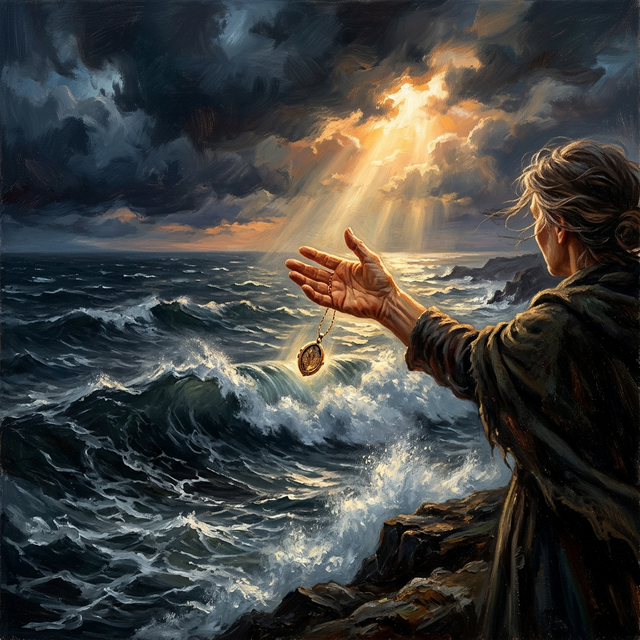
Spafford does not say "my circumstances are well." He says "it is well with my
soul." His relationship with God is secure regardless of what he has lost. "Whatever my
lot" — fire, shipwreck, death of children — the lot does not determine the state of his soul.
God's sovereignty does not erase grief. But it holds us when grief threatens to consume us. And
"Thou hast taught me to say" — this is learned, not natural. No one instinctively says
"it is well" over four coffins. God teaches us through Scripture, through the Spirit, through
endurance.
📖 Key Scriptures
Romans 8:28"And we know that
for those who love God all things work together for good."
Habakkuk 3:17–18"Though the
fig tree should not blossom… yet I will rejoice in the LORD."
🙏 Pray
"Father, I confess I've made my peace conditional on my lot. I renounce the lie that Your
goodness is measured by my comfort. I receive the truth of Romans 8:28. Teach me to say
'it is well' when everything in me resists it."
🪞 Reflect
Can you say "it is well with my soul" right now? If not, what is the specific loss or
fear preventing it? Is it possible your soul can be well even when your circumstances
aren't?
⚡ Act
Read Habakkuk 3:17–18. Write your own version: "Even though ___, yet I will rejoice in
the LORD." Say it out loud. This is the declaration Spafford made on the Atlantic.
Stage 4 of 10 · Act II: The Anchor
Though Satan Should Buffet
"Though Satan should buffet, though trials should come, let this blest
assurance control…"
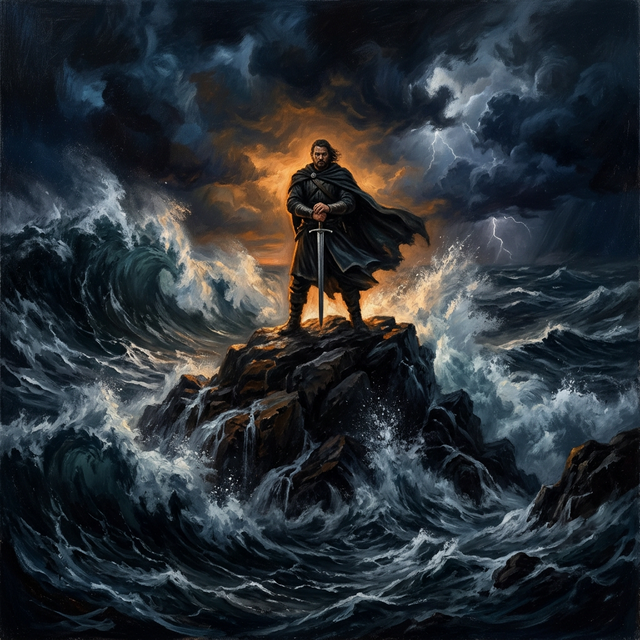
Spafford names the reality: Satan attacks. Trials come. Sorrows roll like sea
billows. He does not pretend otherwise. But he says these things do not control —
Christ's finished work controls. "Let this blest assurance control" — the assurance that Christ
has regarded my helpless estate and has shed His own blood for my soul. Our assurance rests not
in the absence of attack, but in the presence of a Victor who has already won.
📖 Key Scriptures
1 Peter 5:8–9"Your adversary
the devil prowls around like a roaring lion… Resist him, firm in your faith."
Colossians 2:15"He disarmed
the rulers and authorities and put them to open shame, by triumphing over them."
🙏 Pray
"Lord, I confess I've let the buffeting control me instead of letting Your assurance
control me. I renounce fear in the face of spiritual attack. I receive the blest
assurance: Christ has shed His blood for my soul (Colossians 2:15)."
🪞 Reflect
What is the enemy's primary accusation against you right now? Does it carry more weight
in your heart than the cross? When trials come, do you run to assurance or to anxiety?
⚡ Act
Name one accusation from the enemy. Write it down. Then write Colossians 2:15 over it:
"Disarmed. Put to open shame." Say aloud: "This blest assurance controls — not your
lies."
Stage 5 of 10 · Act II: The Anchor
Christ Has Regarded My Helpless Estate
"Christ has regarded my helpless estate, and has shed His own blood for my
soul."

This is the theological center of the hymn. Spafford's peace is not grounded in
positive thinking or emotional resilience — it is grounded in a fact: Christ saw my
helpless estate and shed His blood. "Helpless estate" — not "struggling estate" or "imperfect
estate." Helpless. We were dead in sin, unable to save ourselves, and Christ came down.
While we were still powerless, Christ died for the ungodly (Romans 5:6). Spafford clung to
doctrine, not emotion. When feelings failed, truth held.
📖 Key Scriptures
Romans 5:6–8"While we were
still weak, at the right time Christ died for the ungodly… God shows his love for us in
that while we were still sinners, Christ died for us."
Ephesians 2:4–5"God, being
rich in mercy… even when we were dead in our trespasses, made us alive together with
Christ."
🙏 Pray
"Jesus, I confess I forget that You saw me at my worst and came anyway. I renounce the
lie that I must be less helpless before You will act. I receive the truth: You regarded
my helpless estate and shed Your blood. Grace came to the helpless (Romans 5:6)."
🪞 Reflect
Do you behave as though God helps those who help themselves — or those who are helpless?
Where are you trying to be less broken before approaching God?
⚡ Act
Write: "Christ regarded my helpless estate." Sit with the word helpless. Don't soften it.
Read Romans 5:6–8. Tell someone you trust about one area where you feel helpless — and
invite them to remind you of the blood.
Stage 6 of 10 · Act II: The Anchor
My Sin, Not in Part but the Whole
"My sin — oh, the bliss of this glorious thought! — my sin, not in part
but the whole, is nailed to the cross, and I bear it no more."
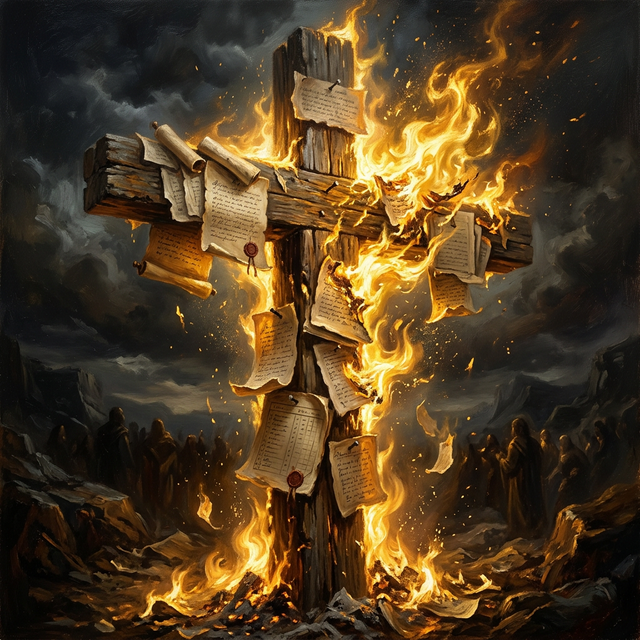
This is the hinge of the hymn. Spafford calls the thought of his sin being
dealt with bliss. Not shame. Bliss. Because it is not dealt with partially —
"not in part but the whole." Every sin. Every failure. Every secret. Nailed to the cross. Done.
"I bear it no more" — the weight is gone. This is Colossians 2:14: the record of debt that stood
against us, He set aside, nailing it to the cross. This is the objective truth that holds when
feelings collapse.
📖 Key Scriptures
Colossians 2:14"By canceling
the record of debt that stood against us with its legal demands. This he set aside,
nailing it to the cross."
Hebrews 10:14"For by a single
offering he has perfected for all time those who are being sanctified."
🙏 Pray
"Father, I confess I've been carrying sins You've already nailed to the cross. I renounce
the lie that my sin is too much for the blood. I receive the bliss of this glorious
thought: my sin — not in part, but the whole — is nailed to the cross. I bear it no more
(Colossians 2:14)."
🪞 Reflect
Is there a sin you keep picking back up after God nailed it to the cross? Can you call
the thought of total forgiveness "bliss" — or does it feel too good to be true?
⚡ Act
Write down every sin you're still carrying guilt for. Read Colossians 2:14 over each one.
Physically cross them out and write: "Nailed to the cross. I bear it no more."
Stage 7 of 10 · Act III: The Hope
Praise the Lord, O My Soul
"Praise the Lord, praise the Lord, O my soul!"

Even in devastation, Spafford lifts praise — not because his feelings dictate
it, but because of what Christ has objectively accomplished. "There is therefore now no
condemnation for those who are in Christ Jesus" (Romans 8:1). God does not condemn us in our
grief. He does not add guilt to our sorrow. He does not punish us for our tears. Christ's blood
has settled everything. We can grieve deeply and worship truly at the same time. These are not
contradictions — they are the mark of mature faith.
📖 Key Scriptures
Romans 8:1"There is therefore
now no condemnation for those who are in Christ Jesus."
Romans 8:33–34"Who shall
bring any charge against God's elect? It is God who justifies. Who is to
condemn?"
🙏 Pray
"Lord, I confess I've confused grief with condemnation — as if my suffering is proof
You're punishing me. I renounce the lie that my pain is payment for my sin. I receive
Romans 8:1: there is no condemnation in Christ. None."
🪞 Reflect
Have you secretly believed your suffering is punishment? Do you feel condemned in your
grief? What would it look like to grieve deeply and praise simultaneously?
⚡ Act
If you're in grief, don't suppress it. Weep. Then read Romans 8:33–34 aloud. Say: "I am
not condemned. I bear it no more. Praise the Lord, O my soul." Start a worship song —
even if your voice shakes.
Stage 8 of 10 · Act III: The Hope
The Clouds Be Rolled Back as a Scroll
"And Lord, haste the day when my faith shall be sight, the clouds be
rolled back as a scroll; the trump shall resound and the Lord shall descend — even so, it is
well with my soul."
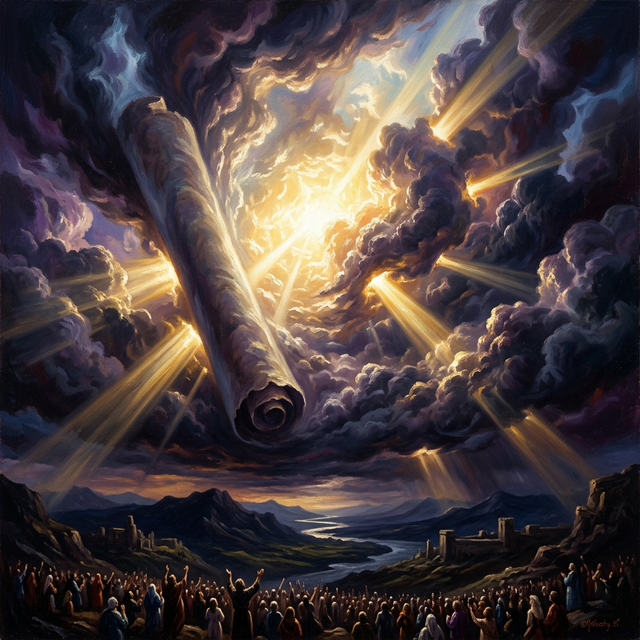
Spafford's ultimate hope was not survival — it was Christ's return and
resurrection. "The trump shall resound and the Lord shall descend" — he was quoting 1
Thessalonians 4:16. His daughters were not lost forever. They await the trumpet. One day faith
becomes sight, the clouds roll back, and every loss is swallowed up in victory. The grave is not
our goal. The sky is. Reunion, restoration, and eternal joy with Christ.
📖 Key Scriptures
1 Thessalonians 4:16–17"The
Lord himself will descend from heaven with a cry of command… and the dead in Christ will
rise first."
Revelation 21:4"He will wipe
away every tear from their eyes, and death shall be no more."
🙏 Pray
"Lord, haste the day. I confess I've set my hope on this world instead of Your return. I
renounce the lie that this life is all there is. I receive the blessed hope: You are
coming back. The dead in Christ will rise. Every tear will be wiped away (1 Thess
4:16–17)."
🪞 Reflect
Have you lost someone? Do you live with the hope of reunion, or have you buried that hope
with them? What would change if you truly believed the trumpet will sound?
⚡ Act
If you've lost someone, write their name. Under it write: "The dead in Christ will rise
first." If you haven't, write the name of someone in grief. Send them this deck. Read
Revelation 21:4.
Stage 9 of 10 · Act IV: The Declaration
Thou Wilt Whisper Thy Peace to My Soul
"Blessed hope, blessed rest of my soul!"

God's whisper of peace sustained Spafford — not audible, but through Scripture,
the Spirit, and the unshakeable promise: "Yea, though I walk through the valley of the shadow of
death, I will fear no evil, for You are with me" (Psalm 23:4). God does not always shout. He
often whispers. In the darkest night, in the deepest loss, in the silence after the storm — He
speaks peace. Not circumstantial peace. Soul-deep peace. The kind that passes understanding. The
kind the world cannot give and cannot take.
📖 Key Scriptures
Psalm 23:4"Even though I walk
through the valley of the shadow of death, I will fear no evil, for you are with
me."
Philippians 4:7"And the peace
of God, which surpasses all understanding, will guard your hearts and your minds in
Christ Jesus."
🙏 Pray
"Father, I confess I've been straining to hear You shout when You've been whispering. I
have mistaken silence for absence. I renounce the lie that You are far from my grief. I
receive the whisper: 'Peace. I am with you.' Guard my heart with peace that passes
understanding (Philippians 4:7)."
🪞 Reflect
When was the last time you heard God's whisper? Are you listening for a shout when He's
speaking in a whisper? What does His peace sound like to you?
⚡ Act
Sit in five minutes of silence today. No music, no phone, no agenda. Say: "Whisper Your
peace to my soul." Then open Psalm 23 and read it slowly. Circle "I will fear no evil,
for You are with me."
Stage 10 of 10 · Act IV: The Declaration
It Is Well
"It is well with my soul. It is well, it is well with my soul."

This is the final declaration. Not a feeling — a decision. Not denial — faith.
Horatio Spafford teaches us that "it is well" is not something you say because life is easy. It
is something you say because Christ has regarded your helpless estate, shed His blood, nailed
your sin to the cross, removed all condemnation, and is coming back to roll the clouds away. You
can say "it is well" not because your circumstances are good, but because your Savior
is. When everything in you wants to despair — say it anyway. That's faith. That's the
hymn. That's the gospel.
📖 Key Scriptures
Habakkuk 3:17–18"Though the
fig tree should not blossom… yet I will rejoice in the LORD."
2 Corinthians 4:16–18"We do
not lose heart… this light momentary affliction is preparing for us an eternal weight of
glory."
🙏 Pray
"Lord Jesus, I say it now — by faith, not by feeling: it is well with my soul. My sin is
nailed to the cross. There is no condemnation. You are sovereign over my sorrow. You are
coming back. It is well with my soul."
🪞 Reflect
Can you say it? "It is well with my soul." What shifts in you when you declare it — not
as a feeling, but as faith? What is the one loss you need to speak those words over
right now?
⚡ Act
Stand up. Say out loud — slowly, firmly — "It is well with my soul." Name your greatest
loss, your deepest grief. Speak "it is well" over each one. Share this hymn with someone
who needs it. Sing it this week — even if your voice breaks.
🌊 🕊️ 🙌 ⚔️ 🙏 ✝️ 🎵 ☁️ 🤫 🏔️
It Is Well with My Soul
- 🌊 When sorrows roll — God is a very present help in trouble
- 🕊️ Peace like a river — Christ's peace, not the world's
- 🙌 Whatever my lot — God teaches us to say "it is well"
- ⚔️ Satan buffets — but Christ's assurance controls
- 🙏 Christ regarded our helpless estate — grace came down
- ✝️ Sin nailed to the cross — not in part, but the whole
- 🎵 No condemnation — we can grieve deeply and worship truly
- ☁️ The clouds will roll back — the sky, not the grave, is our goal
- 🤫 God whispers peace — in the valley, in the silence, in the dark
- 🏔️ It is well — not a feeling, but a declaration of faith
"When peace like a river attendeth my way, when sorrows like sea billows roll;
whatever my lot, Thou hast taught me to say, it is well, it is well with my soul."
— Horatio Spafford, 1873
🕊️ My Declaration
"After walking through Spafford's hymn and the truths it declares, I choose — by faith, not
by feeling — to say: it is well with my soul. My sin is nailed to the cross. There is no
condemnation. God is sovereign over my sorrow. Christ is coming back."
Name: _______________
Date: _______________
My Sorrow: _______________
My Declaration: It is well.