What Is Faith?
Hebrews 11:1-3 — The definition that launched a thousand acts of obedience.
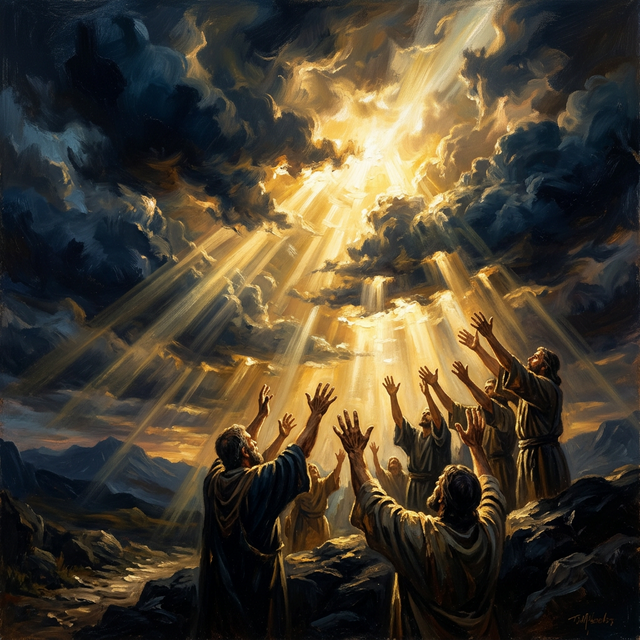
"Now faith is confidence in what we hope for and assurance about what we do not see" (Hebrews 11:1). This isn't a dictionary definition — it's a battle cry. Faith is not blind optimism or wishful thinking. It's substance — the Greek word hypostasis means "standing under," a foundation. And it's evidence — the Greek elegchos means "proof, conviction." Faith is the proof of things you can't see yet. It makes the invisible visible, the incredible believable, and the impossible actionable. "By faith we understand that the universe was formed at God's command, so that what is seen was not made out of what was visible" (Hebrews 11:3). The universe itself is Exhibit A — everything you can see was made from what you can't.
📖 Key Scriptures
🙏 Pray
"Father, I confess I've demanded proof before I trusted. I've required sight before I stepped. I renounce the lie that says faith is foolish. I declare: faith is the substance of things hoped for — it is proof, not wishful thinking. I choose to live by faith, not by sight (2 Corinthians 5:7)."
🪞 Reflect
Where have you been waiting for proof before you obey? Is there an area where God has spoken but you haven't moved because you can't see the outcome? What would it look like to treat faith as evidence?
⚡ Act
Write Hebrews 11:1 on a card. Identify one area where God is asking you to trust without seeing. Take one step today — one concrete act of faith before you see the result.
Abel — Faith That Still Speaks
Hebrews 11:4 — The Hall of Faith doesn't start with a prophet or king. It starts with a man who simply gave God his best.
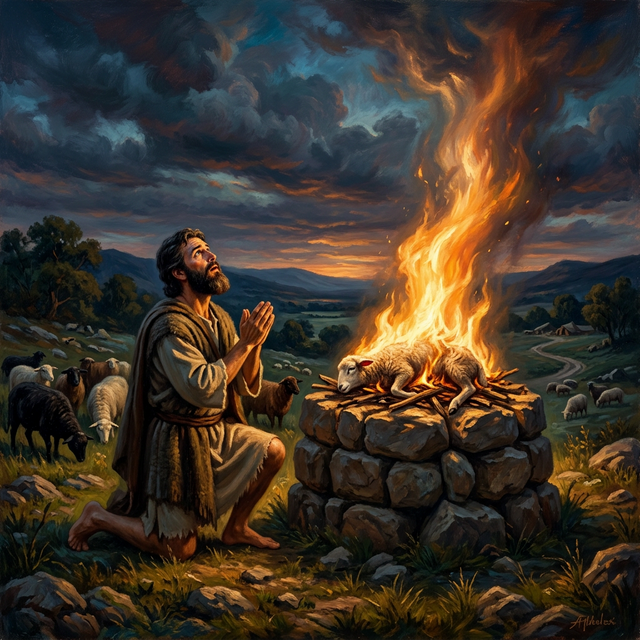
"By faith Abel brought God a better offering than Cain did. By faith he was commended as righteous, when God spoke well of his offerings. And by faith Abel still speaks, even though he is dead" (Hebrews 11:4). Why was Abel's sacrifice accepted and Cain's rejected? Not the offering itself — but the heart of faith behind it. Abel gave God his best — the firstborn of his flock, the fat portions. Cain gave leftovers. The first entry in the Hall of Faith teaches us: God doesn't measure the size of your offering — He measures the faith behind it. And here's the stunning detail: Abel has been dead for millennia, but his faith still speaks. Your faith outlives your body.
📖 Key Scriptures
🙏 Pray
"Lord, I confess I've given You leftovers — leftover time, leftover energy, leftover attention. I renounce the spirit of Cain that gives out of obligation instead of faith. I declare: I will bring my best to You — my first, not my last. Let my faith speak long after I'm gone (Hebrews 11:4)."
🪞 Reflect
Are you giving God your best or your leftovers? What would it look like to bring your "firstborn" — your first hours, your best energy, your finest work — to Him? What do you want your faith to say after you're gone?
⚡ Act
Give God your "first" this week — first hour of your day, first portion of your income, first thought when you wake. Write down what you want your faith to say about you in 100 years.
Enoch — Walking With God
Hebrews 11:5-6 — He didn't perform miracles, lead armies, or build arks. He simply walked with God — and God took him home.
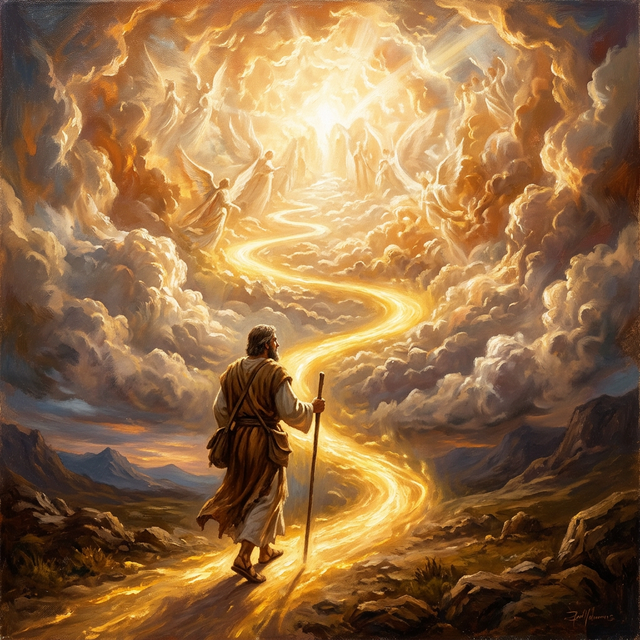
"By faith Enoch was taken from this life, so that he did not experience death... before he was taken, he was commended as one who pleased God" (Hebrews 11:5). Enoch's faith was not spectacular — it was consistent. "Enoch walked faithfully with God; then he was no more, because God took him away" (Genesis 5:24). No miracles. No armies. No arks. Just daily, faithful, intimate walking with God — until one day God said, "You're closer to My house than yours. Come home." Then comes the verse that anchors everything: "Without faith it is impossible to please God, because anyone who comes to him must believe that he exists and that he rewards those who earnestly seek him" (Hebrews 11:6). Faith pleases God — not because He needs validation, but because when you trust Him, you are safe.
📖 Key Scriptures
🙏 Pray
"Father, I confess I've chased spectacular faith while neglecting consistent faith. I've wanted the miracle without the daily walk. I renounce the lie that says ordinary faithfulness doesn't count. I declare: I will walk with You daily. Without faith it is impossible to please You — let my walk please You today (Hebrews 11:6)."
🪞 Reflect
Is your faith spectacular or consistent? Have you been waiting for a burning-bush moment while ignoring the daily walk? What would it look like to walk with God so closely that He takes you home?
⚡ Act
Commit to one daily practice of "walking with God" this week — a morning prayer, a scripture reading, a 10-minute silence. Not dramatic. Just daily. Track it. Let consistency become your faith signature.
Noah — Faith That Convicts the World
Hebrews 11:7 — He worked 120 years on a project the world mocked. And the world was wrong.
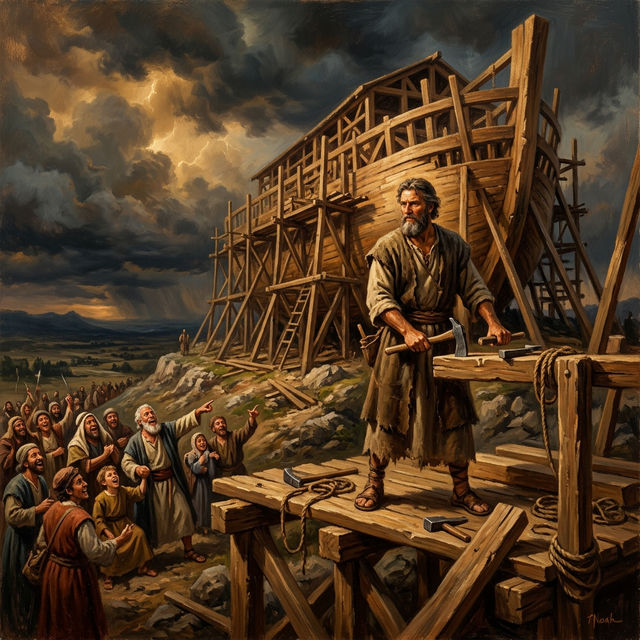
"By faith Noah, when warned about things not yet seen, in holy fear built an ark to save his family. By his faith he condemned the world and became heir of the righteousness that is in keeping with faith" (Hebrews 11:7). Think about this: Noah built a massive ship on dry land, in a world that had never seen rain. For 120 years. The world watched. The world mocked. The world laughed. But Noah kept building — because God had spoken. His faith wasn't just personal — it was prophetic. Every hammer swing was a sermon. Every plank was a warning. His obedience convicted an entire generation. Application: your faith is a light that pierces the darkness — even when the world mocks, stay the course.
📖 Key Scriptures
🙏 Pray
"Lord, I confess I've cared more about what people think than what You've said. I've let mockery slow my obedience. I renounce the fear of man. I declare: I will build what You've told me to build — even if the world laughs. My obedience is my sermon (Genesis 6:22)."
🪞 Reflect
What is God asking you to build that the world doesn't understand? Have you stopped building because of other people's opinions? What "ark" has been sitting unfinished because you got tired of being mocked?
⚡ Act
Identify your unfinished "ark" — the calling, project, or act of obedience you've paused because of fear or fatigue. Pick it back up this week. Do one thing to advance it. Every plank is a sermon.
Abraham — Obedience Before Understanding
Hebrews 11:8-12 — He left everything familiar and followed God into the unknown. He didn't know where he was going.
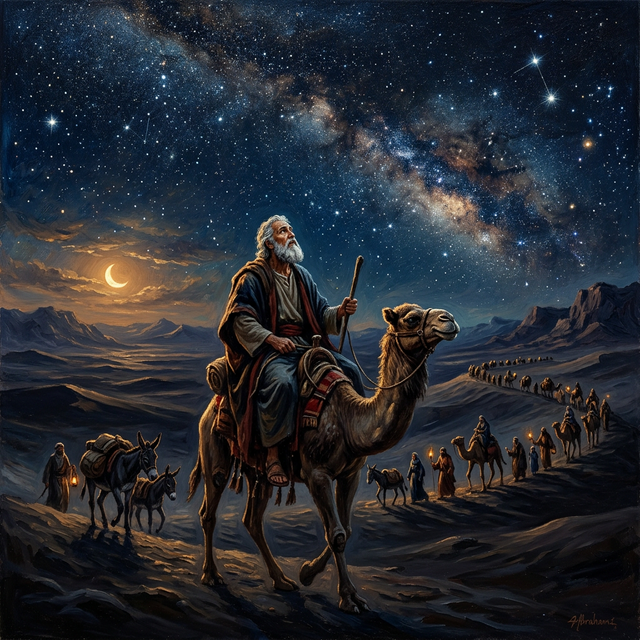
"By faith Abraham, when called to go to a place he would later receive as his inheritance, obeyed and went, even though he did not know where he was going" (Hebrews 11:8). Read that again: he obeyed and went, even though he did not know where he was going. Abraham didn't get a map. He got a command. He didn't receive a destination. He received a promise: "I will make you into a great nation" (Genesis 12:2). So he packed up his family, his livestock, and his life — and walked into a desert with nothing but a word from God. This is the pattern of faith: obedience precedes understanding. You don't move after you see — you move and then you see. From this one act of blind obedience came descendants as numerous as the stars.
📖 Key Scriptures
🙏 Pray
"Father, I confess I've demanded a map before I moved. I've required understanding before I obeyed. I renounce the lie that says I need to know every step before I take the first one. I declare: like Abraham, I will obey and go — even when I don't know where. Your promise is enough (Genesis 12:1-2)."
🪞 Reflect
Where is God calling you to go without a map? What familiar thing is He asking you to leave behind? Have you been demanding understanding before you obey — or are you willing to obey first and understand later?
⚡ Act
Identify one thing God is calling you toward that you can't fully see yet. Write it down. Then take one step of obedience this week — before you have the full picture. Faith moves before it sees.
Abraham — The Offering of Isaac
Hebrews 11:17-19 — The ultimate test: give back the one thing God gave you.
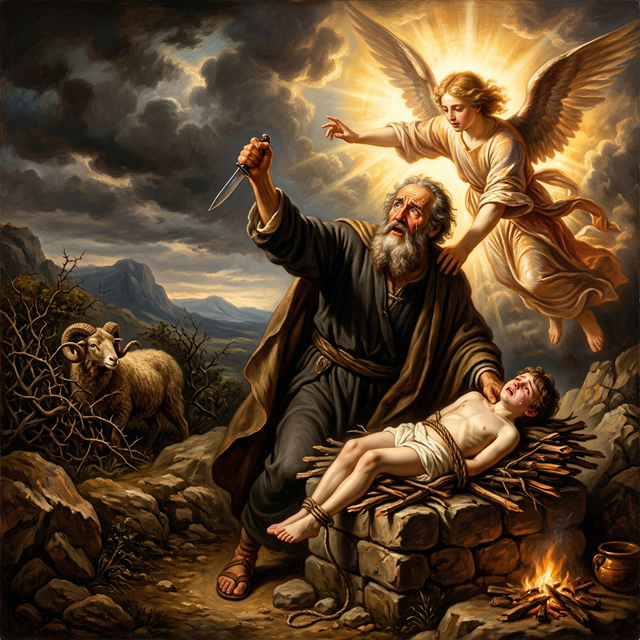
"By faith Abraham, when God tested him, offered Isaac as a sacrifice. He who had embraced the promises was about to sacrifice his one and only son" (Hebrews 11:17). This is the climax of Hebrews 11. God gave Abraham the miracle son — the one he waited 25 years for — and then said: "Give him back." Abraham's faith was so deep that he "reasoned that God could even raise the dead, and so in a manner of speaking he did receive Isaac back from death" (Hebrews 11:19). This is a type of the cross — a father offering his only son on a mountain, trusting that God could bring life from death. Isaac was a shadow. Jesus was the fulfillment. The test wasn't whether Abraham loved Isaac — it was whether he trusted the God who gave Isaac.
📖 Key Scriptures
🙏 Pray
"Father, I confess I've held back my 'Isaac' — the thing I love most, the blessing I'm afraid to release. I renounce the grip of fear that says if I let go, I'll lose everything. I declare: You are the God who provides. You gave Your own Son. I trust You with what You've given me (Romans 8:32)."
🪞 Reflect
What is your "Isaac" — the thing God gave you that you're afraid to give back? A relationship? A dream? A comfort? Could you lay it on the altar and trust that God can bring life from death?
⚡ Act
Name your "Isaac" — write it down. Pray Genesis 22:8 over it: "God Himself will provide." Then physically open your hands and say: "It's Yours, Lord. I trust the Giver more than the gift."
Sarah — Barren Faith Made Fruitful
Hebrews 11:11-12 — She laughed at the promise. God fulfilled it anyway.
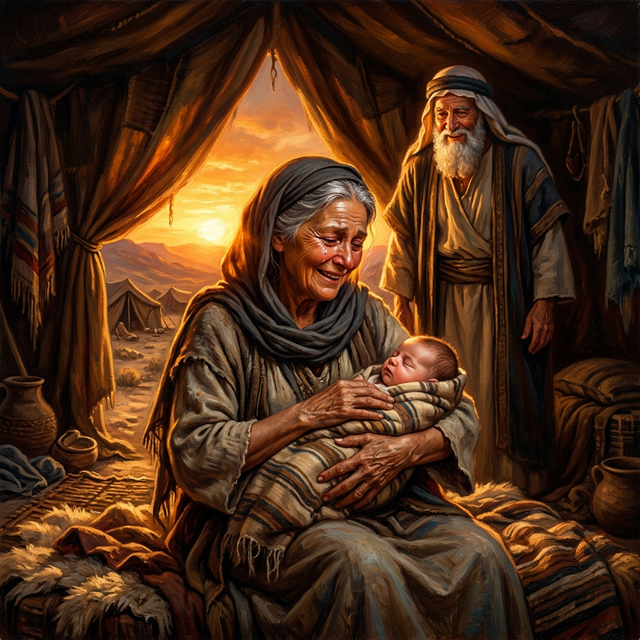
"By faith even Sarah, who was past childbearing age, was enabled to bear children because she considered him faithful who had made the promise" (Hebrews 11:11). Sarah's faith story is gloriously messy. When God promised her a son, she laughed (Genesis 18:12). She doubted. She schemed — giving Hagar to Abraham as a shortcut. She tried to manufacture God's promise through her own plan. And yet Hebrews 11 says she acted "by faith." How? Because despite the doubt and the detours, she ultimately "considered him faithful who had made the promise." Sarah teaches us that God doesn't require perfect faith — He honors real faith. She arrived at trust through struggle, not through certainty. And from that imperfect, messy, laughing faith came descendants "as numerous as the stars in the sky and as countless as the sand on the seashore" (Hebrews 11:12).
📖 Key Scriptures
🙏 Pray
"Lord, I confess I've laughed at Your promises — the ones that seemed too big, too late, too impossible. I've tried to manufacture outcomes with my own plans. I renounce the shame of my doubt. I declare: You are faithful even when my faith is messy. Nothing is too hard for You (Genesis 18:14)."
🪞 Reflect
What promise from God have you laughed at? What seems too late or too impossible? Have you tried to "help God" by engineering your own outcome? Can you trust His timing even when it makes no sense?
⚡ Act
Write down one "impossible" promise you're holding. Under it, write Genesis 18:14: "Is anything too hard for the LORD?" Release your timeline to God. Stop trying to manufacture the miracle — let Him bring it in His way and time.
Moses — Choosing Suffering Over Comfort
Hebrews 11:23-28 — He had everything Egypt could offer. He walked away.
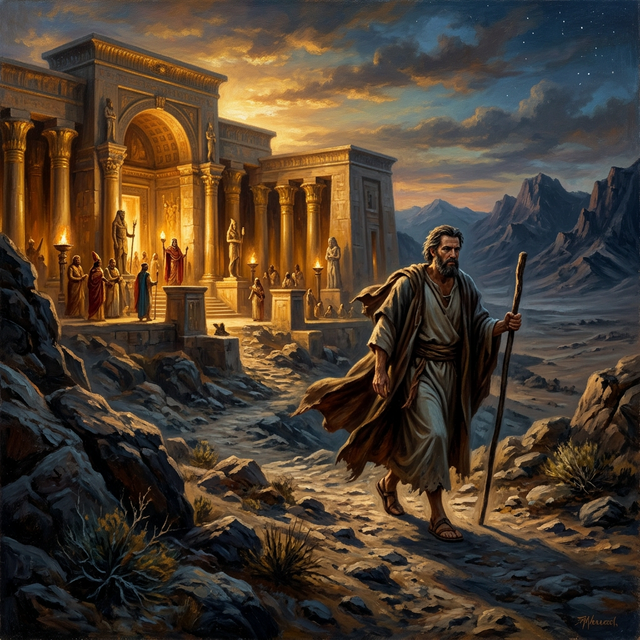
"By faith Moses, when he had grown up, refused to be known as the son of Pharaoh's daughter. He chose to be mistreated along with the people of God rather than to enjoy the fleeting pleasures of sin" (Hebrews 11:24-25). Moses had it all — royal status, wealth, power, the finest education in the ancient world. He was the adopted grandson of the most powerful ruler on earth. And he turned his back on all of it. Why? "He regarded disgrace for the sake of Christ as of greater value than the treasures of Egypt, because he was looking ahead to his reward" (Hebrews 11:26). Moses made a calculation: temporary luxury vs. eternal reward. He chose the desert over the palace, suffering over comfort, God's people over Pharaoh's court. By faith he kept the Passover — the blood on the doorposts that saved Israel from the destroyer.
📖 Key Scriptures
🙏 Pray
"Father, I confess I've valued comfort over calling. I've chosen pleasure over purpose. I renounce the pull of 'Egypt' — the world's rewards that compete with Your will. I declare: disgrace for Christ is worth more than the treasures of this world. I choose Your people and Your purpose (Hebrews 11:26)."
🪞 Reflect
What "Egypt" is luring you with comfort, status, or pleasure? What would you have to give up to follow God's calling fully? Are you choosing the palace or the desert?
⚡ Act
Identify one "comfort" that's competing with your calling. Make a conscious choice this week to prioritize God's purpose over that comfort. Take one tangible step toward the "desert" — the harder, holier path.
Rahab — Unlikely Faith
Hebrews 11:31 — A Gentile prostitute in the lineage of Jesus. Faith doesn't care about your résumé.
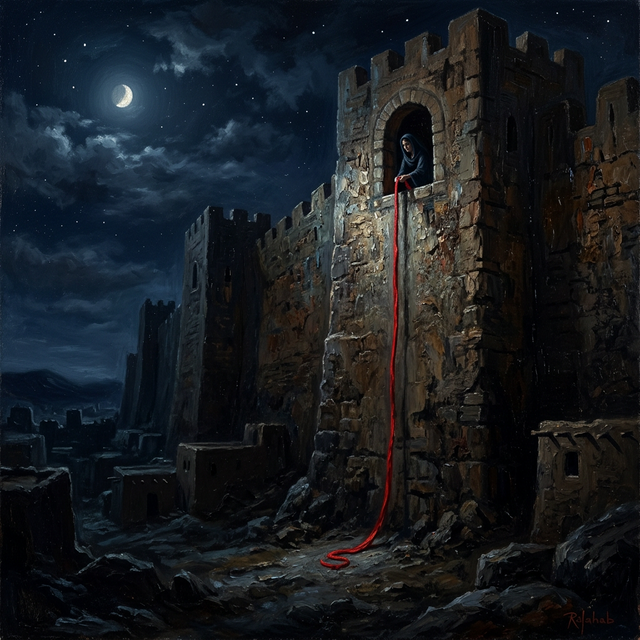
"By faith the prostitute Rahab, because she welcomed the spies, was not killed with those who were disobedient" (Hebrews 11:31). Of all the people God could have included in the Hall of Faith — and He chose a prostitute from a pagan city. Rahab's faith wasn't polished, theological, or strong. It was raw. She declared: "The LORD your God is God in heaven above and on earth below" (Joshua 2:11) — and then hid the spies at the risk of her own life. Her faith was imperfect but real. She hung a scarlet cord from her window — a crimson thread of salvation that foreshadowed the blood of Christ. And here's what makes her story explosive: Rahab is in the genealogy of Jesus (Matthew 1:5). A Gentile prostitute became an ancestor of the Messiah. Grace doesn't check your background.
📖 Key Scriptures
🙏 Pray
"Lord, I confess I've disqualified myself because of my past. I've believed the lie that my history makes me unworthy. I renounce the shame that says 'God can't use someone like me.' I declare: If a prostitute can be in the lineage of Jesus, then my past cannot disqualify me. Your grace doesn't check my résumé (Matthew 1:5)."
🪞 Reflect
What part of your past have you let disqualify you from faith? Do you believe God can use your story — even the broken parts — for His glory? What "scarlet cord" is God asking you to hang as a sign of trust?
⚡ Act
Write down the part of your past that shames you most. Then write Matthew 1:5 next to it — Rahab is in Jesus's family tree. Pray: "Lord, if You can redeem her story, You can redeem mine." Share your story with one trusted person this week.
And Many More...
Hebrews 11:32-38 — Some conquered kingdoms. Others were sawed in two. Same faith. Different outcome.
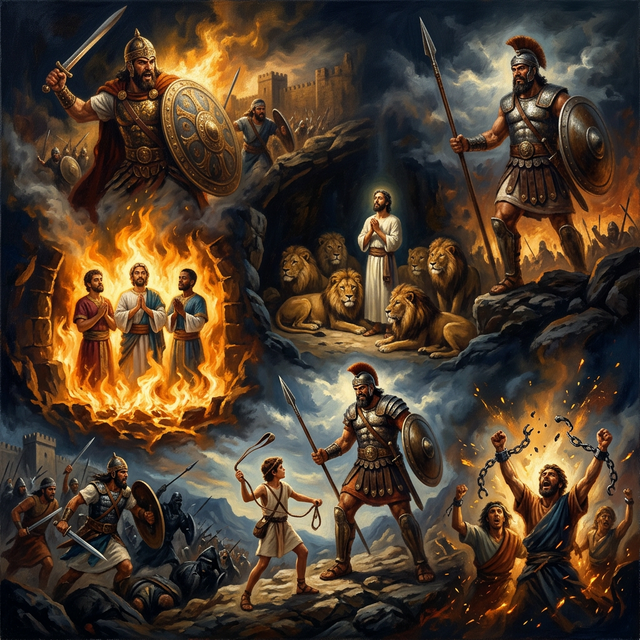
"And what more shall I say? I do not have time to tell about Gideon, Barak, Samson, Jephthah, David, Samuel, and the prophets" (Hebrews 11:32). The author runs out of space — there are too many witnesses to name. So he summarizes: by faith they conquered kingdoms, administered justice, shut the mouths of lions, quenched raging fire, escaped the sword. But then comes the devastating pivot: others "were tortured... faced jeers and flogging... were chained and put in prison... stoned... sawed in two... put to death by the sword" (Hebrews 11:35-37). Same faith. Radically different outcomes. "The world was not worthy of them" (Hebrews 11:38). This is the hardest lesson in the Hall: faith doesn't always deliver you from suffering — sometimes it empowers you to endure it.
📖 Key Scriptures
🙏 Pray
"Lord, I confess I've made faith about outcomes — deliverance, healing, success. I renounce the prosperity lie that says faith always leads to comfort. I declare: faith doesn't guarantee the outcome I want — it guarantees the God I need. Whether You deliver me from the fire or walk through it with me, I trust You (Hebrews 11:38)."
🪞 Reflect
Have you been measuring your faith by your outcomes? What if faith's real power isn't deliverance from suffering but endurance through it? Are you prepared for faith that empowers you to endure — not just escape?
⚡ Act
Read Hebrews 11:32-38 aloud. Write down: "Faith doesn't change God's plan — it holds me through it." Identify one current suffering you need endurance for. Ask God for persevering faith, not just delivering faith.
They Didn't Receive the Promise
Hebrews 11:39-40 — They believed, obeyed, suffered, died — without seeing the full fulfillment.
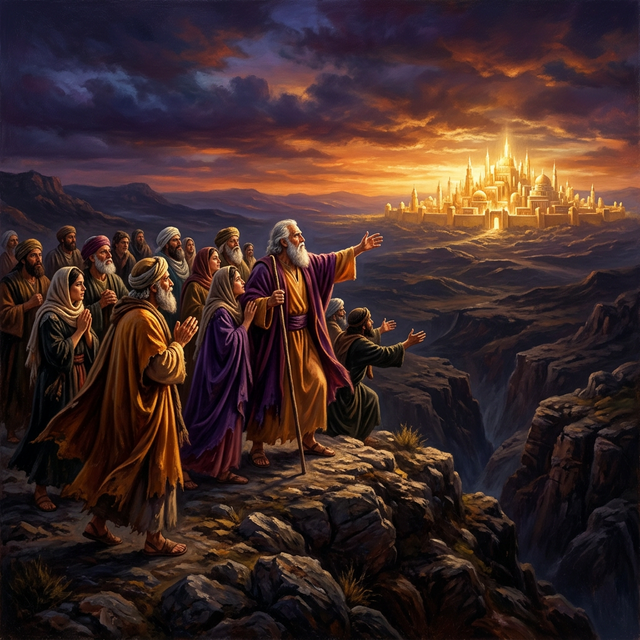
"These were all commended for their faith, yet none of them received what had been promised" (Hebrews 11:39). Every hero in this Hall — every one who trusted, obeyed, suffered, endured — died without seeing the full promise fulfilled. Why? "Since God had planned something better for us so that only together with us would they be made perfect" (Hebrews 11:40). The "something better" is the cross. They looked forward to the Messiah in faith — we look back, having seen the fulfillment. But here's the stunning implication: they "saw the promises from a distance and welcomed them" (Hebrews 11:13). They welcomed what they couldn't hold. Your faith is part of a bigger story — the heroes before you paved the way, and you're paving it for those who come after.
📖 Key Scriptures
🙏 Pray
"Father, I confess I've demanded fulfillment in my timeline. I've confused 'commended' with 'completed.' I renounce the lie that unfulfilled promises mean unfaithful God. I declare: my faith is part of a bigger story. I will welcome the promise from a distance — even if I don't hold it in my lifetime (Hebrews 11:13)."
🪞 Reflect
What promise are you waiting on that hasn't been fulfilled yet? Can you "welcome it from a distance" without demanding it in your timeline? How does it change your perspective to know your faith is building something for future generations?
⚡ Act
Write down your unfulfilled promises. Under each one, write: "Commended, not yet completed — and that's okay." Pray for the generation that will receive what you've been planting. Your faith is part of a bigger story.
The Great Cloud of Witnesses
Hebrews 12:1a — They're not just watching. They're testifying.
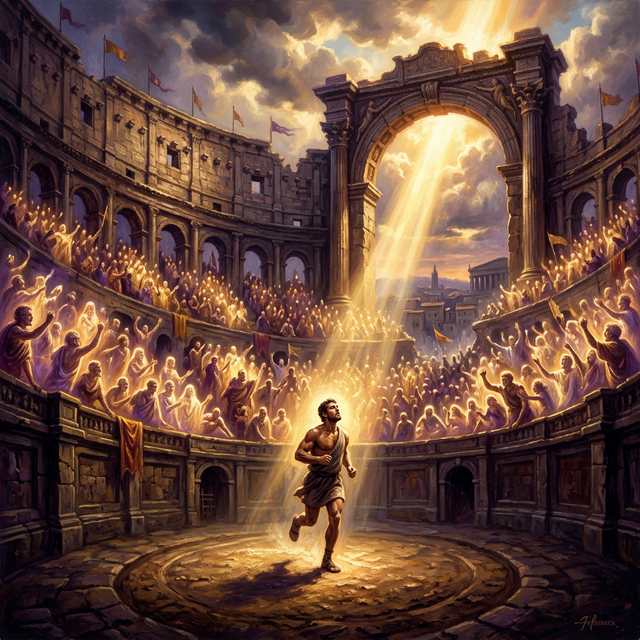
"Therefore, since we are surrounded by such a great cloud of witnesses..." (Hebrews 12:1a). The word "therefore" connects everything. Because of Abel, Enoch, Noah, Abraham, Sarah, Moses, Rahab — and millions of believers who have gone before us — we are now surrounded. The Greek word for "witnesses" is martyres — the same word that gives us "martyr." These aren't casual spectators. They are those who bear testimony. Their lives testify to the reality of faith. Picture it: a vast ancient stadium, the stands filled with the heroes of faith — glowing, present, alive. They've run their race. Now they're watching you run yours. You are not running alone. You never were.
📖 Key Scriptures
🙏 Pray
"Lord, I confess I've felt alone in my race. I've believed the lie that says nobody understands my struggle. I renounce isolation. I declare: I am surrounded by a great cloud of witnesses. Abel, Enoch, Abraham, Moses, Rahab — they ran this race before me. I am not alone (Hebrews 12:1)."
🪞 Reflect
Do you feel alone in your faith journey? Which hero from the Hall of Faith resonates most with your story? How does it change your perspective to know that the saints who came before are "witnesses" — testifying that faith works?
⚡ Act
Choose one hero from Hebrews 11 whose story most resonates with you. Study their full biblical narrative this week. Write down how their faith speaks to your current situation. Let their testimony become fuel for your race.
Run Your Race — Eyes on Jesus
Hebrews 12:1-2 — The cloud is watching. Jesus is leading. Now run.
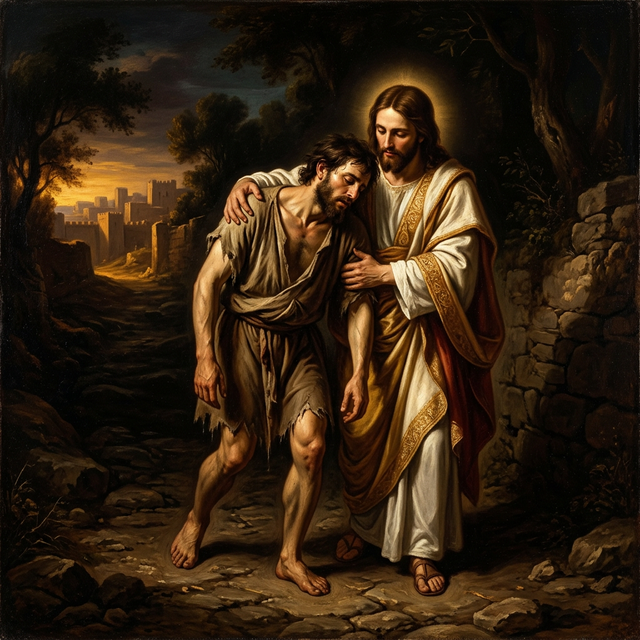
Two commands from Hebrews 12:1: Throw off everything that hinders — the weight, the sin, the distraction — "and the sin that so easily entangles." Then: Run with perseverance — not perfection, but endurance — "the race marked out for us." But here is the ultimate verse: "Fixing our eyes on Jesus, the pioneer and perfecter of faith. For the joy set before him he endured the cross, scorning its shame, and sat down at the right hand of the throne of God" (Hebrews 12:2). The heroes in Hebrews 11 are inspiring — but Jesus is the true hero. He didn't just start faith — He perfected it. He endured the cross not because it was easy, but because He could see joy on the other side. That joy was you. That joy was your salvation. He ran for you. Now you run for Him. The cloud is watching. Jesus is leading. The race is yours. Run.
📖 Key Scriptures
🙏 Pray
"Jesus, I fix my eyes on You — the pioneer and perfecter of my faith. I confess I've been distracted by sin, by worry, by the world. I throw off every weight. I renounce every entanglement. I declare: I will run with perseverance the race You marked for me. For the joy set before You, You endured the cross. I run for that same joy (Hebrews 12:2)."
🪞 Reflect
What weight do you need to throw off? What sin easily entangles you? Are your eyes fixed on Jesus — or on the obstacles? What would it look like to run your race with the same "for the joy" mentality that Christ had?
⚡ Act
Write "Fix your eyes on Jesus" where you'll see it every day. Name one weight you need to throw off — commit to releasing it. Then pray 2 Timothy 4:7: "Let me fight the good fight, finish the race, and keep the faith." Now run.