My Personal devotions translated into a visual guide—strategic, grounded, and ready for real-life application.
Permission to Lament
The Bible gives us an entire book of Lamentations. If this is in Scripture, you're allowed to feel this way.
Before we go any further, I need to give you permission. Permission to name your pain. Permission to tell God exactly how you feel. The Western church has a toxic positivity problem. We silence suffering. We spiritualize depression. We shame people for struggling. "Just have more faith." "Claim your victory." "Speak life, not death."
But the Bible doesn't do that. The Bible gives us an entire book called Lamentations. An entire book of grief, despair, and raw honesty before God. If this is in Scripture, you're allowed to feel this way. God isn't offended by your pain. He's waiting for you to bring it to Him.
📖 Key Scriptures
🙏 Pray
"Father, I confess I've been afraid to bring You my real feelings. I renounce the lie that honest grief offends You. I receive permission to lament — because Your Word shows me how."
🪞 Reflect
"Where have I been silencing my own pain to 'look strong'? What grief have I never brought to God because I thought it wasn't spiritual enough?"
⚡ Act
"Write one honest sentence to God about your deepest pain right now. Don't edit it. Don't spiritualize it. Just name it."
I Am the Man Who Has Seen Affliction
"Surely against me he turns his hand again and again the whole day long."
"I am the man who has seen affliction under the rod of his wrath." God's discipline feels like wrath. The suffering is relentless — "again and again the whole day long." There's no light. Only darkness.
If you're in this place right now, hear me: You're not backslidden. You're not apostate. You're not a bad Christian. You're in Lamentations 3. And that's okay.
📖 Key Scriptures
🙏 Pray
"Father, I confess I feel like You are against me. I renounce the lie that relentless suffering means I'm abandoned. I receive the truth that You see my affliction and have not turned away."
🪞 Reflect
"When did suffering first start feeling relentless? Is there a specific season where it felt like God's hand was 'against' you? What did you believe about Him in that moment?"
⚡ Act
"Read Lamentations 3:1-3 out loud slowly. Sit with it. Let yourself feel the weight of it without rushing to 'fix' the feeling."
Flesh and Skin Waste Away
"He has made me dwell in darkness like the dead of long ago."
"He has made my flesh and my skin waste away; he has broken my bones." This is physical, emotional, and spiritual exhaustion. "He has made me dwell in darkness like the dead of long ago." That's clinical depression language.
Feeling like the walking dead. Going through the motions but not really alive. If that's you — you're not alone. Depression isn't a lack of faith. It's a human experience that God knows about. And He doesn't shame you for it.
📖 Key Scriptures
🙏 Pray
"Father, I confess my body and soul are exhausted. I renounce the shame that says depression means weak faith. I receive Your compassion — You formed my body and You know my frame."
🪞 Reflect
"Where are you experiencing exhaustion — physical, emotional, spiritual? Have you been treating depression as a faith failure instead of a human reality God understands?"
⚡ Act
"If you haven't slept, eaten, or moved your body in days — do that first. Faith includes caring for your body. Consider talking to a counselor or pastor this week."
Walled In, Prayer Shut Out
"Though I call and cry for help, he shuts out my prayer."

"He has walled me about so that I cannot escape; he has made my chains heavy; though I call and cry for help, he shuts out my prayer." Unanswered prayer. Divine silence. You're crying out to God, and it feels like He's not listening.
You're walled in. Trapped. Heavy chains. Blocked paths. If you've ever felt like God has abandoned you — you're in good company. The writer of Lamentations felt it too. But here's what's important: when God feels silent, He hasn't abandoned you. He's in the silence with you.
📖 Key Scriptures
🙏 Pray
"Father, I confess my prayers feel unanswered and I'm tempted to stop praying. I renounce the lie that Your silence means absence. I receive the truth that You are present in the silence."
🪞 Reflect
"How long have you been in the 'unanswered prayer' season? Have you stopped praying because it felt pointless? What if God's silence is not rejection but a different kind of answer?"
⚡ Act
"Pray one honest prayer today even if it feels like shouting into a void. Write it in a journal. Date it. Trust that God records every prayer (Revelation 8:3-4)."
God as Predator
"He is a bear lying in wait for me, a lion in hiding."

Now we get to the most disturbing image in the entire passage. God as a predator. A bear lying in wait. A lion in hiding. An archer hunting you. This isn't comfortable. This isn't Sunday school.
But this is lament. Lament doesn't sugarcoat. It names what you feel, even if it's terrifying. Even if it sounds blasphemous. God can handle your honesty. He's big enough for your anger, your fear, your confusion. Bring it all to Him.
📖 Key Scriptures
🙏 Pray
"Father, I confess that sometimes You feel like the enemy. I renounce the belief that honest anger toward You is unforgivable. I receive the truth that You are safe enough for my rawest emotions."
🪞 Reflect
"Have you ever felt hunted by God? Like He was actively working against you? What triggered that feeling? What were you believing about His character?"
⚡ Act
"Tell God the unedited version of how you feel. Write it, speak it, shout it. He already knows — He's waiting for you to be honest about it."
Mockery and Bitterness
"He has filled me with bitterness; he has sated me with wormwood."
"I have become the laughingstock of all my people." Suffering often comes with social isolation. People don't know what to say, so they say nothing. Or worse — they mock. "Where's your God now?" "Maybe you're in sin." "You just need more faith."
And the bitterness grows. "He has filled me with bitterness; he has sated me with wormwood." Wormwood is a plant so bitter it's poisonous. That's what prolonged suffering does. It embitters you. If you're bitter right now — God understands. But don't stay there. Because the story doesn't end here.
📖 Key Scriptures
🙏 Pray
"Father, I confess bitterness has taken root. I renounce the right to hold onto it as self-protection. I receive Your grace to release the poison before it consumes me (Hebrews 12:15)."
🪞 Reflect
"Who mocked your suffering or gave you bad theology when you were hurting? Has that bitterness become your identity? What would releasing it cost you?"
⚡ Act
"Name one person whose words wounded you in your suffering. Pray for them by name — not to excuse them, but to break bitterness's hold on you."
Grinding Teeth on Gravel
"My endurance has perished; so has my hope from the LORD."
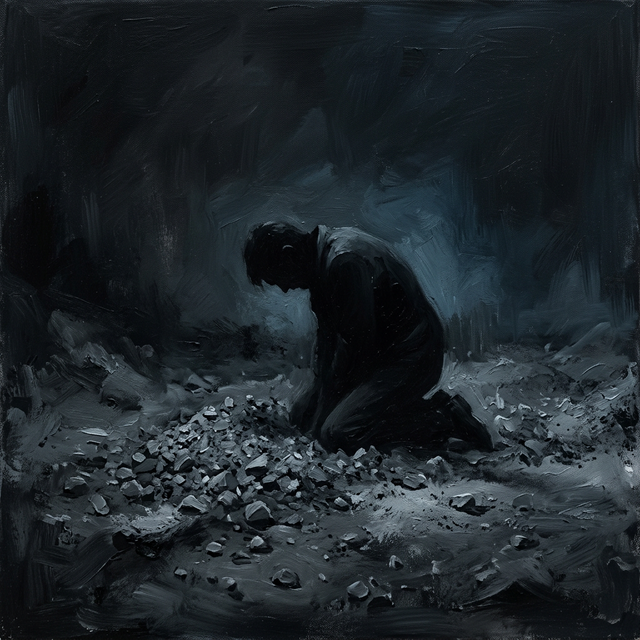
"He has made my teeth grind on gravel, and made me cower in ashes." That's the image of eating dirt. Humiliation. Suffering so severe it's degrading. "My soul is bereft of peace. I have forgotten what happiness is."
Have you ever been there? So deep in the darkness that you can't even remember what joy felt like? And then the crushing declaration: "My endurance has perished; so has my hope from the LORD." This is rock bottom. This is the place where hope dies. But here's the thing about rock bottom: Rock bottom is where the pivot happens.
📖 Key Scriptures
🙏 Pray
"Father, I confess I have forgotten what happiness feels like. I renounce the declaration that hope is dead. I receive the truth that rock bottom is not the end — it's where You meet me."
🪞 Reflect
"When was your rock bottom? Are you there right now? What did you believe about yourself and about God at your lowest point?"
⚡ Act
"Don't skip this slide. Sit here for a moment. Let the weight settle. Then turn the page — because what comes next changes everything."
But This I Call to Mind
"But this I call to mind, and therefore I have hope."

Verse 21. The hinge verse. The moment everything changes. "But this I call to mind, and therefore I have hope." Three words: But this I. In the middle of the darkness, the writer makes a choice. He chooses to remember. He chooses to call truth to mind. He chooses hope.
Not because he feels hopeful. But because hope isn't a feeling — it's a choice. It's a decision to anchor yourself to truth when your feelings are lying to you. So the question is: what do you call to mind when hope dies? What truths about God do you anchor to when everything else is falling apart?
📖 Key Scriptures
🙏 Pray
"Father, I confess my mind has been anchored to despair instead of truth. I renounce the agreement that hopelessness is permanent. I receive the power to choose hope — not as a feeling, but as a decision rooted in Your character."
🪞 Reflect
"When hope died in you, what replaced it? What lies did you start believing? What truth about God could have been your anchor — but you forgot it?"
⚡ Act
"Write down one truth about God that doesn't change regardless of your circumstances. Tape it somewhere you'll see every day. That's your hinge."
What Do You Call to Mind?
In the darkest moment, what truths do you anchor to?

This is where the work happens. In your darkest moment, what do you call to mind? What truths about God anchor you when the storm is raging? Not platitudes. Not clichés. Real, solid, biblical truths about God's character that don't change — even when your circumstances do.
Here are some anchors: God is sovereign — He's never surprised. God is good — even when I can't see it. God is faithful — He keeps His promises. God is near — He doesn't abandon His children. God is powerful — nothing is too hard for Him. What are yours? Because the next time you're in the pit, you need to know what to call to mind.
📖 Key Scriptures
🙏 Pray
"Father, I confess I've relied on feelings instead of truth. I renounce the habit of letting my emotions define reality. I receive the discipline to anchor my mind to Your Word when everything else shifts."
🪞 Reflect
"Write down 3-5 truths about God's character that don't change. Which of these have you forgotten in your current season? Which do you need most right now?"
⚡ Act
"Create a 'hinge card' — a physical card with your anchor truths. Keep it in your wallet, on your mirror, or on your phone lock screen. When despair whispers, read it out loud."
The Steadfast Love of the LORD Never Ceases
"His mercies never come to an end."

"The steadfast love of the LORD never ceases." The word "steadfast love" is the Hebrew word hesed. It's covenant love. Loyal love. Unbreakable love. It's not based on your performance, your feelings, or your circumstances. It's based on God's character. And His character doesn't change.
When you're in the pit, His love doesn't cease. When you're grinding your teeth on gravel, His love doesn't cease. When you've forgotten what happiness is, His love doesn't cease. It never ceases. His love for you is not conditional. It's covenant.
📖 Key Scriptures
🙏 Pray
"Father, I confess I've doubted Your love in my suffering. I renounce the lie that my pain proves You don't care. I receive Your hesed — covenant love that never ceases, never fails, never quits on me."
🪞 Reflect
"When have you experienced God's steadfast love most clearly? When has it felt most absent? What if His love was present both times — and your perception was the only thing that changed?"
⚡ Act
"Say out loud: 'The steadfast love of the LORD never ceases.' Say it three times. Let it settle. Then text it to someone who needs to hear it today."
New Every Morning
"They are new every morning."

"They are new every morning." God's mercies reset daily. Yesterday's despair doesn't define today. This morning, you woke up to fresh mercy. Tomorrow morning, you'll wake up to fresh mercy again.
God doesn't run out of mercy. He doesn't run out of compassion. Every single morning, His mercies are new. That means today is a new day. No matter how dark yesterday was, today is a fresh start. God's not tired of you. He's not done with you. His mercies are new. Every. Single. Morning.
📖 Key Scriptures
🙏 Pray
"Father, I confess I've been carrying yesterday's weight into today. I renounce the lie that my past failures define my future. I receive today's fresh mercy — new, unearned, unlimited."
🪞 Reflect
"What are you still carrying from yesterday — or last year — that God has already renewed? Are you living in today's mercy or yesterday's regret?"
⚡ Act
"Tomorrow morning, before you check your phone, say this: 'God, Your mercies are new this morning. I receive them.' Do it for 7 days straight."
Great Is Your Faithfulness
"Great is your faithfulness."

And here it is. The famous line. "Great is your faithfulness." Not "great is my faithfulness." God's faithfulness anchors us when ours fails. This is the line that became the hymn. But don't miss the context.
This isn't prosperity gospel. This isn't "everything's going great, God is good." This is a man who just spent 20 verses describing unimaginable suffering — and he declares: "Great is Your faithfulness." That's worship in the wasteland. That's choosing to sing when you don't feel like it. And that's what breaks the power of darkness. Sing it. Even when you don't feel it. Worship is warfare.
📖 Key Scriptures
🙏 Pray
"Father, I confess I've waited for feelings before I worship. I renounce the lie that worship requires good circumstances. I receive the truth that worship is warfare — and I choose to declare Your faithfulness right here in the darkness."
🪞 Reflect
"When was the last time you worshiped God in the middle of suffering — not after, but during? What would it look like to sing 'Great Is Your Faithfulness' right now?"
⚡ Act
"Put on the hymn 'Great Is Thy Faithfulness.' Listen to it. Sing it — even if your voice breaks. Worship in the wasteland is the most powerful kind."
The LORD Is My Portion
"'The LORD is my portion,' says my soul, 'therefore I will hope in him.'"

A "portion" in the Old Testament is your inheritance. Your share. When you've lost everything, God Himself is enough. Not God plus a good job. Not God plus health. Not God plus a happy family. Just God.
God alone is your portion. And here's the radical question this verse asks: What if God is the prize, not the means to a prize? What if the goal of life isn't comfort, success, or happiness — but knowing God? If you have God, you have everything. And that's enough.
📖 Key Scriptures
🙏 Pray
"Father, I confess I've made You a means to an end instead of the end itself. I renounce the idol of comfort, control, and having 'enough.' I receive You as my portion — and You are enough."
🪞 Reflect
"What have you been adding to God to feel satisfied — God plus money, God plus approval, God plus health? What would it mean for God alone to be your portion?"
⚡ Act
"Say out loud: 'God, You are my portion. You are enough.' Then identify one thing you've been clinging to as a supplement to God — and surrender it in prayer today."
Good to Those Who Wait
"It is good that one should wait quietly for the salvation of the LORD."

"The LORD is good to those who wait for him, to the soul who seeks him." Waiting isn't passive resignation. It's active trust. It's not giving up. It's surrendering control.
"It is good that one should wait quietly for the salvation of the LORD." Quietly. Not frantically. Not anxiously. Quiet trust in the middle of chaos. Waiting doesn't mean you stop praying. It means you stop demanding. It means you trust God's timing even when you don't understand it. And that kind of waiting? That kind of trust? God calls it good.
📖 Key Scriptures
🙏 Pray
"Father, I confess I've been demanding answers on my timeline. I renounce the anxiety that says 'if God doesn't act now, He won't act at all.' I receive the grace to wait quietly — trusting that Your timing is perfect."
🪞 Reflect
"Where are you demanding speed from God right now? What would 'waiting quietly' look like in your current season? Is your waiting anxious or restful?"
⚡ Act
"Spend 5 minutes in silence today. No music, no phone, no prayer requests — just sit with God. Practice quiet trust. Let the silence be worship."
How to Lament Biblically
Lament follows a pattern: Name the pain → Remember the truth → Choose hope.

How do you lament biblically without falling into despair? Here's the pattern from Lamentations 3:
Step 1: Name the pain. Write it out. All of it. Be brutally honest with God. Don't sugarcoat it. Don't spiritualize it. Just name it. "God, I feel abandoned. I feel like You're not listening. I'm angry. I'm scared. I don't understand."
Step 2: Identify your hinge. What truth will you call to mind? What's your "But this I call to mind" moment? Write it down. Anchor yourself to it.
Step 3: Declare truth aloud. Speak it. Even if you don't feel it. "The steadfast love of the LORD never ceases. His mercies are new every morning. Great is Your faithfulness." Say it until you believe it. That's how you lament biblically. You bring the pain to God — and you leave with hope.
📖 Key Scriptures
🙏 Pray
"Father, I confess I've either suppressed my pain or drowned in it. I renounce both extremes. I receive the gift of biblical lament — honest, anchored, and leading to hope."
🪞 Reflect
"Which extreme do you default to — toxic positivity or hopeless despair? When was the last time you brought raw, unedited pain to God and still chose hope?"
⚡ Act
"Write your own lament this week using the pattern: Name the pain (vv. 1-18), identify your hinge (v. 21), declare truth aloud (vv. 22-26). Share it with a trusted friend or pastor."
A Prayer for Those in the Darkness
Father,
I'm in the darkness. I feel like You've shut out my prayer. I'm grinding my teeth on gravel, and I've forgotten what happiness feels like.
But this I call to mind:
Your steadfast love never ceases.
Your mercies are new every morning.
Great is Your faithfulness.
You are my portion.
I will wait for You.
Even in the silence, I trust You.
In Jesus' name,
Amen.