Do Not Be Anxious
"Do not be anxious about anything..." — Philippians 4:6a
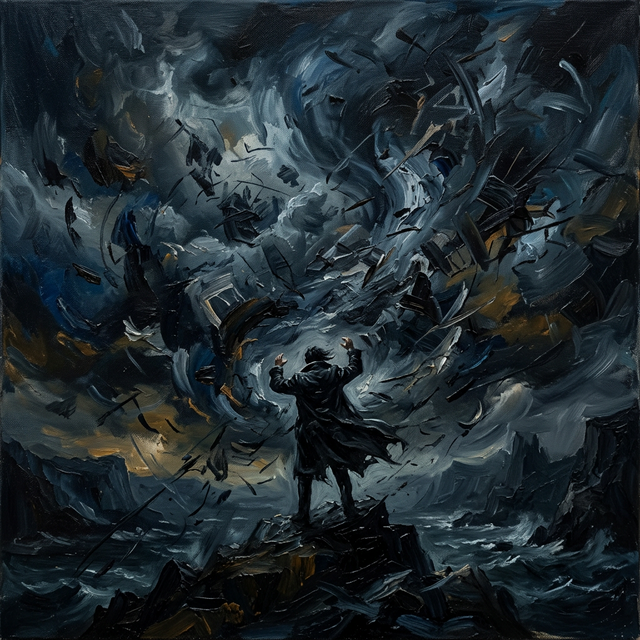
Not "try not to be anxious." Not "be less anxious." Do. Not. Be. Anxious. Paul uses the Greek word merimnao — which means to be divided, distracted, pulled apart. Anxiety is the opposite of trust. It's your mind spinning in a hundred directions, trying to control what you can't control. And God says: Stop. Not because anxiety isn't real. But because there's a better way.
📖 Key Scriptures
🙏 Pray
"Father, I confess I have let anxiety become my default response instead of prayer. I renounce the lie that worrying is productive or protective. I break agreement with the spirit of fear and receive Your command — not as condemnation but as invitation. You didn't say 'don't feel.' You said 'come to Me' (2 Timothy 1:7)."
🪞 Reflect
"What is your body's first response to bad news — prayer or panic? When was the last time you obeyed a command from God that felt impossible? Is your anxiety driven by a need to control outcomes?"
⚡ Act
"Set a daily alarm labeled 'Do Not Be Anxious.' When it goes off, stop and pray Philippians 4:6 out loud — every day for 7 days. Journal what shifts in your thought patterns."
About Anything
"...about anything..." — No category of worry is excluded.

Your health. Your finances. Your relationships. Your kids. Your job. Your future. The thing keeping you up at 3 AM. The conversation you're dreading tomorrow. The diagnosis you're waiting for. God isn't dismissing your concerns — He's inviting you to bring them to Him. Every single one. Because the scope of your anxiety is covered by the scope of His care.
📖 Key Scriptures
🙏 Pray
"Lord, I confess I have categorized my worries as 'too small' or 'too big' for You. I renounce the lie that some burdens are mine to carry alone. I cast every anxiety — named and unnamed — onto You right now, because You care for me (1 Peter 5:7)."
🪞 Reflect
"What worry have you told yourself is 'too silly' to bring to God? What burden are you carrying because you believe prayer won't change it? Are you holding back from God the very thing He's asking for?"
⚡ Act
"Write down every worry — big and small — on a piece of paper. Read each one aloud as a prayer: 'God, I give You ___.' Fold the paper, put it in your Bible at Philippians 4, and leave it there."
The Reality of Anxiety
Christians are not immune. David, Elijah, and Paul all battled anxiety.
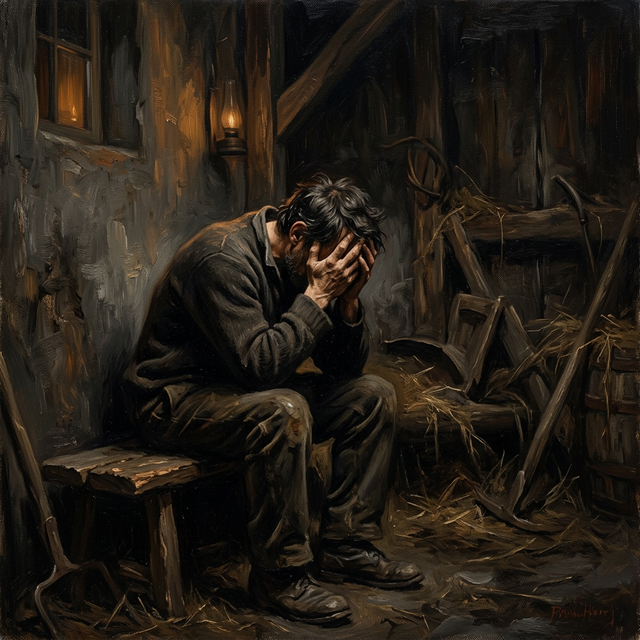
Here's the reality: we are anxious. Even as Christians. Even when we know we shouldn't be. Anxiety is part of living in a broken world. David was anxious. Elijah was anxious. Paul himself battled anxiety. The difference isn't whether you feel anxious. The difference is what you do with the anxiety. Do you carry it alone? Or do you bring it to God?
📖 Key Scriptures
🙏 Pray
"Jesus, I confess I have felt shame for being anxious — as if faith should make me bulletproof. I renounce the lie that anxiety disqualifies me. You chose David, Elijah, and Paul — anxious men who ran to You. I run to You now. Console my soul (Psalm 94:19)."
🪞 Reflect
"Have you ever hidden your anxiety from God or from community because you felt it made you 'less Christian'? Do you judge yourself more harshly for anxiety than God does? When was the last time you were honest about your fear?"
⚡ Act
"Tell one trusted person this week: 'I'm anxious about ___.' Break the isolation. Then pray Psalm 34:4 together. If the anxiety is chronic, seek a Christian counselor — obedience includes getting help."
But in Everything
The pivot: You were anxious about anything. Now you pray about everything.

"But in everything..." This is the pivot. The scope of prayer matches the scope of anxiety. No-thing becomes every-thing. If it's big enough to worry about, it's big enough to pray about. If it's keeping you up at night, God wants to hear about it. Nothing is too small. Nothing is too trivial. Everything that concerns you concerns Him.
📖 Key Scriptures
🙏 Pray
"Father, I confess I have prayed selectively — bringing You the 'spiritual' requests while handling the 'practical' ones myself. I renounce my self-sufficiency. I bring You everything: my finances, my health, my relationships, my fears, my future. All of it. You said 'everything' — I'm taking You at Your word (Matthew 11:28)."
🪞 Reflect
"What category of your life have you kept walled off from prayer? Are there 'secular' worries you've never brought to God? Do you believe God cares about the details — or only the big picture?"
⚡ Act
"Create a prayer list with four columns: Relationships, Finances, Health, Purpose. Write one anxiety in each. Pray through all four tonight. Repeat every evening this week."
Prayer — Communion with God
Not just crisis moments. Ongoing, daily, moment-by-moment conversation.

Paul starts with prayer — the general term. This is communion with God. Not just asking for things. "Pray without ceasing" doesn't mean you're on your knees 24/7. It means you live in a posture of dependence. You talk to God about everything — the good, the bad, the mundane, the terrifying. He's not just the God you call in emergencies. He's the God you walk with every day.
📖 Key Scriptures
🙏 Pray
"Lord, I confess I have treated prayer as a last resort rather than a lifestyle. I renounce the lie that You're too busy for my daily concerns. I want to live in constant communion with You — talking to You as I drive, work, parent, and rest. Be my first thought, not my last option (Psalm 62:8)."
🪞 Reflect
"Is your prayer life event-driven (crisis mode) or relationship-driven (daily communion)? When you're alone with your thoughts, who are you talking to — yourself or God? How long can you go in a day without a single prayer?"
⚡ Act
"Practice 'breath prayers' today: every time you feel anxious, whisper 'Jesus, I trust You.' Do it at least 10 times. Track it. By week's end, it becomes reflex instead of effort (1 Thessalonians 5:17)."
Desperate & Specific Prayer
Supplication and requests — urgent, honest, named before God.
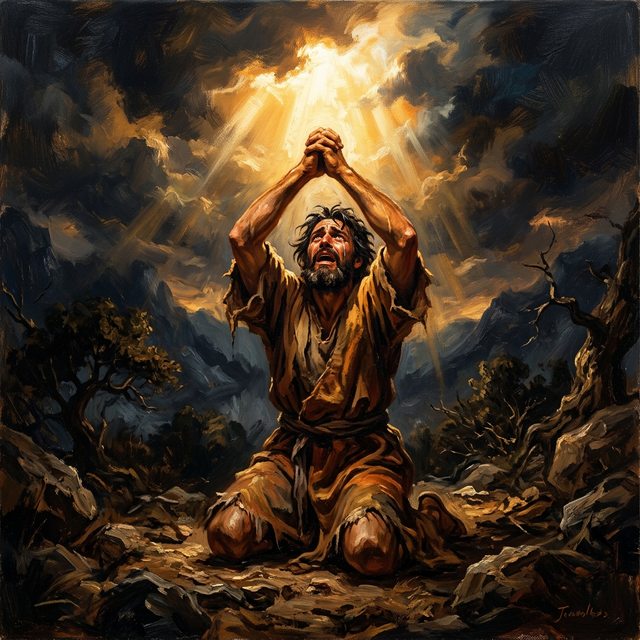
Supplication is more intense. More desperate. It's Jacob wrestling the angel: "I will not let you go unless you bless me." It's Hannah weeping in the temple. It's Jesus in Gethsemane. And then: "Let your requests be made known to God." Not vague prayers — specific ones. God invites specificity. Jesus asked blind Bartimaeus: "What do you want me to do for you?" He already knew. But Bartimaeus needed to say it. Name what you need. The act of naming is an act of trust.
📖 Key Scriptures
🙏 Pray
"God, I confess I have prayed safe, vague prayers to protect myself from disappointment. I renounce the spirit of unbelief that says 'why bother being specific — God might say no.' I come boldly to Your throne of grace right now. Here is exactly what I need: ______. I name it. I trust You with the answer (Hebrews 4:16)."
🪞 Reflect
"Are your prayers vague because you're afraid to be specific? Have you stopped praying about something because God didn't answer the way you wanted? Is there a desperate prayer you've swallowed because it felt too bold?"
⚡ Act
"Write 3 specific prayer requests — not vague blessings, but named needs with dates. 'God, I need ___ by ___.' Pray them daily. When He answers, record the date. Build your faith file (Mark 11:24)."
With Thanksgiving
The game-changer. Not after God answers — while you're asking.

Not after God answers. While you're asking. This is the difference between anxiety and peace. Anxiety focuses on what you don't have. Thanksgiving focuses on what God has already done. When you thank God while asking, you're saying: "God, I don't have the answer yet. But I trust You. I remember what You've done. I believe You're still faithful." You can't be grateful and anxious at the same time. Try it.
📖 Key Scriptures
🙏 Pray
"Father, I confess I wait for answers before I thank You — as if gratitude must be earned. I renounce the transactional spirit that says 'I'll praise You when You deliver.' Right now, before anything changes, I thank You for what You've already done. You are faithful. You have never failed me. I worship You in the waiting (1 Thessalonians 5:18)."
🪞 Reflect
"When was the last time you thanked God before He answered? Is your praise conditional — dependent on outcomes? Can you name 5 answered prayers from the last year without checking notes?"
⚡ Act
"Before your next prayer request, list 3 past answered prayers out loud. Thank God for each one by name. Then make your request. Practice this pattern for 7 days and notice the shift (Psalm 100:4)."
Made Known to God
You're not informing God. You're surrendering to God.
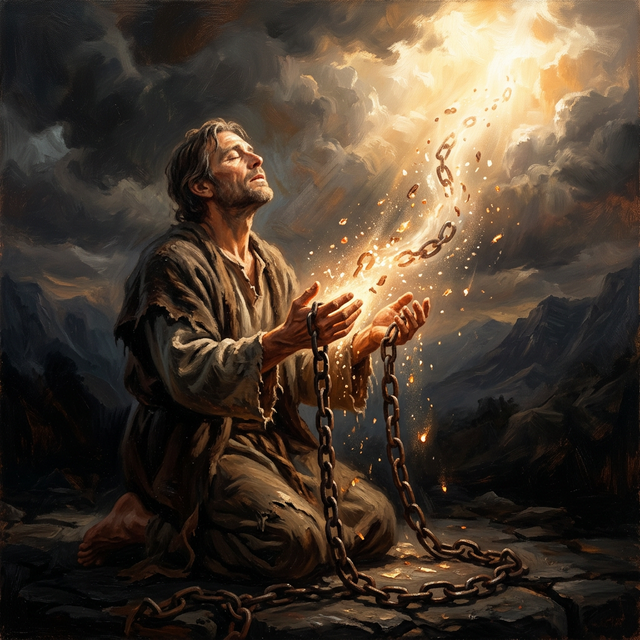
God already knows. So why pray? Because you need to release it. Anxiety is carrying a burden God never asked you to carry. Prayer is the act of handing it over. "God, this is too heavy. I can't carry it. I'm giving it to You." You're not informing God — you're surrendering to God. And when you cast your burden on Him, He doesn't drop it. He sustains you. You pray — and something shifts. Not always in your circumstances. But always in your heart.
📖 Key Scriptures
🙏 Pray
"Lord, I confess I have 'prayed' about things while still clutching them with both hands. I renounce the control that disguises itself as responsibility. I release my grip right now. This burden is Yours. I receive Your yoke — the easy one. I trust that what I give You, You are faithful to hold (Psalm 55:22)."
🪞 Reflect
"Have you ever prayed about something and then kept worrying about it — as if the prayer didn't count? What burden are you 'managing' that God is asking you to release? Is your need to control disguised as conscientiousness?"
⚡ Act
"Hold a physical object (a rock, a book). Pray your biggest worry out loud while holding it. Then set it down and walk away — literally. Leave it on a shelf as a symbol: 'I gave this to God.' When the worry returns, remember: it's on the shelf (Matthew 11:28-30)."
The Peace of God
Not peace with God (that's the Cross). His own peace — given to you, surpassing all understanding.

This peace "surpasses all understanding." It doesn't make logical sense. You're still in the storm. The problem hasn't been solved. But you're calm. Not because you figured it out — but because God is holding you. And this peace guards your heart and mind. The Greek word is phroureo — to garrison, to station a guard. God's peace is a soldier standing watch over your heart. When anxious thoughts come, God's peace pushes them back. Active protection. Every day. Every battle.
📖 Key Scriptures
🙏 Pray
"God of peace, I confess I have sought peace in solutions, outcomes, and control instead of in You. I renounce the lie that peace requires resolved circumstances. I receive Your supernatural peace right now — the kind that doesn't make sense. Guard my heart and mind. Station Your peace like a soldier at the door of my thoughts (Isaiah 26:3)."
🪞 Reflect
"Have you experienced peace that didn't make sense — calm in a storm you couldn't explain? Or have you never experienced it because you've never fully surrendered the situation to God? What would it look like to stop seeking resolution and start seeking presence?"
⚡ Act
"Memorize Philippians 4:7 this week. When anxiety attacks, speak it out loud as a declaration: 'The peace of God WILL guard my heart and mind.' Say it until your pulse settles. Record each time the peace came — build your testimony (John 14:27)."
In Christ Jesus
The location of peace. Not in your circumstances — in Him.
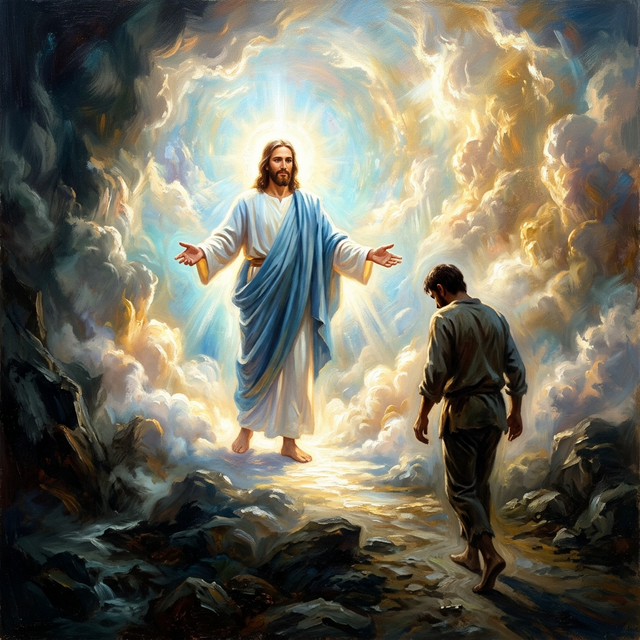
"In Christ Jesus." This is where the peace is found. Not in your circumstances. Not in your own strength. Not in positive thinking or self-help strategies. In Christ. Jesus said: "In me you may have peace. In the world you will have tribulation." The world will give you anxiety. Jesus gives you peace. You can't manufacture it, earn it, or fake it. It's only found in Him. And no circumstance, no trial, no storm can take it away — because it's not based on what's happening around you. It's based on who's holding you.
📖 Key Scriptures
🙏 Pray
"Jesus, I confess I have looked for peace in every place except You — in plans, people, and outcomes. I renounce every substitute for Your presence. I am in You and You are in me. I receive the peace that can't be taken, can't be shaken, and can't be manufactured. You have overcome the world — and I am Yours (John 16:33)."
🪞 Reflect
"Where have you been seeking peace — in resolved circumstances, financial security, human approval? Is your peace Christ-dependent or situation-dependent? What would change if you truly believed He has already overcome?"
⚡ Act
"Start an Answered Prayer Journal today. Write your anxieties, the date you prayed, and leave space for God's answer. When He moves — and He will — record it. Your past answers become fuel for future faith (Colossians 3:15)."