The Watchmaker's Daughter
Haarlem, 1940. An ordinary family chose extraordinary obedience.

Casper ten Boom was a watchmaker in Haarlem, Holland — an elderly man with spectacles and a big heart. When the Nazis occupied the Netherlands, Casper made a decision that would cost him everything: "In this household, God's people are always welcome." It wasn't a grand public declaration. It was a quiet, daily, costly "yes" — spoken into a world that rewarded silence and punished compassion. The ten Boom family began sheltering Jews, knowing full well the penalty was imprisonment or death.
📖 Key Scriptures
🙏 Pray
"Father, I confess I have chosen comfort over costly obedience. I have closed my door to the vulnerable because it was inconvenient. I renounce the lie that says my safety matters more than someone else's survival. I break agreement with the spirit of self-preservation. I declare: in this household, God's people are always welcome (Hebrews 13:2)."
🪞 Reflect
When was the last time your faith cost you something? Is there a person, a cause, or a conviction you've been avoiding because the price is too high? What would Casper's "yes" look like in your life today?
⚡ Act
Name one costly "yes" God is asking of you right now — not a comfortable one, a dangerous one. Write it down. Tell one person. Take the first step this week (Proverbs 31:8-9).
The Secret Room
A false wall. ~800 lives. Love always costs something.
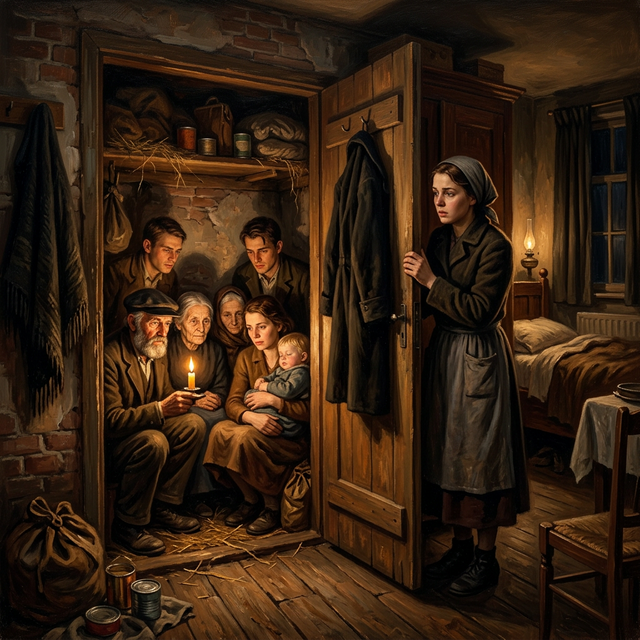
Behind a false wall in Corrie's bedroom, the ten Booms built a hiding place — a tiny space that could hold up to six people. Through an underground network of safe houses, the family helped save approximately 800 Jewish lives. Every knock on the door could be the Gestapo. Every day was a gamble. Every meal shared was one less for themselves. The secret room wasn't just architecture — it was theology made physical. "Greater love has no one than this: to lay down one's life for one's friends."
📖 Key Scriptures
🙏 Pray
"Lord, I confess I've played it safe with my faith. I have built walls to protect myself, not others. I renounce self-preservation as my operating system. I break agreement with the fear of man that paralyzes courageous love. I present my home, my resources, my safety as instruments of Your rescue (John 15:13)."
🪞 Reflect
If your faith were illegal tomorrow, would there be enough evidence to convict you? Where in your life does faith cost you absolutely nothing — and is that the problem? What "secret room" is God asking you to build?
⚡ Act
Identify one area where you can take a risk for someone vulnerable this week — a conversation, a resource, a meal, a stand. Do it. It doesn't have to be heroic. It has to be costly (Luke 9:23-24).
Arrest, Prison, Ravensbrück
February 28, 1944. Everything taken. Everyone lost.
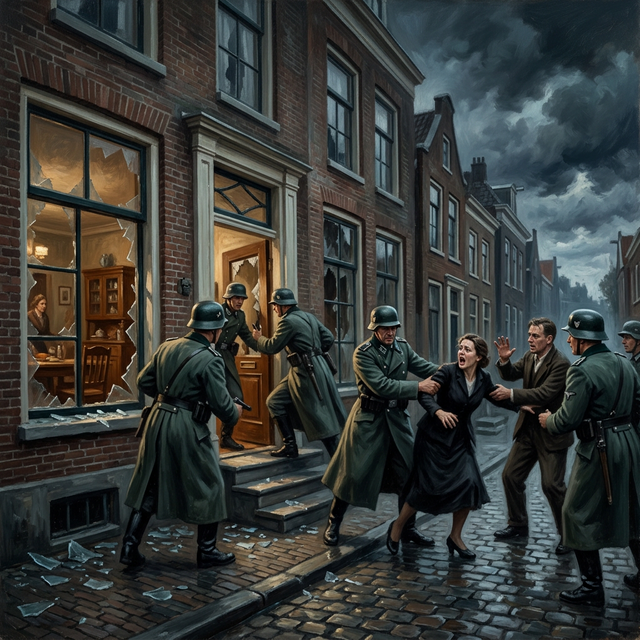
On February 28, 1944, the Gestapo raided the Béjé — the ten Boom home. The entire family was arrested. Six people hidden in the secret room were never found. But the cost was catastrophic: Corrie's 84-year-old father Casper died ten days later in Scheveningen prison. Her nephew Kik was sent to Bergen-Belsen, where he died at age 24. Corrie and her sister Betsie endured months of escalating suffering — Scheveningen, then Vught concentration camp, then finally Ravensbrück, the notorious women's extermination camp in Germany. Where is God when everything is taken?
📖 Key Scriptures
🙏 Pray
"Father, I confess I have questioned Your goodness when suffering hit. I have believed the lie that pain means abandonment. I renounce the accusation that You were absent when everything fell apart. I break agreement with despair that says loss has the final word. I declare: even in Sheol, You are there. Even in the pit, You have not left (Psalm 139:7-8)."
🪞 Reflect
What is the deepest loss you've experienced? Have you let it harden you against God — or have you wrestled honestly with Him about it? Is there a grief you've never brought fully before Him?
⚡ Act
Write out your hardest "where were You, God?" question. Don't sanitize it. Then read Job 1:21 and Psalm 139 aloud over it. Bring the full weight of your loss to Him this week — honestly, not performatively.
No Pit So Deep
"There is no pit so deep that God's love is not deeper still."
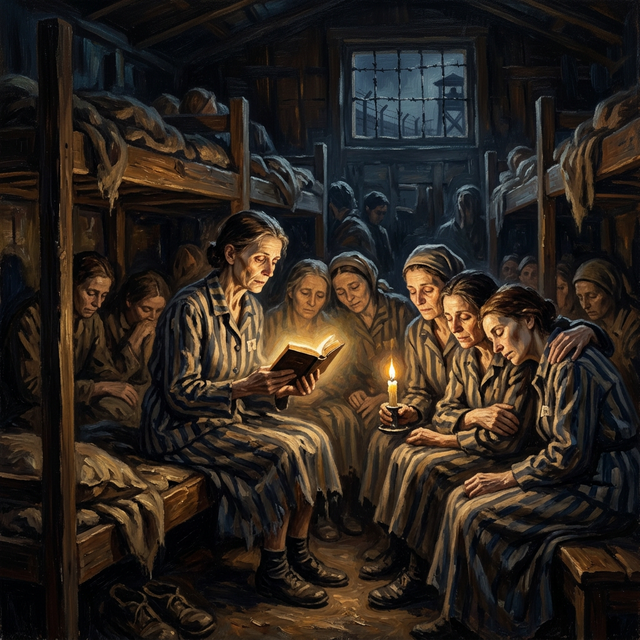
Ravensbrück was hell on earth — starvation, disease, forced labor, random cruelty. But in the flea-infested barracks, something astonishing happened. Corrie complained about the fleas. Betsie quoted 1 Thessalonians 5:18: "Give thanks in all circumstances." Corrie resisted — surely not the fleas. Later they discovered the guards refused to enter their barracks because of the fleas — which meant the sisters could hold Bible studies openly, bringing the gospel to hundreds of prisoners. The very thing Corrie despised was the shield God used. Even in the pit, He was working.
📖 Key Scriptures
🙏 Pray
"Lord, I confess I have seen only the fleas and missed Your purpose. I have cursed the circumstances You are using to protect me. I renounce despair and the lie that my pit is too deep for Your love. I break agreement with hopelessness. I declare: nothing in all creation separates me from Your love — not even this (Romans 8:38-39)."
🪞 Reflect
What are the "fleas" in your life — the irritations you can't see any purpose for? Is there a circumstance you've been cursing that God might actually be using as a shield? What would it look like to give thanks even for that?
⚡ Act
Name your "pit." Write Psalm 139:8 over it physically — on a card, a sticky note, your mirror. Practice 1 Thessalonians 5:18 by thanking God for one thing you've been complaining about. Do it for 7 days.
Betsie's Last Words
December 16, 1944. A death that launched a mission.
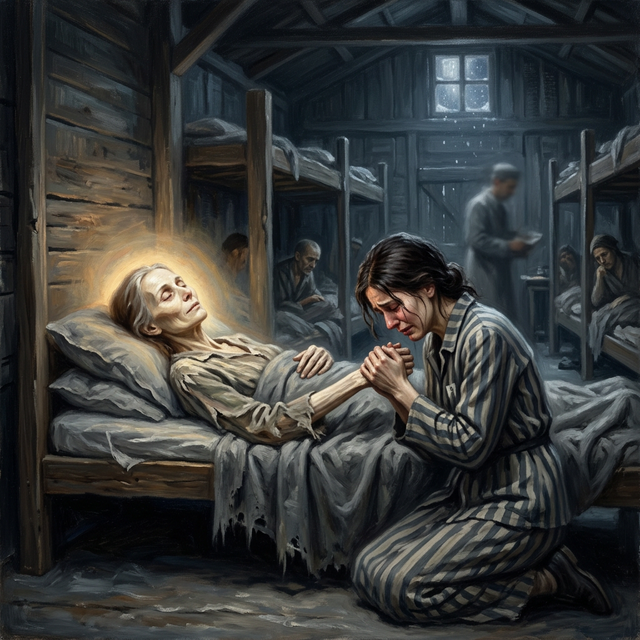
Betsie ten Boom died on December 16, 1944, in Ravensbrück. She was 59. Corrie looked at her sister's face after death and saw something impossible — it was full, young, peaceful. The lines of suffering were gone. Betsie's final charge to Corrie became the engine for the rest of her life: "We must tell people what we have learned here. We must tell them that there is no pit so deep that God is not deeper still. They will listen to us, Corrie, because we have been here." Days later, Corrie was released — a clerical error. One week after her release, all women her age in the camp were sent to the gas chambers.
📖 Key Scriptures
🙏 Pray
"Father, I confess I have tried to waste my pain instead of redeem it. I have hidden my wounds instead of letting them become a testimony. I renounce the lie that my suffering is meaningless. I break agreement with bitterness that says loss produces nothing. I receive Your commission: comfort others with the comfort I've received (2 Corinthians 1:3-4)."
🪞 Reflect
What is the hardest thing you've survived? Have you let it become a testimony — or have you buried it? Who in your life needs to hear "I have been there" from someone who has actually been there?
⚡ Act
Identify one person in your life who is in a pit you've already walked through. Reach out this week — not with advice, but with presence. Say: "I've been there. You're not alone." Let your wound become a door (Isaiah 61:1-3).
The Command to Forgive
Easy to preach from a platform. Hard to practice with a face.
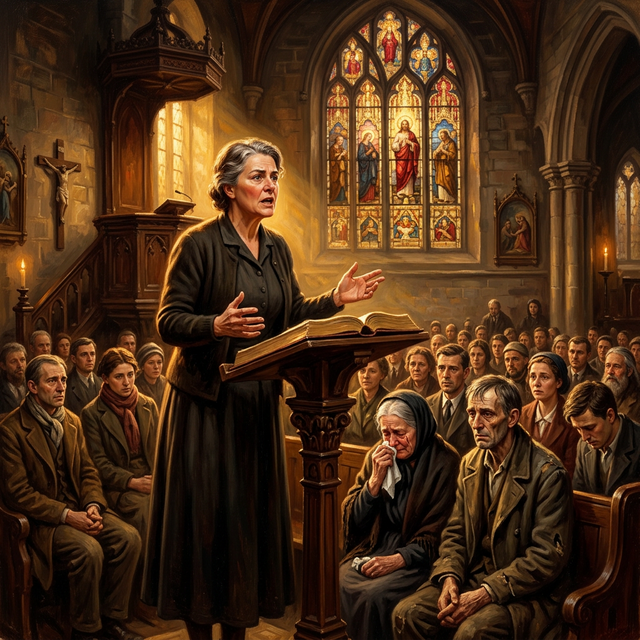
After the war, Corrie became a "tramp for the Lord" — traveling to over 60 countries over 33 years, sharing the message of God's love and forgiveness. She preached in bombed-out churches to broken people. The text she returned to again and again: "Lord, how often shall my brother sin against me, and I forgive him? As many as seven times?" Jesus said, "Not seven times, but seventy-seven times." She taught it. She believed it. She had no idea that the ultimate test was coming — not from a pulpit, but from an outstretched hand.
📖 Key Scriptures
🙏 Pray
"Father, I confess I have preached forgiveness I haven't practiced. I've told others to forgive while holding my own debts tight. I renounce selective obedience — forgiving when it's easy and withholding when it costs. I break agreement with hypocrisy that teaches what it won't live. Search me, Lord — show me where my teaching outruns my obedience (Matthew 18:21-22)."
🪞 Reflect
Is there a truth you teach or believe intellectually that you haven't actually practiced? Who is the person you'd least want to forgive — the one whose face makes your stomach turn? That's where the test is.
⚡ Act
Write down the name of one person you've been preaching forgiveness about but not practicing it toward. Don't act yet — just be honest with God about the gap between what you teach and what you live (Luke 6:27-28).
The Outstretched Hand
Munich, 1947. "Fräulein, will you forgive me?"
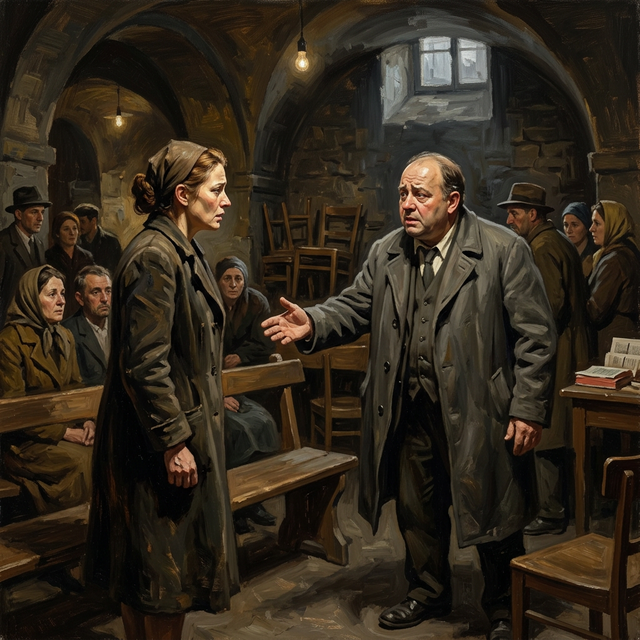
Munich, 1947. A Lutheran church basement. Corrie had just finished speaking about God's forgiveness when a man pushed through the crowd — balding, heavy-set, gray overcoat. She recognized him instantly. That guard. The blue uniform. The leather crop. The shower room at Ravensbrück where she and Betsie had stood naked and humiliated. He didn't recognize her. But she knew his face like a nightmare.
He thrust out his hand: "You mentioned Ravensbrück in your talk. I was a guard there. But since that time, I have become a Christian. I know that God has forgiven me for the cruel things I did there, but I would like to hear it from your lips as well. Fräulein, will you forgive me?" Corrie's hand stayed at her side. It would not move.
📖 Key Scriptures
🙏 Pray
"Lord, I confess there are people whose faces still trigger rage in my body. I have held onto the memory of what they did like a weapon. I renounce bitterness as self-protection. I break agreement with the lie that unforgiveness keeps me safe — it imprisons me. I don't have the strength to forgive. I need Yours (Matthew 5:44)."
🪞 Reflect
Is there a face that still triggers you? A name you can't say without your body tensing? What memory floods back when you think of them — and have you ever told God honestly that you can't forgive them?
⚡ Act
Write the name of the person you cannot forgive. Don't try to forgive them yet — that comes next. For now, just name them before God and say: "I can't do this. But I'm willing to be made willing." Pray Genesis 50:20 over the wound.
"I Cannot Forgive"
The most honest prayer ever prayed.
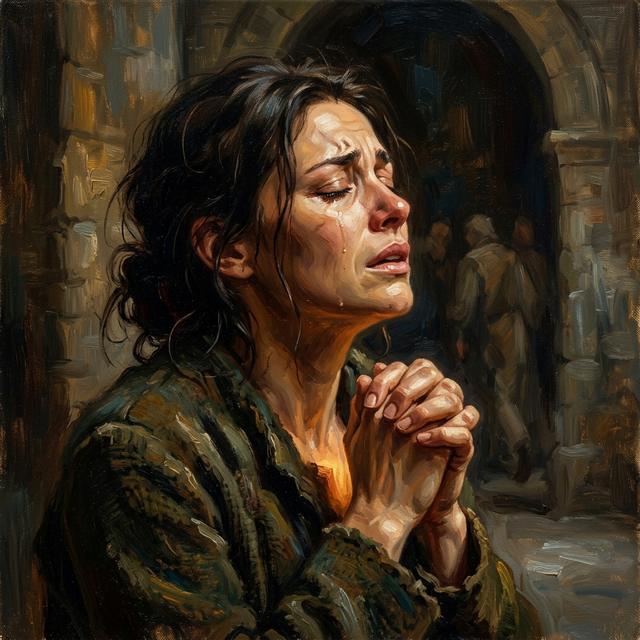
Seconds felt like hours. The guard's hand hung in the air. Corrie's hand was concrete at her side. Anger flooded back — Betsie's emaciated face, the cruelty, the humiliation, the death. Every theological truth she'd preached evaporated in the heat of the moment. She knew what Scripture said. She knew what Jesus commanded. But her hand. Would. Not. Move.
Then she prayed the most honest prayer of her life: "Jesus, I cannot forgive him. Give me Your forgiveness." Forgiveness is not a feeling. It is an act of the will. And sometimes the will needs power it does not have. Corrie made the mechanical decision — she thrust her hand forward, a wooden, deliberate gesture with no emotion behind it.
📖 Key Scriptures
🙏 Pray
"Father, I confess I have tried to forgive in my own strength and failed. I have manufactured forgiveness with my lips while my heart held the debt. I renounce false forgiveness — the kind that pretends it's fine when it's not. I break agreement with the lie that I must feel forgiving before I act. I pray Corrie's prayer now: Jesus, I cannot forgive them. Give me Your forgiveness (Romans 5:5, 2 Corinthians 12:9)."
🪞 Reflect
Have you been waiting to feel forgiving before you release someone? What would it look like to make the mechanical decision — to thrust your hand forward even when everything inside resists? Are you willing to be a vessel for forgiveness you don't possess?
⚡ Act
Pray Corrie's prayer word-for-word: "Jesus, I cannot forgive [name]. Give me Your forgiveness." Say it out loud. You don't need to feel it. You need to mean the surrender. Then extend one act of grace toward them this week — even if it's just praying Romans 12:14 ("bless and do not curse") over their name.
The Healing Current
"I had never known God's love so intensely as I did then."

The moment Corrie's hand met his, something happened that defied explanation. From her shoulder, down her arm, and into their joined hands — a current. Not metaphorical. Physical. A warmth, a healing, a love that was not hers. She wept. He wept. And in that dark church basement, Corrie cried out: "I forgive you, brother! With all my heart!"
She later testified: "I had never known God's love so intensely as I did then." The miracle wasn't that Corrie forgave. The miracle was that she couldn't — and Christ did it through her. Divine love flowed through a surrendered vessel. That's the pattern. That's the gospel. That's the only way impossible forgiveness happens.
📖 Key Scriptures
🙏 Pray
"Holy Spirit, I confess I have tried to produce forgiveness by my own willpower. I have gritted my teeth and said 'I forgive' while my heart stayed locked. I renounce self-powered forgiveness. I break agreement with the lie that forgiveness is something I generate. I surrender my arm to You — pour Your love through me toward the person I cannot release on my own (Ephesians 4:31-32)."
🪞 Reflect
Have you ever experienced a moment where God's love surprised you — flowing through you toward someone you thought you could never forgive? If not, are you willing to ask for it? What would change if you stopped trying to forgive and started asking God to forgive through you?
⚡ Act
Write a letter of release to the person who hurt you most. You don't have to send it. Pour out everything — the anger, the pain, the injustice. Then at the bottom write: "I release you to God. May His love flow where mine cannot." Burn the letter. Let it go (Colossians 3:13). If the wound involves trauma, reach out to a pastor or counselor.
Forgiveness Is an Act of the Will
"The will can function regardless of the temperature of the heart."
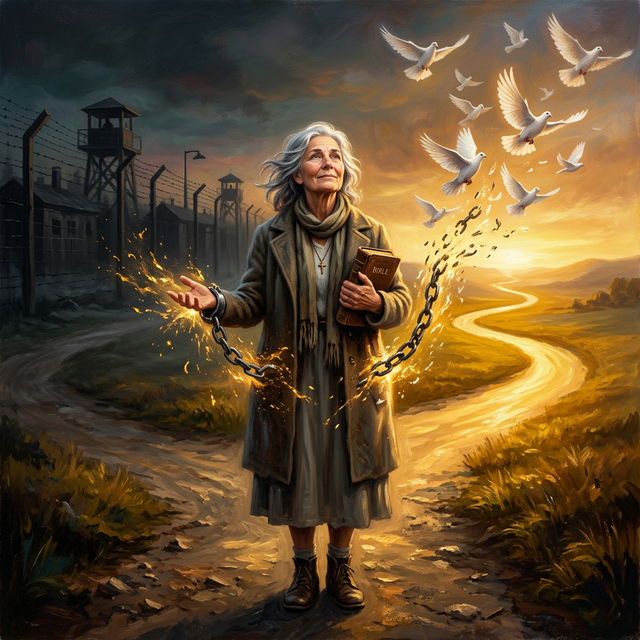
Corrie spent the rest of her life distilling what she learned in that Munich basement into one sentence: "Forgiveness is not an emotion — it is an act of the will, and the will can function regardless of the temperature of the heart." Forgiveness is not forgetting. It is not pretending it didn't happen. It is not automatic reconciliation without repentance. It is a decision — fueled by divine power — to release the debt and surrender vengeance to God.
"The blood of Jesus Christ cleanses us from ALL sin — and that includes the sin of bitterness in my heart." Corrie traveled to 60+ countries for 33 years as a "tramp for the Lord" — carrying this message until a series of strokes silenced her voice in 1978. She died on her 91st birthday, April 15, 1983. Her legacy: forgiveness is not something you can do. It's something Christ does through you when you surrender.
"Forgiveness is the key that unlocks the door of resentment and the handcuffs of hatred. It is a power that breaks the chains of bitterness and the shackles of selfishness."— Corrie ten Boom
📖 Key Scriptures
🙏 Pray
"Father, I confess I have held bitterness as protection and played judge over people You died for. I renounce every vow of 'I will never forgive.' I release them from the prison of my judgment. I break agreement with the root of bitterness that has defiled my heart. I receive Your grace — not to forget, but to release. Forgive through me what I cannot forgive alone (Hebrews 12:15, Ephesians 4:31-32)."
🪞 Reflect
Have you said "I forgive them" but still carried the weight? Is there a root of bitterness that has grown so deep you've mistaken it for wisdom? What would your life look like if you were actually free — if the prison door opened and you walked out?
⚡ Act
Make the decision today. Write the name. Say out loud: "I release you to God." Pray Romans 12:14 over them — "Bless and do not curse" — every day for 7 days. Tell one person you trust what you're doing. If the wound involves abuse or trauma, seek a pastor or counselor. Forgiveness is not something you generate. It's something you receive — and pass through (Matthew 6:14-15).